


 The Daily Ritual
 Take the quiz
 Our standards
 Our story
Our ingredients
What's inside, what's left out, and why.
Every ingredient has to earn its place, and nine did. For each one, here is the form we chose, the amount on the label, what it's there to do and the research behind it.
- Every dose on the label
- No proprietary blends
- Third-party tested
- Licensed by Health Canada
- Vegan and non-GMO
- Gluten-free
What's inside
Nine ingredients. Every dose on the label.
How strong is the research?
Established
Supported
Early
Each ingredient carries one of three words, so you can see how much research stands behind it.
- Established
- Several consistent human trials, or a role in the body that isn't in dispute.
- Supported
- Placebo-controlled human trials, with larger ones still to come.
- Early
- Laboratory work, early studies or traditional use.
Reviewed November 2026. Every study links to PubMed.
How strong is the research?
Each ingredient carries one of three words, so you can see how much research stands behind it.
Reviewed November 2026. Every study links to PubMed.
- Established
- Several consistent human trials, or a role in the body that isn't in dispute.
- Supported
- Placebo-controlled human trials, with larger ones still to come.
- Early
- Laboratory work, early studies or traditional use.
All nine, across Rise and RestThe five in Rise, your morning formulaThe six in Rest, your evening formula
Magnesium
150 mg in Rise100 mg in Rest150 mg in Rise100 mg in Restfour forms
The mineral your energy, your calm and your sleep all depend on, in four forms, because one form cannot do four jobs.Established
The four forms
- Magnesium L-threonateRisePart of the 150 mg blendFor focus. The brain-facing form, studied for memory, focus and sleep in adults aged 35 to 55.Supported
- Magnesium malateRisePart of the 150 mg blendFor energy. Carried on malic acid, an intermediate of the cycle that makes ATP.Early
- Magnesium taurateRisePart of the 150 mg blendFor calm. Bound to taurine, an amino acid that quiets nerve signalling.Early
- Magnesium bisglycinateRest100 mgFor sleep. The evening form, tested on its own for sleep and bound to glycine, which helps sleep too.Supported
What it does
- Takes part in more than 600 enzyme reactions, including every one that handles ATP (PMID 25540137).
- Regulates how readily neurons fire and is a cofactor in melatonin synthesis (PMID 41992896).
- Roughly half of people get less than they need from food alone (PMID 22364157).
How we formulated it
- Never taken without its cofactor. Magnesium with vitamin B6 outperformed magnesium alone by about 24% on stress scores in 264 severely stressed adults (PMID 30562392). Rise and Rest both carry B6, so every dose of magnesium arrives with the vitamin that made it work harder in the trial.
How it supports women
If you're running on empty, magnesium is a good place to start, because your energy by day and your sleep at night both depend on it.
The research
- Sleep, the evening form. Double-blind, placebo-controlled, four weeks, healthy adults with poor sleep: bisglycinate itself lowered the Insomnia Severity Index by 3.9 points versus 2.3 on placebo, more so in people low in dietary magnesium (PMID 40918053). At LunHer: why the form in Rest is bisglycinate.
- Sleep, magnesium generally. Meta-analysis of randomised trials: magnesium shortened the time to fall asleep by about 17 minutes versus placebo (PMID 33865376). At LunHer: why magnesium is in the evening formula as well as the morning one.
- Daytime, L-threonate. 2024 double-blind, placebo-controlled trial, 80 adults aged 35 to 55 with sleep complaints, three weeks: L-threonate maintained sleep quality, daytime energy, mood and alertness while the placebo group declined, with more time in deep and REM sleep (PMID 39252819). At LunHer: why L-threonate is one of the three forms in Rise.
B vitamins
Six in Risethree in RestSix in RiseThree in Restseven in all
Seven B vitamins that turn the food you eat into energy and build the brain chemistry behind mood and calm.Established
The seven
- Thiamine (B1)Rise10 mgCarries carbohydrate into the ATP cycle.
- Riboflavin (B2)Rise15 mgriboflavin 5'-phosphateBecomes the electron carriers of the mitochondrial chain. Supplied as the coenzyme form itself.
- Niacin (B3)Rise5 mginositol hexanicotinateBecomes NAD, the coenzyme of energy metabolism. Supplied in the form that does not cause the niacin flush (PMID 23351578).
- Pantothenic acid (B5)10 mg in Rise75 mg in Rest10 mg75 mgThe precursor of coenzyme A, the molecule at the hub of energy, fat and steroid metabolism, supplied morning and night.
- Vitamin B625 mg in Rise25 mg in Rest25 mg25 mgpyridoxal 5'-phosphate (P5P)The coenzyme behind serotonin, GABA and dopamine by day, and behind your own melatonin by night.
- Vitamin B12Rise300 mcghydroxocobalamin and cobamamideSteady supply of the vitamin behind your blood, your DNA and your mood chemistry.
- FolateRest250 mcgL-5-MTHF (L-methylfolate)Folate in its finished form: the one your cells use directly, whatever your MTHFR status.
What it does
- Formulated with the rest of the energy chain. In Rise, thiamine, riboflavin, niacin and B5 sit alongside magnesium malate and CoQ10, so every step from the food you eat to the ATP your cells spend has its cofactor in one morning capsule (PMID 38187802, PMID 25540137, PMID 34129891).
- Part of a three-vitamin team. B12 in Rise, B6 in both formulas, folate in Rest: together they run the cycle that makes serotonin and GABA, the brain chemicals behind mood and calm (PMID 41992896). Spread across the day, so the team is never short a member.
How we formulated it
- Active forms, ready to use. B6, B12, riboflavin and folate are in their active forms, the ones your body can put straight to work (PMID 33912895, PMID 10730193, PMID 19917061).
- Dosed to cover, at 300 mcg. Your gut absorbs B12 through a doorway that fills at about 1.2 mcg per dose; past that, only about 1% gets through (PMID 39683551). At 300 mcg, a full day's need gets in even on days the doorway is not working well.
- The reason Rest needs no melatonin. P5P is the cofactor for the enzyme that turns 5-HTP into serotonin, and serotonin is what becomes melatonin after dark (PMID 20403077, PMID 16687310). B6 deficiency measurably reduces that enzyme (PMID 20403077). Rest supplies the cofactor your own pathway runs on, so the hormone stays yours to make.
How it supports women
B6 has been studied in women specifically: a BMJ review of 9 trials in 940 women found it likely benefits premenstrual symptoms and low mood (PMID 10334745). And in a 24-week trial of 144 women aged 19 to 33, the folate in Rest raised red-blood-cell folate significantly more than folic acid did (PMID 16825690).
The research
- Absorption. 2024 crossover, 9 healthy adults, labelled B12 at rising doses: absorption fell from 51% to 15% as the dose rose, with the active route topping out near 1.2 mcg (PMID 39683551). At LunHer: this is why Rise carries 300 mcg rather than a daily-value dose. Once the doorway fills, only the overflow gets through, so the dose is set for the overflow to cover a full day.
- Route. 2024 network meta-analysis and a 2018 randomised trial: oral B12 corrected deficiency as effectively as injection (PMID 38231320, PMID 29931179). At LunHer: a capsule is a real route, which is why B12 sits in Rise rather than being left to a clinic.
- Folate. Head to head, L-5-MTHF put more folate into the blood than the same amount of folic acid, with none of it left circulating unmetabolised (PMID 33255787); a 2026 review of 61 studies confirmed the difference (PMID 42739064). At LunHer: why Rest uses L-5-MTHF and leaves folic acid out.
Expect bright yellow urine. That is riboflavin beyond need clearing within hours: documented, harmless, and a sign the vitamin was absorbed (PMID 8604671, PMID 33212933).
Vitamin D3
Rise1000 IU (25 mcg)cholecalciferol
The sunshine vitamin, at 1000 IU a day, for the long Canadian months when the sun can't make it for you.Established
What it does
- Vitamin D is made in the skin from UVB light and acts like a hormone on immune cells, bone and mood-related pathways (PMID 22894564, PMID 28202713).
- Canadian winters cut UVB so far that blood levels fall markedly between summer and winter (PMID 36848989).
How we formulated it
- D3, every day, not a big occasional dose. Cholecalciferol is the form your skin makes from sunlight (PMID 22894564). The infection benefit appeared with daily or weekly dosing rather than large boluses (PMID 28202713), so Rise gives 1000 IU each morning.
- Fewer winter infections when you start low. A meta-analysis of 25 trials in 11,321 people found daily vitamin D modestly reduced acute respiratory infections, most clearly in people who were low to begin with (PMID 28202713, PMID 33798465).
How it supports women
Through a Canadian winter most of us run low, and that is when vitamin D has been shown to help: in meta-analyses it eased low mood mainly in people whose levels were low to begin with (PMID 39552387, PMID 42594843).
The research
- Canada. Canadian Health Measures Survey 2012 to 2019, and the 2007 to 2009 cycle: vitamin D insufficiency common and seasonal, winter concentrations markedly lower than summer (PMID 36848989, PMID 20426226); UVB exposure drives status (PMID 22894564). At LunHer: the reason a Canadian morning formula carries D3 at all.
- Mood. Systematic review and dose-response meta-analysis, 2024: small reductions in depressive symptoms, mostly in people with low vitamin D or existing depression (PMID 39552387). Bayesian meta-analysis of 13 randomised studies, 2026: favoured lower depressive-symptom severity, with heterogeneity (PMID 42594843). At LunHer: the evidence behind the mood line above, honestly scoped to people who start low.
CoQ10
Rise50 mgubiquinone
The spark your cells use to turn food into energy, taken with breakfast or lunch so your body absorbs it.Established
What it does
- Inside every mitochondrion, CoQ10 shuttles electrons between the complexes that make ATP, and it is the fat-soluble antioxidant that protects that membrane (PMID 34129891).
- The body makes its own, but production falls with age and with statins (PMID 34129891); topping up restores blood levels and improves how efficiently mitochondria work (PMID 42249931).
How we formulated it
- The last link in Rise's energy chain. The B vitamins and magnesium malate carry food into the cycle that makes ATP; CoQ10 carries the electrons that finish the job inside the mitochondrial chain (PMID 34129891). Rise supplies the whole pathway, first step to last.
- Taken with food, on purpose. CoQ10 is absorbed through the fat in a meal, and food and formulation matter more to absorption than the ubiquinol-versus-ubiquinone label does (PMID 27128225, PMID 30558322). Rise is taken with breakfast or lunch partly for this reason.
- Expect less physical fatigue over time. In a double-blind crossover in healthy adults, CoQ10 reduced physical fatigue (PMID 18272335).
How it supports women
Your own CoQ10 falls with age, which is why it belongs in an energy formula for women in their thirties and forties, and not only in formulas for later life.
The research
- Role. Review of CoQ10 biology: obligatory electron carrier in the respiratory chain, lipid-phase antioxidant, made by the body, declining with age and statins (PMID 34129891). At LunHer: why CoQ10 sits in Rise, the energy formula.
- Mitochondria, 2026. Randomised double-blind trial, 54 healthy active males, six weeks of ubiquinol: higher plasma CoQ10 and improved oxidative-phosphorylation coupling efficiency in muscle (PMID 42249931). At LunHer: the newest evidence that the supplement reaches the mitochondria and changes how they work.
- Absorption. Human comparisons: ubiquinol and ubiquinone produced comparable plasma CoQ10 (PMID 27128225); absorption depends on lipid micelles and formulation (PMID 30558322, PMID 20354345). At LunHer: why we chose ubiquinone and ask you to take Rise with breakfast or lunch, rather than paying for the ubiquinol label.
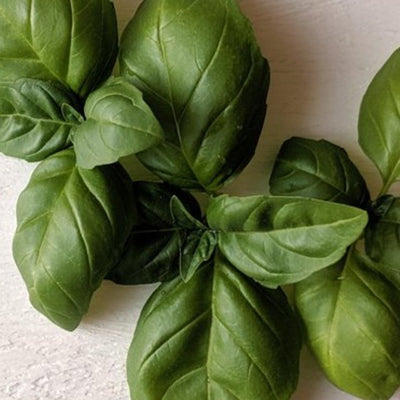
Holy basil
Rise100 mg (2000 mg leaf equivalent)20:1 extract
Your morning adaptogen, shown in a placebo-controlled trial to lower both the stress you feel and the cortisol behind it.Supported
What it does
- Holy basil dampens cortisol at its source: in lab and animal work it acts on the CRF1 receptor that starts the stress-hormone cascade (PMID 37141281).
- In people that shows up as lower perceived stress and lower cortisol in hair and saliva over eight weeks (PMID 36185698).
- It sits in Rise so the daytime stress response is met alongside magnesium taurate and B6.
How we formulated it
- One adaptogen by day, one by night. Rise carries holy basil; Rest carries schisandra. In a 2026 double-blind placebo-controlled trial of 186 highly stressed adults, a formula combining both with rhodiola lowered perceived stress and anxiety and improved sleep quality over 60 days (PMID 41656269). Holy basil takes the daytime shift.
- The most concentrated extract in either formula. A 20:1 extract, so 100 mg delivers the equivalent of 2000 mg of holy basil leaf.
How it supports women
Ashwagandha is the better-known adaptogen, but in clinical trials it has raised thyroid hormone levels (PMID 28829155, PMID 41740946), and thyroid conditions are far more common in women. Rise uses holy basil for that reason.
The research
- Stress and cortisol. Randomised double-blind placebo-controlled trial, 100 adults, eight weeks: lower perceived stress and lower hair and salivary cortisol than placebo (PMID 36185698). At LunHer: the reason holy basil is Rise's adaptogen; it is the one with cortisol measured two ways.
- Stress, earlier. Double-blind placebo-controlled trial: lower general stress scores (PMID 21977056). At LunHer: a second trial pointing the same way.
- The field. Two systematic reviews collect the human literature, 24 studies in one (PMID 28400848, PMID 33650944). At LunHer: the evidence base is broad enough to build on, and both reviews call for larger trials, which is why the rating is Supported rather than Established.
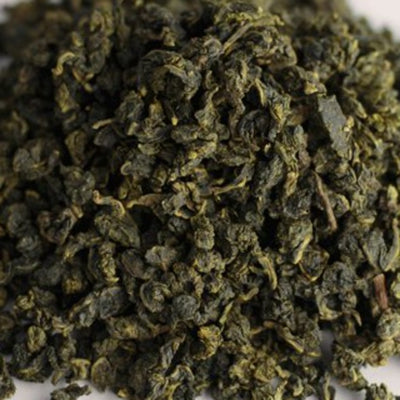
L-theanine
Rest200 mgthe amino acid from tea leaves
Calm without drowsiness, from the best-studied ingredient in either formula.Established
What it does
- L-theanine shifts the brain's electrical rhythm toward alpha waves, the pattern of relaxed, alert attention (PMID 18296328).
- That shift lowers the body's stress reactivity: under a stressor, heart rate, salivary stress markers and cortisol all drop (PMID 16930802, PMID 26797633).
- Because it calms without sedating, it can be taken in the evening for sleep and still leave next-day focus intact, which is why Rest carries it at 200 mg.
How we formulated it
- The anchor of Rest's calm layer. Rest stacks four ingredients that each have their own sleep or calm trials: L-theanine, chamomile, passionflower and magnesium bisglycinate. L-theanine is the best-evidenced of them, with two 2025 meta-analyses behind it (PMID 40056718, PMID 40314930), so it carries the load while the others add their own routes to calm.
- 200 mg, within the clinically studied range. A four-week double-blind trial at 200 mg a day improved sleep-quality scores and, in the same people, verbal fluency and executive function (PMID 31623400). A 2026 review puts 200 to 400 mg as the range that reduces stress without sedation and 200 to 450 mg as the range that supports sleep quality (PMID 42761839). Rest sits inside both.
How it supports women
If your sleep is light and broken and you wake unrested, this is the ingredient in Rest with the most sleep evidence behind it, and because it calms without sedating, it leaves the next morning clear.
The research
- Sleep. Two 2025 systematic reviews and meta-analyses, one of 19 studies (n=897) and one of 50 randomised trials: L-theanine improved subjective sleep outcomes (PMID 40056718, PMID 40314930). At LunHer: why L-theanine is Rest's lead ingredient rather than a supporting one.
- Dose. Four-week double-blind randomised trial, 30 adults, 200 mg a day: better Pittsburgh Sleep Quality Index scores plus gains in verbal fluency and executive function (PMID 31623400). At LunHer: a trial at the amount Rest carries.
- Stress. Double-blind crossover, 12 adults: lower heart-rate and salivary IgA response to a mental-arithmetic stressor (PMID 16930802). Placebo-controlled crossover with magnetoencephalography, 34 adults: lower subjective stress and salivary cortisol (PMID 26797633). At LunHer: the measured evidence behind the word "calm" on the label.
- Range. 2026 review of the meta-analyses of human trials: 200 to 400 mg a day reduces perceived and physiological stress without sedation, 200 to 450 mg supports sleep quality, and it is well tolerated (PMID 42761839). At LunHer: confirms the 200 mg in Rest sits inside both ranges.
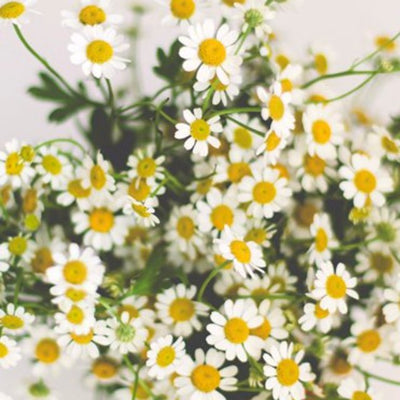
Chamomile
Rest150 mg (1500 mg flower equivalent)10:1 extract
The most-studied botanical in Rest, for a calmer mind and fewer wake-ups through the night.Supported
What it does
- Chamomile's active flavonoid, apigenin, binds the same receptor site in the brain that anti-anxiety medicines use, without the sedation, in preclinical work (PMID 7617761).
- In people that shows up as lower anxiety scores over weeks and better sleep quality with fewer awakenings (PMID 19593179, PMID 39106912).
- Magnesium amplifies the effect in animal models (PMID 41701207), and Rest supplies both.
How we formulated it
- A concentrated extract. Rest uses a 10:1 extract, so 150 mg delivers the equivalent of 1500 mg of chamomile flower, in a capsule rather than a cup.
- Expect better sleep quality and fewer wake-ups. A 2024 meta-analysis of 10 studies in 772 people found chamomile improved sleep quality and reduced night-time awakenings (PMID 39106912), and a 2026 triple-blind trial of 80 patients found 4.5 times the odds of good sleep (PMID 41538720).
How it supports women
If you're exhausted and still can't settle at night, chamomile is the part of Rest that calms first, so steadier sleep can follow.
The research
- Anxiety. Randomised double-blind placebo-controlled trial, 57 adults with generalised anxiety disorder, eight weeks: greater reduction in anxiety scores than placebo (PMID 19593179). 26-week continuation, 93 responders: anxiety stayed lower (PMID 27912875). Systematic review and meta-analysis of 12 randomised trials (PMID 31006899). At LunHer: why chamomile is in Rest for calm as well as for sleep.
- Sleep. Systematic review and meta-analysis, 10 studies, 772 people: sleep-quality score improved by 1.88 points and awakenings fell (PMID 39106912). At LunHer: the sleep-quality claim on this card.
- Mechanism. Apigenin binds the brain's benzodiazepine receptors and is calming without sedation in animal work (PMID 7617761); apigenin plus magnesium extended sleep more than either alone in three mouse models (PMID 41701207). At LunHer: why chamomile and magnesium share the capsule.
Chamomile belongs to the same plant family as ragweed, chrysanthemum, marigold and mugwort, so skip Rest if you react to any of those.
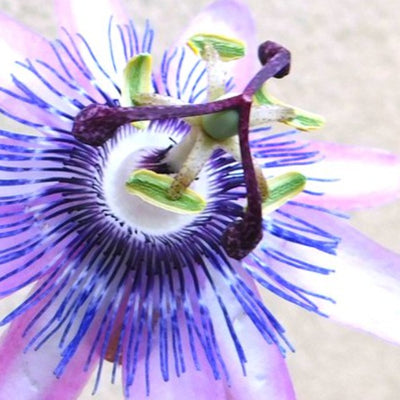
Passionflower
Rest100 mg (1000 mg herb equivalent)10:1 extract
Used for sleep for centuries, and shown in a sleep-lab trial to add to the hours you actually sleep.Supported
What it does
- In laboratory work, passionflower acts on several sleep systems at once, among them adenosine, the brain's sleep-pressure signal, and serotonin receptors (PMID 42462921).
- In people that shows up as more total sleep on polysomnography and lower cortisol under stress (PMID 31714321, PMID 41381570).
- In Rest it adds routes to sleep that L-theanine, chamomile and magnesium do not use.
How we formulated it
- More sleep, measured in the lab. In 110 adults with insomnia disorder, two weeks of passionflower increased total sleep time on polysomnography, the clinical standard, not a questionnaire (PMID 31714321). A double-blind crossover in 41 adults found better subjective sleep quality than placebo (PMID 21294203).
- A concentrated extract. A 10:1 extract, so 100 mg delivers the equivalent of 1000 mg of passionflower, in a capsule rather than a tea.
How it supports women
If you fall asleep and then wake through the night, total sleep time is the measure that matters, and it is the one passionflower moved in the sleep-lab trial.
The research
- Sleep, objective. Randomised placebo-controlled trial with polysomnography, 110 adults with insomnia disorder, two weeks: total sleep time increased versus placebo (PMID 31714321). At LunHer: the reason passionflower earns a place next to L-theanine rather than being a traditional-use garnish.
- Sleep, subjective. Double-blind placebo-controlled crossover, 41 adults, one week: better sleep quality than placebo (PMID 21294203). Randomised double-blind placebo-controlled trial, 65 adults, standardised extract at bedtime for 30 days (PMID 38646244). At LunHer: consistent direction across three trial designs.
- Calm. Pilot double-blind randomised trial, 36 adults with generalised anxiety, four weeks: comparable to oxazepam (PMID 11679026). Randomised trial, 30 patients before third-molar extraction: salivary cortisol lower than placebo and no different from midazolam (PMID 41381570). At LunHer: why the card says calm as well as sleep.
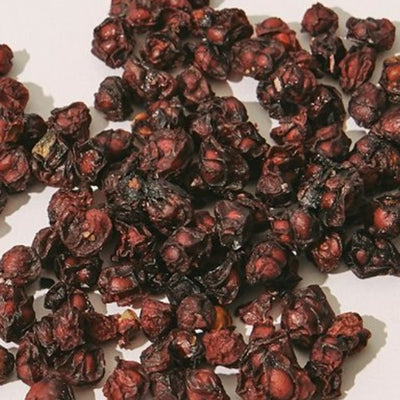
Schisandra
Rest150 mg (1500 mg berry equivalent)10:1 extract
Your evening adaptogen, a classical stress herb studied alongside holy basil for calmer days and better sleep.Early
What it does
- Schisandra is an adaptogen: its lignans act on the HPA axis, the stress-hormone chain, blunting the cortisol rise under strain in animal models (PMID 21901061, PMID 25141817).
- In people, the evidence is in combination formulas: less perceived stress, better sleep and sharper attention (PMID 41656269, PMID 20374974).
- It sits in Rest so the day's stress response is unwound at night, with holy basil covering the day.
How we formulated it
- A concentrated extract. A 10:1 extract, so 150 mg delivers the equivalent of 1500 mg of schisandra berry.
- Expect steadier focus under pressure. A single dose of an adaptogen combination containing schisandra improved attention, speed and accuracy in stressed adults in a double-blind placebo-controlled trial (PMID 20374974).
How it supports women
After a day of being switched on for everyone else, schisandra is the evening half of the adaptogen pair, there to help your stress response stand down before sleep.
The research
- Stress and sleep, 2026. Randomised double-blind placebo-controlled trial, 186 highly stressed adults, 60 days, a Rhodiola + holy basil + schisandra formula: lower Perceived Stress Scale, better PSQI sleep quality, lower anxiety and mood dysregulation than placebo (PMID 41656269). At LunHer: the largest trial either of our adaptogens appears in, and the reason they are split across Rise and Rest rather than stacked in one capsule.
- Focus. Double-blind placebo-controlled trial, single dose of an adaptogen combination containing schisandra: improved attention, speed and accuracy in stressed subjects (PMID 20374974). At LunHer: the evidence behind steadier focus under pressure.
- On its own. Randomised double-blind placebo-controlled trial, schisandra alone: reduced menopausal symptoms (PMID 27763802). At LunHer: the one solo human trial, in women, the people Rest is built for.
- Stress axis. Rabbit and rat models: schisandra suppressed the cortisol and stress-kinase rise under immobilisation and exhaustive exercise (PMID 21901061, PMID 25141817). Rat model, 2026: schisandrin B reduced anxiety-like behaviour comparably to diazepam (PMID 42718869). At LunHer: why schisandra is placed in the evening formula, where the day's stress is unwound.
What we left out
What we left out is equally important.
Each of these was considered and left out, and each exclusion has a reason.
Melatonin
It's a hormone with a small average effect in the research (about seven minutes faster to fall asleep), and what's sold is often badly mislabelled. Rest supports the pathway your body already uses to make its own.
Ashwagandha
In clinical trials it has raised thyroid hormone levels, and thyroid conditions are far more common in women, so Rise uses holy basil instead.
5-HTP
It can interact with common antidepressants, which would mean screening every customer, and the evidence isn't strong enough to justify that.
GABA
The evidence that a GABA capsule reaches the brain is unsettled, and a 95-day placebo-controlled trial found no significant effect on sleep quality. Rest uses L-theanine for calm.
Rhodiola
Wild rhodiola is under conservation pressure from its own popularity, so our adaptogens are holy basil and schisandra.
Folic acid
Your body has to convert it first, so Rest uses folate in its active form, L-5-MTHF.
Cyanocobalamin
It's the most common form of vitamin B12. Rise uses two others: cobamamide, one of the two forms your body actually uses, and hydroxocobalamin, which the body held on to better in clinical comparisons.
Proprietary blends
Proprietary blends name an ingredient without saying how much of it you're getting. We don't use them, so every amount in our products is laid out on the label.
Caffeine and stimulants
Neither formula contains caffeine or any other stimulant. Instead, our products contain the precursors your body needs to make its own energy: B vitamins, CoQ10 and magnesium.
Additives
- Artificial colours
- Artificial flavours
- Sweeteners
- Preservatives
- Magnesium stearate
- Talc
- Titanium dioxide
- Carrageenan
- Hydrogenated oils
- Brominated oils
- Sodium benzoate
- Potassium sorbate
- Silicon dioxide
- Stearic acid
- Corn starch
- Maltodextrin
- Polyethylene glycol
Our products are suitable for vegans, non-GMO, and made without dairy, gluten, nuts, soy or added sugar.
Questions
About the ingredients.
Why are the B vitamin amounts so high?
Because the daily value on a label is the amount that prevents a deficiency, which makes it a floor and not a ceiling. B vitamins are water-soluble, so your body uses what it needs and clears the rest.
- B12: your gut takes in only about 1.2 mcg at a time through its main route (PMID 39683551), so Rise carries 300 mcg to make sure a full day's worth gets through
- Riboflavin (B2): what you don't need is cleared within hours, which is why your urine may turn bright yellow (PMID 8604671). It is harmless
Why four forms of magnesium?
Because what your body needs at 8am is different from what it needs at 8pm, and one form of magnesium cannot do four jobs.
- In Rise: L-threonate for focus, malate for energy and taurate for calm
- In Rest: bisglycinate for sleep
Can I take them with my other supplements?
Yes, and you may find you need fewer of them, because Rise and Rest already cover a lot of ground.
- You can skip: extra magnesium, B vitamins or a multivitamin
- Best avoided: other adaptogens, including greens powders that contain ashwagandha
- Fine alongside: extra vitamin D and probiotics
Pregnancy, medication and allergies are answered in our FAQs.