Probiotics 101: How “Good Bacteria” Can Support Your Gut, Immunity & Even Your Mood
Did you know that your gut is home to trillions of tiny allies working to support your digestion, immunity, and even your mental well-being? Probiotics can help keep your internal ecosystem balanced and happy.
The LunHer Take
- Probiotics are “good” bacteria that help balance your gut microbiome, supporting digestion, immunity, nutrient absorption, and even mood through the gut-brain connection.
- Supplements can help fill the gap if you’re not regularly consuming probiotic-rich foods.
- A balanced gut microbiome benefits overall health.
While bacteria often get a bad rap, probiotics are the beneficial kind that help keep your internal ecosystem balanced. They’re found naturally in your digestive system, but you can also get them from certain foods, fermented drinks, and high-quality supplements. Here’s a simple breakdown of everything you need to know about probiotics.
Why Good Bacteria Matter
When you were younger, you were probably told that bacteria can be harmful and make you sick. However, as our knowledge of the human body evolves, scientists are getting a deeper understanding of the other side of the equation: the importance of “beneficial” or “good” bacteria. In fact, the average human has just as many bacterial cells as it does human cells.
The trillions of microorganisms in your body are commonly referred to as the “microbiome.” The microorganisms that live in our digestive systems are known as the “gut microbiome.” According to a study published by the National Institute of Health, when your microbiome is balanced, “good” bacteria may help:
-
Support healthy digestion
-
Keep “bad” bacteria in check
-
Strengthen your immune system
-
Improve nutrient absorption
-
Reduce lactose intolerance symptoms
-
Possibly even influence mood and stress levels through the gut-brain connection
Fermentation: the prehistoric process that became the latest trend
Long before probiotics became a wellness buzzword, cultures around the world used fermented foods for their healing properties. Fermentation, which creates probiotic-rich food and drink, is a process by which bacteria and yeasts consume sugars, then expel acids, gases, and alcohol. You are probably quite familiar with a number of the most common fermented foods and drinks from around the world:
-
Yogurt – likely from Mesopotamia, now a global staple
-
Kefir – a tangy, drinkable fermented milk from the Caucasus Mountains
-
Kimchi – Korea’s probiotic-rich, spicy fermented cabbage
-
Sauerkraut – Germany’s famous tangy fermented cabbage
-
Kombucha – fermented tea with a natural fizz, originally from China
In "lacto-fermented" foods, like pickles or sauerkraut, the beneficial bacteria digest sugars and produce lactic acid, which act as a natural preservative and defense against harmful bacteria. Incredibly, the two most common strains of beneficial bacteria found in the human digestive system are Lactobacillus acidophilus and Bifidobacterium bifidum, which are also abundant in fermented foods and beverages.
Not all fermented foods contain live probiotics (beer and wine, for example, lose them during alcohol fermentation), so if you’re looking for gut benefits, focus on those with active cultures.
Food vs. Supplements
You can nourish your gut with probiotic-rich foods like yogurt, kefir, sauerkraut, kimchi, and kombucha. But if you’re not regularly eating these, supplements can be a convenient option.
The dosing for probiotics is measured in something called “colony-forming units” (CFUs) — the number of active cells with the potential to grow and multiply. A typical dose of a probiotic supplement will include between one and ten billion active CFUs. They are typically found in capsule form, but are also available in tablet, liquid, and even gummy form. The most effective formulations and delivery methods for providing viable probiotic cells are still being studied and developed.
When choosing a probiotic supplement:
-
Look for strains like Lactobacillus acidophilus and Bifidobacterium bifidum — two of the most studied for gut health.
-
Check the CFU count (colony-forming units) — many effective doses range from 1 to 10 billion CFUs.
-
Make sure it’s from a reputable brand that ensures live cultures survive until they reach your gut.
The Bottom Line
Adding probiotics, whether through food or supplements, is one of the simplest ways to care for your gut and overall well-being. Your microbiome is an active partner in your health journey, and nurturing it pays off in better digestion, stronger immunity, and potentially even a brighter mood.
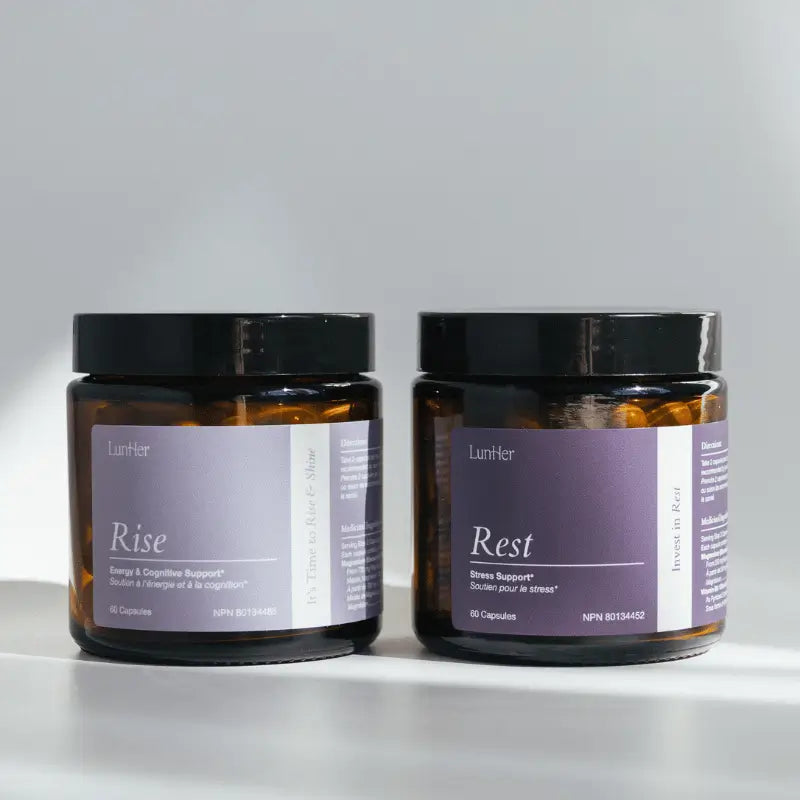
The Daily Ritual: the nervous system formula that complements your gut health routine →
The information in this article is for general educational purposes only and is not intended to replace consultation with a qualified healthcare professional. Always consult a doctor or naturopath before starting any supplement, particularly if taking medications or managing a health condition. LunHer products are not intended to diagnose, treat, cure, or prevent any disease.