Probiotics vs Prebiotics: What's the Difference?
Written by Our Editorial Team & Medically Reviewed by Dr. Aisling Lanigan, N.D.
Key Takeaways
- Probiotics are beneficial bacteria that colonize your gut and help maintain a healthy microbiome.
- Prebiotics are the food source that keeps those good bacteria thriving—think of them as fertilizer for your gut garden.
- They work best together: probiotics introduce the good guys, prebiotics keep them fed and happy.
- About 70% of your immune system lives in your gut, which is why this stuff actually matters for your overall health.
Probiotics are having a major moment right now—you've probably seen them in everything from supplements to skincare. But what about prebiotics? And more importantly, what's the actual difference between the two?
Let's break it down.
What Are Probiotics and Prebiotics?
Here's the simplest way to think about it: probiotics and prebiotics are a team. Probiotics do the colonizing; prebiotics do the feeding. Together, they create and maintain a healthy digestive system.
Probiotics: The Good Bacteria
Probiotics help balance and regulate your gut microbiome by introducing beneficial bacteria into your digestive system.
Generally, your body is pretty good at maintaining the right balance of "good" and "bad" bacteria on its own. But sometimes things throw that balance off—illness, stress, medications, diet changes. Antibiotics are a classic example: they're designed to wipe out harmful bacteria, but they take some of the good guys down too.
When your gut bacteria get out of balance, adding probiotics to your diet (or taking a supplement) can help restore equilibrium.
Research shows probiotics can help:
- Improve overall gut health
- Alleviate digestive concerns like bloating, irregularity, and discomfort
- Support immune function
- Influence mood and mental clarity (hello, gut-brain connection)
Where to find probiotics:
- Fermented foods: yogurt, kefir, kimchi, sauerkraut, miso, kombucha
- Probiotic supplements
Prebiotics: The Fuel for Your Good Bacteria
Prebiotics aren't live bacteria themselves—they're the food source that keeps your existing good bacteria thriving. Think of probiotics as the plants in your gut garden, and prebiotics as the fertilizer that helps them grow.
Without adequate prebiotics, even the best probiotic strains can struggle to survive and multiply. That's why the two work so much better together.
Where to find prebiotics:
- High-fiber foods: bananas, pears, apples, onions, garlic, leeks
- Leafy greens and vegetables
- Legumes: chickpeas, lentils, beans
- Whole grains: oats, barley, wheat
- Prebiotic supplements
Why Does Gut Health Actually Matter?
Here's something that surprises a lot of people: roughly 70% of your immune system lives in your intestines.
Your gut isn't just about digestion—it's a major player in your overall health. The balance of bacteria in your digestive tract influences:
- Immune function: A healthy microbiome helps your body fight off pathogens
- Nutrient absorption: Good bacteria help you extract vitamins and minerals from food
- Mood and mental health: The gut-brain axis means your digestive health directly impacts how you feel
- Hormonal balance: Gut bacteria play a role in estrogen metabolism and hormone regulation
- Energy levels: Poor gut health can leave you feeling sluggish and fatigued
For women navigating hormonal transitions—whether that's trying to conceive, postpartum recovery, perimenopause, or just trying to feel like yourself again—gut health is foundational. When your microbiome is off, everything else can feel off too.
Do Probiotics and Prebiotics Work Better Together?
Short answer: yes.
Probiotics ensure your body has enough good bacteria to function properly. Prebiotics serve as the energy source that helps those probiotics do their job. When you take them together (sometimes called a "synbiotic" approach), you're giving your gut the best chance to maintain balance.
Think of it this way: you can plant all the flowers you want, but if you don't feed and water them, they won't thrive. Same principle applies to your gut bacteria.
Should You Take a Probiotic Supplement?
Here's our honest take:
Most people don't eat fermented foods every day. And even if you do, you're probably consuming the same strains repeatedly—we're creatures of habit, after all. The thing is, different strains of probiotics support gut flora in different ways. Variety matters.
Probiotic supplements offer an easy way to introduce diverse beneficial bacteria to your gut, especially if fermented foods aren't a regular part of your diet.
What to Look for in a Probiotic
Not all probiotics are created equal. Here's what matters:
- Reputable source: Look for brands with transparent labeling and third-party testing
- Strain diversity: Multi-strain formulations can offer broader support than single strains
- CFU count: Colony-forming units indicate how many live bacteria you're getting (more isn't always better—look for clinically studied doses)
- Shelf stability: Some probiotics require refrigeration; others are shelf-stable. Know what you're buying.
- Targeted formulations: Some probiotics are specifically formulated for women's health, digestive support, or immune function
Do You Need a Prebiotic Supplement Too?
If you're eating a fiber-rich diet with plenty of fruits, vegetables, legumes, and whole grains, you may be getting adequate prebiotics from food. But if your diet is lacking in these areas (no judgment—life gets busy), a prebiotic supplement can help ensure your good bacteria have the fuel they need.
Food Sources at a Glance
Probiotic-Rich Foods
- Yogurt (look for "live active cultures")
- Kefir
- Kimchi
- Sauerkraut (unpasteurized)
- Miso
- Kombucha
- Tempeh
Prebiotic-Rich Foods
- Bananas (especially slightly green ones)
- Garlic and onions
- Leeks
- Asparagus
- Jerusalem artichokes
- Chicory root
- Oats and barley
- Apples
- Flaxseeds
The Bottom Line
Probiotics and prebiotics aren't just wellness buzzwords—they're foundational to how your body functions, from digestion and immunity to mood and hormonal balance.
Probiotics introduce beneficial bacteria to your gut. Prebiotics keep those bacteria fed and thriving. Together, they help maintain the delicate ecosystem that influences so much of your overall health.
Whether you're dealing with digestive issues, supporting your immune system, or just trying to feel more like yourself, paying attention to your gut health is one of the most impactful things you can do.
Your gut is doing a lot for you. It's worth returning the favor.
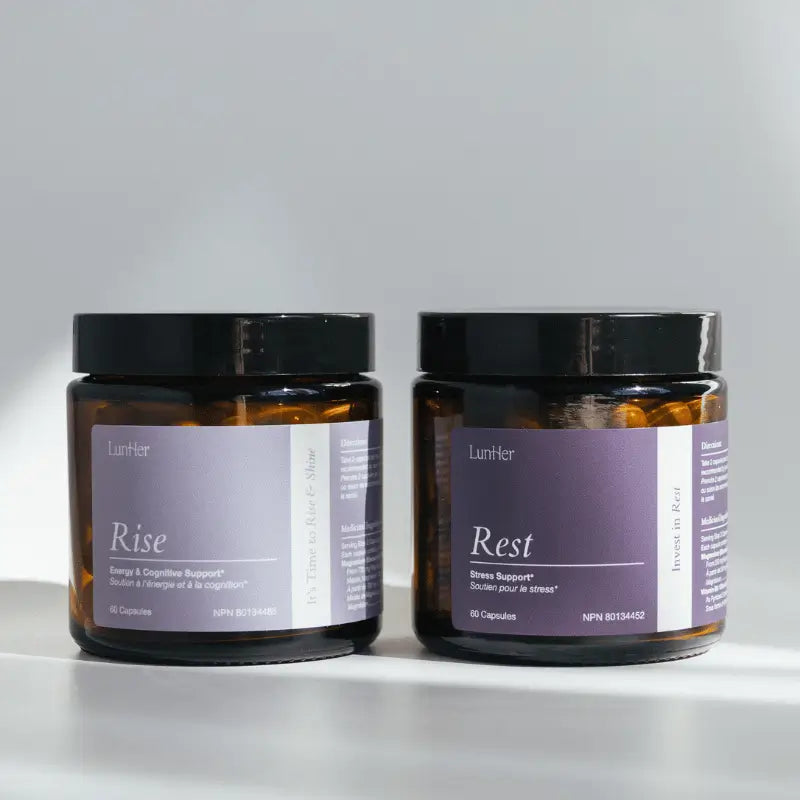
The Daily Ritual Bundle supports the nervous system foundation that gut health depends on →
The information in this article is for general educational purposes only and is not intended to replace consultation with a qualified healthcare professional. Always consult a doctor or naturopath before starting any supplement, particularly if taking medications or managing a health condition. LunHer products are not intended to diagnose, treat, cure, or prevent any disease.