



Article: When to Take Magnesium: Morning, Night, or Both?

When to Take Magnesium: Morning, Night, or Both?
Key takeaways
- Consistency over weeks beats clock time. Magnesium is repletion, not a timed sedative.
- For sleep, evening dosing matches the trials that worked. Expect a calmer transition into sleep, not knockout.
- For energy and stress support, morning with food anchors the habit; the strongest stress trial paired magnesium with B6 daily for eight weeks.
- Splitting doses improves the absorption math and is gentler on digestion. Form matters even more: skip oxide.
- Keep four hours between magnesium and thyroid medication, and take it with food.
You bought the magnesium. Now the bottle just says take two capsules daily, the internet says night, your friend says morning, and somebody on a podcast said it does not matter at all. As usual, the boring answer is closest to true, but the interesting answer is more useful.
Here is both: consistency beats clock time for almost everything magnesium does, and yet the job you are hiring it for genuinely changes the best answer. This piece sorts the timing question by goal, with the trial evidence named, and explains why we ended up splitting magnesium across morning and night ourselves.
Does the time of day actually matter?
Less than the marketing implies, more than zero. Magnesium works by repletion: refilling a mineral your enzymes draw on constantly, which is a weeks-long project where the daily habit matters most. But two real factors pull on timing, namely what the sleep trials actually did, and how absorption behaves as doses grow.
The repletion point comes first because it reframes everything. Magnesium participates in over 600 enzymatic reactions, including the ones producing ATP, the energy currency your cells spend all day (PMID: 25540137). A mineral that fundamental is not a pill you time for an effect an hour later; it is a level you restore and hold. Which is why the honest first rule is: the best time to take magnesium is the time you will actually take it every day.
When should you take magnesium for sleep?
In the evening, because that is what the trials that worked actually did. The randomized studies behind magnesium's sleep evidence dosed it at night: an elderly insomnia trial that improved sleep measures used evening dosing (PMID: 23853635), and a 2025 trial of magnesium bisglycinate taken before bed improved insomnia severity in poor sleepers (PMID: 40918053).
Keep expectations honest though. A meta-analysis of magnesium sleep trials found it shortened time to fall asleep by about 17 minutes without reliably extending total sleep (PMID: 33865376), and the bisglycinate trial saw the clearest benefit in people whose dietary magnesium ran low. Magnesium is not a sedative you time like a sleeping pill; it is a calmer baseline that makes the transition into sleep less of a fight. Whether it helps your sleep at all is its own question, which our guide on magnesium for sleep takes on directly.
When should you take magnesium for energy and stress?
Morning with breakfast is the sensible default, not because your cells check the clock but because energy metabolism runs all day and morning dosing anchors the habit to a meal you rarely skip. The with-food part is doing real work too: it is gentler on your stomach and supports steady absorption.
For stress specifically, the strongest trial gave magnesium daily for eight weeks to severely stressed adults, where pairing it with vitamin B6 outperformed magnesium alone by about 24 percent (PMID: 30562392). Note what that trial varied: the pairing and the persistence, not the hour. Timing is the tiebreaker here, and consistency is the mechanism.
Why split the dose between morning and night?
Because absorption is a percentage game that turns against big single doses. Fractional absorption falls as the dose rises, meaning a large amount taken at once delivers proportionally less than the same total split across the day (PMID: 29123461). Splitting also spreads the digestive load, which is kinder to sensitive stomachs.
Form decides even more than timing, for what it is worth: magnesium oxide showed roughly four percent fractional absorption in a human comparison (PMID: 11794633), while organic forms absorb substantially better across studies (PMID: 16548135). A perfectly timed oxide dose is still mostly a laxative. Our rundown of the types of magnesium sorts the forms properly.
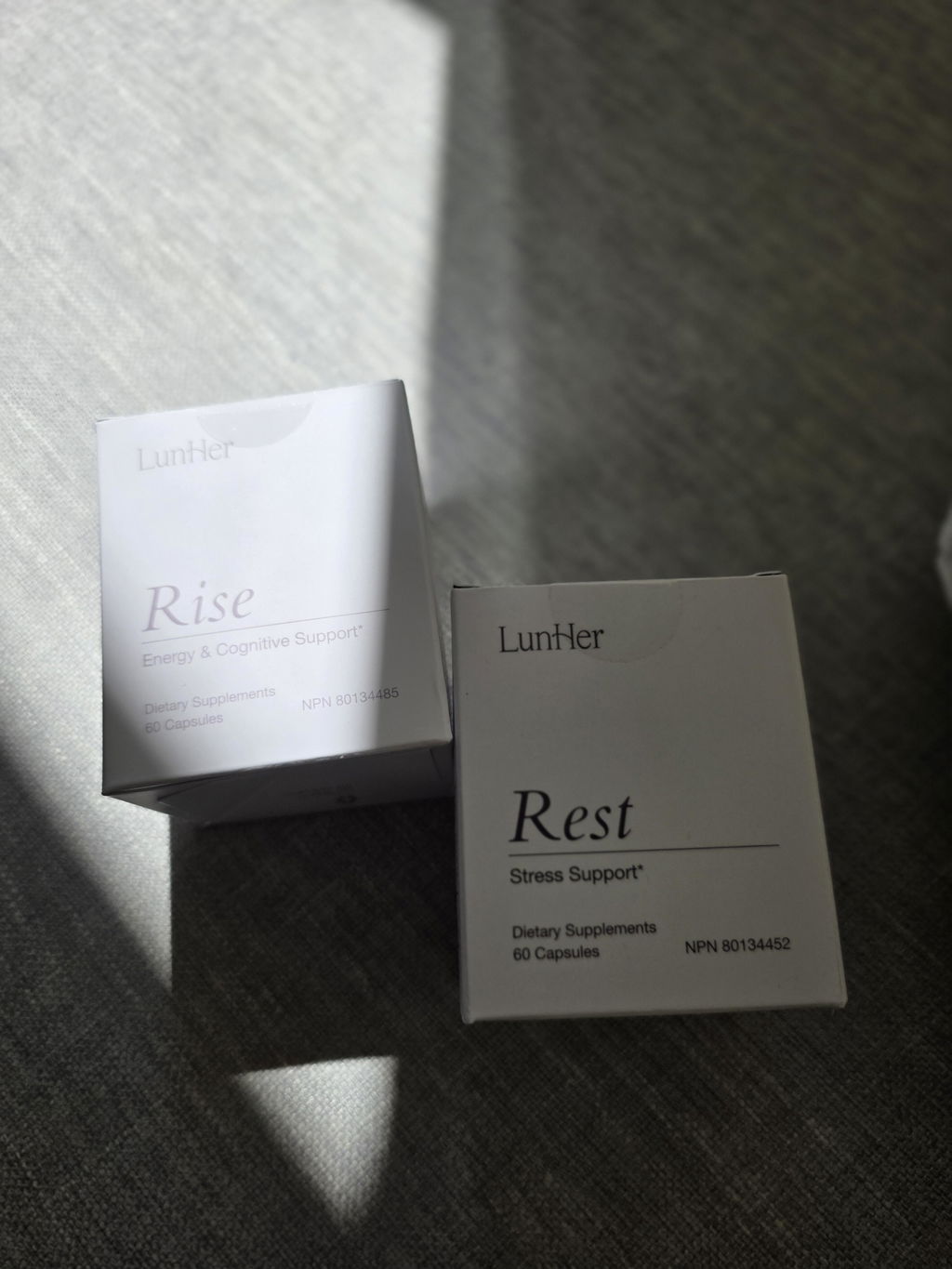
This math is why Rise and Rest split magnesium the way they do: three well-absorbed forms totalling 150 mg elemental in the morning formula, where energy metabolism lives, and 100 mg of bisglycinate an hour before bed, the form with the evening sleep trial behind it. Two moderate doses, two jobs, better arithmetic than one big pile of powder.
What are the practical rules?
Take it with food, take it daily, and give it weeks rather than days, since repletion is gradual and the successful trials ran four to eight. If you get loose stools, split the dose, take it with a bigger meal, or check whether your product is built on oxide, in roughly that order.
Two spacing rules matter. Keep magnesium at least four hours away from thyroid medication, because magnesium can bind levothyroxine in the gut and blunt its absorption; the standard pattern is thyroid pill on waking, magnesium with breakfast later or at night (PMID: 33801406). And count your total across everything you take, since magnesium hides in multis, greens powders, and sleep blends. If your supplement seems to be doing nothing, timing is rarely the culprit; our piece on magnesium absorption walks the likelier suspects.
This article is for general education and is not a substitute for medical advice. If you take prescription medication, confirm timing and interactions with your pharmacist or doctor.