



How to Increase Magnesium Absorption (And Why Your Supplement Might Not Be Working)
Written by Our Editorial Team & Medically Reviewed by Dr. Aisling Lanigan, N.D.
You've been taking magnesium for months. You picked it because everything you read said it would help the sleep, the fog, the tension you're carrying in your shoulders by 4pm.
And nothing much has changed.
Before you decide magnesium doesn't work for you, it's worth asking a different question. Not whether you're taking enough. Whether you're absorbing any of it.
Magnesium is involved in more than 600 enzyme reactions in your body. But how much of what you swallow actually makes it in depends on the form it's in, the dose, what you take it with, and the state of your gut. Get those wrong and you can take magnesium every day for a year and feel very little.
Here's what actually moves the needle.
Key Takeaways
- The form matters more than the number on the label. Magnesium oxide has been measured at around 4% absorption, while organic and chelated forms are absorbed several times better.
- Absorption drops as the dose goes up. Splitting your intake across the day is one of the simplest ways to get more of it in.
- Magnesium and vitamin D depend on each other. The enzymes that activate vitamin D need magnesium to work.
- A blood test usually won't tell you much. Your body pulls magnesium from bone and tissue to keep blood levels looking normal.
- Caffeine, alcohol, and a struggling gut all quietly work against you, which is a familiar combination if you're running on empty.
First, a correction worth making
You'll see it everywhere: "50% of people are magnesium deficient."
That's not quite what the data says, and the difference matters.
What the intake surveys actually show is that a large share of adults consume less magnesium than the recommended amount. Inadequate intake is not the same thing as clinical deficiency. Most people with low intake are not deficient in a medical sense. They're running under-supplied, which is a subtler and more common situation.
Here's the part that's genuinely hard: it's difficult to know where you stand. Less than 1% of your body's magnesium is in your blood. When intake drops, your body pulls magnesium from bone and tissue to keep blood levels steady, which means a standard serum test can look perfectly normal while your stores are quietly draining (NIH Office of Dietary Supplements).
So the practical approach isn't to chase a test result. It's to make sure what you're taking is actually absorbable, and to stop working against it.
The form is the biggest lever
This is where most magnesium supplements quietly fail.
Magnesium has to be bound to something to be stable in a capsule. What it's bound to determines how much of it your body can take up. And the range is not subtle.
Magnesium oxide is the cheapest and by far the most common form on the shelf. It looks great on a label because it carries a lot of elemental magnesium per milligram. The problem is that very little of it gets absorbed. Fractional absorption has been measured as low as around 4% (Firoz & Graber, 2001), and a 2021 systematic review of magnesium supplement bioavailability confirmed the broader pattern: organic forms are absorbed better than inorganic ones (Blancquaert et al., 2021, Nutrition).
Most of what oxide does at typical doses is act as a laxative. If a magnesium supplement has ever sent you straight to the bathroom and done nothing else, this is usually why.
Organic and chelated forms (bisglycinate, malate, taurate, citrate, L-threonate) are more soluble and better absorbed. That same review noted magnesium taurate as one of the more bioavailable forms, and separately, L-threonate is the form studied for its ability to reach the brain.
So the first question isn't "how many milligrams?" It's "what is it bound to?" A label that just says "magnesium (as magnesium oxide) 400 mg" is telling you something important, and it isn't good news.
The part almost nobody talks about: one form can't do every job
Here's where the standard advice stops short.
Choosing a bioavailable form is necessary. It isn't sufficient. Because different forms of magnesium don't just absorb differently, they go to different places and do different things.
- L-threonate is the form studied for crossing the blood-brain barrier, which is why it's associated with cognition and mental clarity.
- Malate feeds into the energy cycle your cells use to make ATP, which is why it's the daytime form.
- Taurate is bound to taurine, which supports nervous system calming.
- Bisglycinate is bound to glycine, which is itself a calming amino acid, making it the most relevant form for sleep and evening recovery.
Now hold that next to how most people take magnesium: one form, one dose, at night.
If you take a single calming form at bedtime, you've supported one job. The daytime work, the energy production, the cognitive support, none of that got covered. And if you take a stimulating combination at night, you've supported the wrong thing at the wrong hour.
This is why the forms of magnesium and what each one actually does is worth understanding before you buy anything.
Split the dose. It's the easiest absorption win there is.
This one is genuinely underrated.
The percentage of magnesium you absorb goes down as the dose goes up. Your gut has a saturable transport system. Load it with a big single dose and a smaller fraction of that dose crosses into your body. Give it a smaller amount twice, and you absorb a greater share of the total (Blancquaert et al., 2021).
So one 400 mg hit at bedtime is, on paper, a worse absorption strategy than two smaller doses spaced across the day. It also happens to line up with how your body actually runs. Your energy and your wind-down are on a 24-hour circadian rhythm, and your magnesium needs are not identical at 8am and 10pm.
Two smaller doses, morning and night, matched to what each part of the day is for. That's not a marketing structure. It's an absorption one.
What else helps (and what quietly works against you)
Pair it with vitamin D, because they need each other. This runs in both directions. Vitamin D supports intestinal magnesium absorption, and magnesium is a required cofactor for the enzymes in your liver and kidneys that activate vitamin D in the first place (Uwitonze & Razzaque, 2018, JAOA). Supplementing vitamin D while low in magnesium is a bit like buying a lock and skipping the key.
Eat the food anyway. Leafy greens, pumpkin seeds, almonds, cashews, black beans, dark chocolate. Food magnesium comes packaged with the cofactors that help you use it. Supplements fill a gap, they don't replace a diet.
Watch the caffeine and the alcohol. Both increase how much magnesium you flush out through urine. This is the loop worth noticing: you're depleted, so you drink more coffee to function and pour a glass of wine to come down, and both of them nudge your magnesium lower. That's the depletion cycle feeding itself.
Mind the gut. Magnesium is absorbed in the intestine, so if digestion is struggling, absorption struggles with it. Fiber helps here. When gut bacteria ferment fiber, the process supports intestinal mineral uptake.
Don't take it with a calcium supplement. They compete for absorption. Space them apart rather than cutting either one.
Stay hydrated. Absorption is a wet process. Water is not optional.
Where Rise and Rest fit
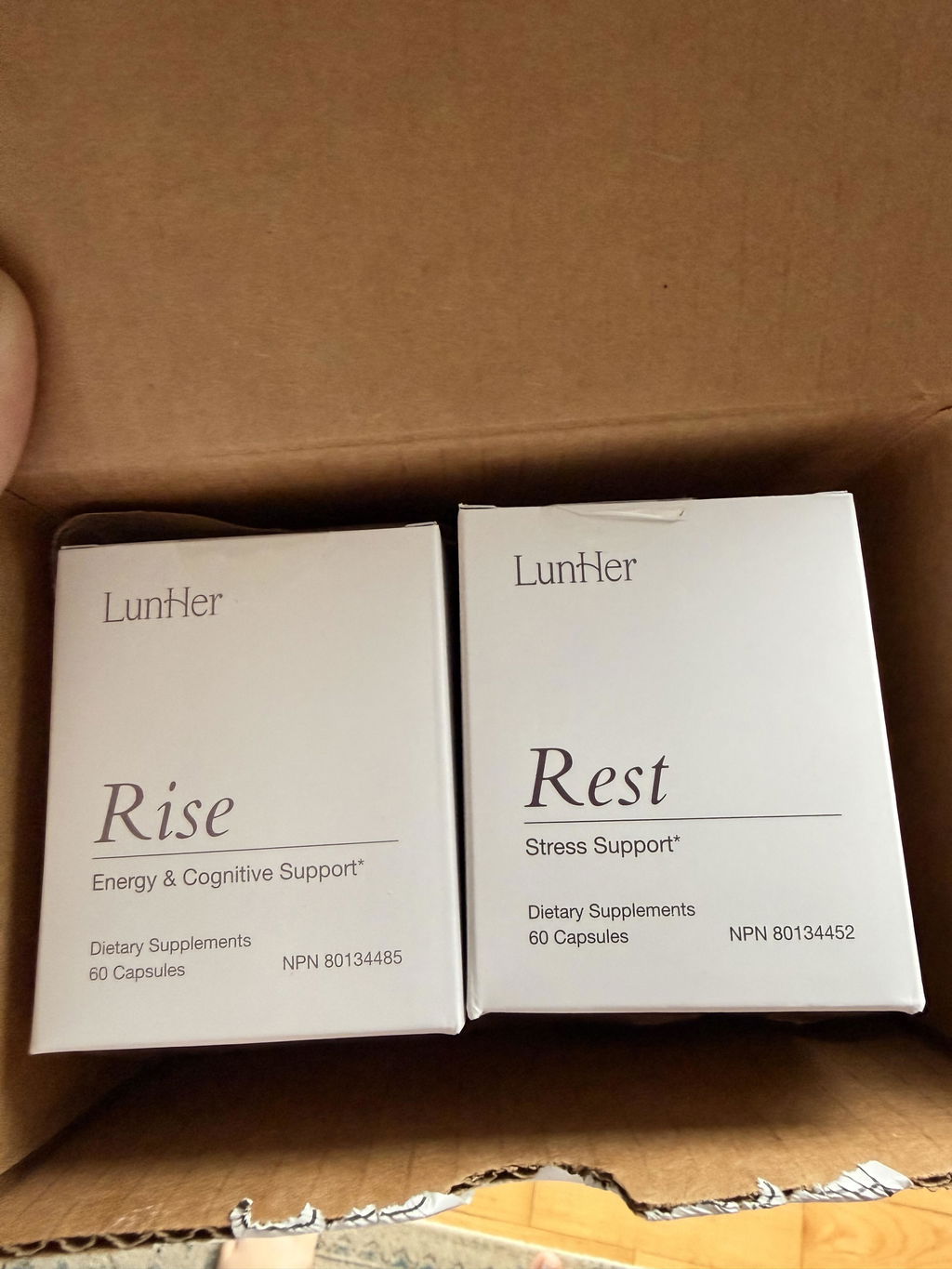
LunHer uses four forms of magnesium, split across two formulas, chosen for what each one does and when your body needs it.
Rise (AM), 150 mg elemental magnesium: L-threonate for cognitive support, malate for cellular energy, taurate for nervous system support. Paired with vitamin D3, which magnesium is required to activate.
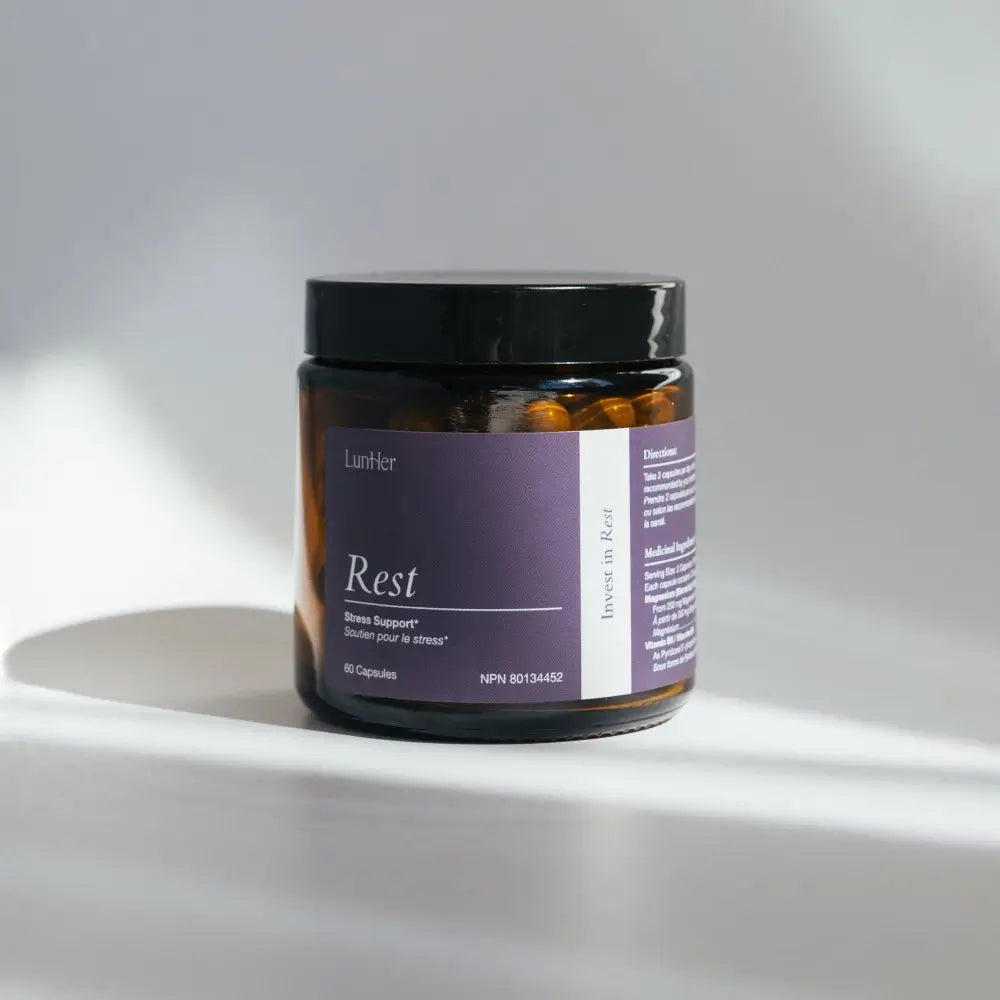
Rest (PM), 100 mg elemental magnesium: bisglycinate, the form most associated with calm and sleep quality, where the glycine it's bound to does work of its own overnight.
No magnesium oxide. Not in either formula. That was a deliberate exclusion, and now you know why.
Two doses, spaced across the day, in forms that absorb, matched to what the morning and the evening are actually for. That's the whole design.
The bottom line
If magnesium hasn't worked for you, the honest first suspect isn't your body. It's the form, the dose, and the timing.
Oxide barely gets in. A single large dose absorbs worse than two smaller ones. One form can't cover cognition, energy, and sleep at the same time. And your coffee, your wine, and your gut are all quietly voting against you.
Fix those, and magnesium gets a fair shot at doing what it's supposed to do.
Four forms. Two moments. One system.
The Daily Ritual Bundle pairs Rise (magnesium L-threonate, malate, and taurate, plus vitamin D3, active B vitamins, CoQ10, and Holy Basil) with Rest (magnesium bisglycinate, L-theanine, and calming botanicals).
No magnesium oxide. No proprietary blends. Every dose published on the label.
In our 8-week observational study, 90% of women reported improved sleep and 87% said they felt like themselves again.
Licensed by Health Canada (Rise NPN 80134486, Rest NPN 80154492). Third-party tested, made in Canada. Backed by a 60-day money-back guarantee.