



Postpartum Insomnia: Why You Can't Sleep Even When the Baby Sleeps
Key takeaways
- Postpartum insomnia is the ability to sleep breaking down, not just the opportunity, and it has real mechanisms: vigilance, hormone withdrawal, and conditioned fragmented sleep.
- Maternal sleep is typically worst around eight weeks postpartum and rebuilds gradually.
- Wide awake while the baby sleeps, plus intrusive worry or low mood, is a flag worth raising with your provider. Sleep and postpartum mood travel together.
- Adapted CBT-I tools work here: a protected handoff window, stimulus control, dim-light wakings, morning daylight.
- Most sleep supplements lack breastfeeding safety data, ours included. We recommend the behavioural lane while nursing, honestly.
It is the cruelest version of tired: you have been desperate for sleep since 6am, the baby finally goes down, the house goes quiet, and your brain lights up like a control tower. You lie there doing the math on how few hours are left, which is its own special kind of awake.
Postpartum insomnia is real, common, and almost never talked about honestly, because everyone assumes new mothers only lack the opportunity to sleep. Plenty of you lack the ability, and that distinction changes what helps. No guilt in this piece, and no perfect-mother advice. Just the mechanisms and the levers.
Why can't you sleep when you finally could?
Three mechanisms stack against you. Your brain is running a vigilance program that monitors for the baby even in silence. Your hormones dropped off a cliff after birth and are still finding a floor. And weeks of fragmented nights have taught your brain that sleep comes in shallow, interruptible pieces rather than long arcs.
The vigilance piece deserves the most compassion, because it is not a malfunction. New-mother brains are tuned to respond to infant sounds, and that tuning does not switch off just because it is your turn to rest. Many women describe hearing phantom cries in the shower or startling awake moments after drifting off. That is a protective system running hot, which is also why the fix is not trying harder to sleep but convincing the system it is safe to stand down for a defined window.
The conditioning piece matters just as much. Sleep is partly a trained behaviour, and months of feed-wake cycles train it apart. Research following mothers from pregnancy through the first year finds sleep is at its worst around eight weeks postpartum and rebuilds gradually rather than all at once (PMID: 26031504).
Is it hormones?
Partly, especially early. Estrogen and progesterone fall steeply after delivery, and both influence sleep systems directly, while night feeds keep cortisol and adrenaline cycling at hours they should be quiet. Thyroid function can also swing in the first postpartum year, and a thyroid check is cheap insurance if sleeplessness comes with palpitations, anxiety, or weight changes.
Hormones are the backdrop rather than the whole story though, which is actually good news, because the trainable parts respond to behavioural tools regardless of what your hormones are doing. If your bigger battle is bone-deep tiredness rather than sleeplessness, our month-by-month guide to postpartum fatigue covers that side, and the broader postpartum stress and sleep guide connects the two.
When is it more than insomnia?
Sleep and mood are entangled in the postpartum year, and the research says so plainly: insomnia symptoms track with anxiety and depression from pregnancy through the postpartum period (PMID: 32496138). One specific pattern is worth taking seriously as a flag rather than a quirk: lying awake unable to sleep while the baby sleeps.
If that pattern comes with intrusive worries you cannot put down, a mood that has gone flat or heavy, dread of the nights, or thoughts that frighten you, tell your provider, and tell them plainly. Postpartum depression and anxiety are common, treatable, and nothing to earn your way out of alone. Asking for that appointment is not an overreaction; it is the competent move.
What actually helps postpartum insomnia?
Adapted versions of the tools from cognitive behavioural therapy for insomnia, which is the best-evidenced treatment for chronic sleeplessness in general (PMID: 26054060). The postpartum adaptations matter: protect one defined handoff window if another adult can take the monitor, even a few nights a week, so your brain gets real evidence that it can stand down.
Then work the conditioning. Use the bed for sleep rather than scrolling feeds about sleep, keep lights dim for night wakings, and if you have been awake more than twenty minutes with the baby down, get up and do something genuinely boring in low light until sleepy, so the bed stops meaning wakeful vigilance. Guard the basics that are actually in reach: caffeine before noon rather than none, daylight exposure in the morning, and the phone charging somewhere that is not your hand. None of this requires the sleep-when-the-baby-sleeps fantasy schedule, and none of it asks you to be a better mother. It retrains a system that adapted exactly as designed.
What about supplements while nursing?
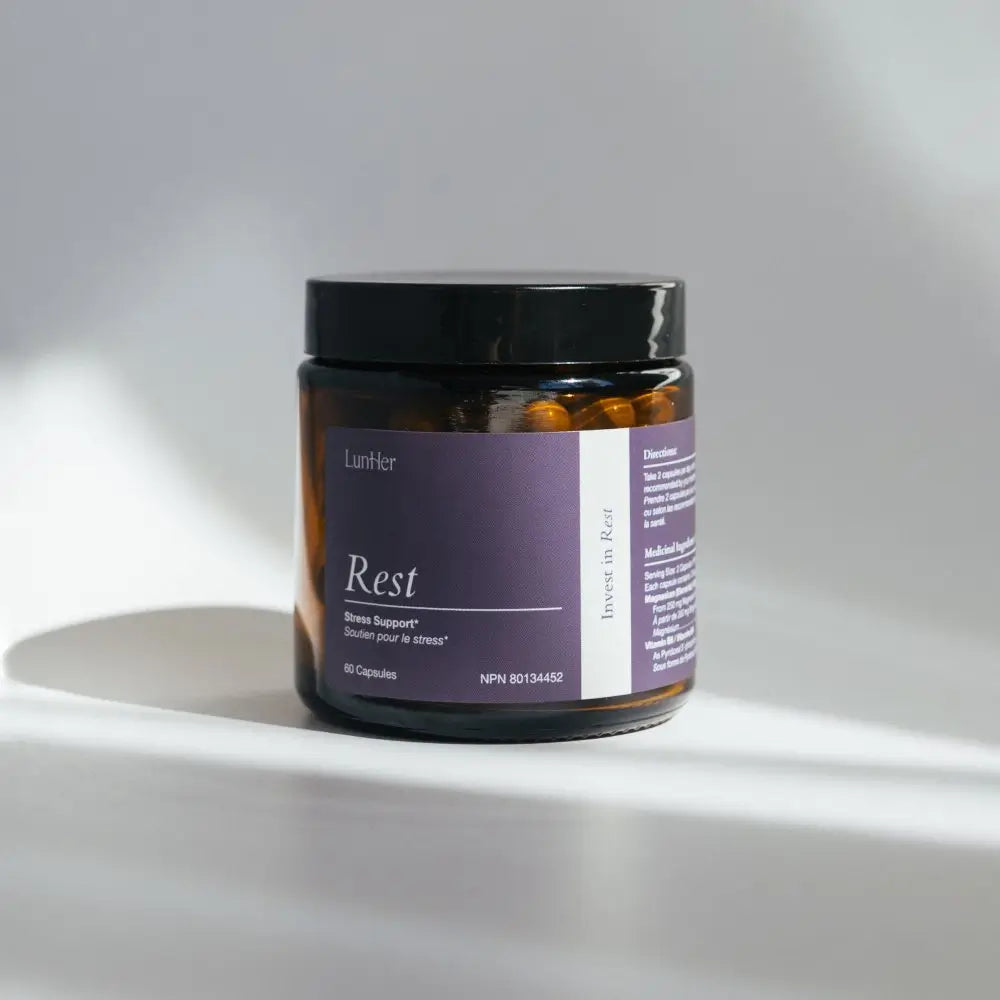
Here is where we will be more careful than most supplement brands, because the honest answer is restraint. Most sleep supplements, botanicals very much included, lack adequate safety data in pregnancy and breastfeeding. That includes our own PM formula, Rest, which we do not recommend while nursing, and we would rather lose the sale than fudge that line.
What is reasonable: continue the prenatal or postnatal vitamin your provider recommends, get vitamin D and iron checked if fatigue is crushing, and run any supplement, including magnesium, past your provider with breastfeeding named explicitly. Later, if and when nursing ends and sleep is still fragile, that is the right moment to look at nervous-system support, and our postpartum recovery guide lays out what that path looks like when the time fits. For now, the behavioural tools above are the evidence-backed lane, and they are more powerful than their gentleness suggests.
This article is for general education and is not a substitute for medical advice. If sleeplessness or your mood is frightening you, contact your healthcare provider, and reach emergency services if you have thoughts of harming yourself or your baby.