


Maximize Your Supplement Benefits: The Complete Guide to Nutrient Absorption
You're taking your vitamins religiously. You invested in high-quality supplements. You never miss a dose. But here's the uncomfortable truth: just because you swallow a vitamin doesn't mean your body actually absorbs and uses it.
The LunHer Take
- Research shows that absorption rates can vary dramatically, from as low as 10% to as high as 90%, depending on factors you have complete control over.
- Understanding how nutrient absorption works and making a few strategic adjustments can dramatically increase how much your body actually benefits from your supplements.
This comprehensive, science-backed guide will show you exactly how to maximize absorption of every nutrient you take, so your investment in your health actually pays off.
Understanding Nutrient Absorption Basics
Before we dive into optimization strategies, let's understand what actually happens when you take a supplement.
The Absorption Journey
When you swallow a vitamin or mineral, it must:
- Survive stomach acid - Some nutrients are destroyed by low pH
- Be released from the capsule/tablet - Poor-quality supplements may not dissolve properly
- Navigate the small intestine - Where most absorption occurs
- Cross the intestinal barrier - Requires specific transport mechanisms
- Enter the bloodstream - Finally available for use by cells
- Reach target tissues - Where they perform their functions
Each step is an opportunity for loss.
According to research published in the Journal of the American College of Nutrition, the bioavailability of nutrients from supplements can range from less than 10% to over 90%, depending on numerous factors including nutrient form, presence of cofactors, and individual digestive health.
What Affects Absorption?
Individual factors:
- Digestive health and gut microbiome composition
- Stomach acid levels (often low postpartum and with aging)
- Presence of digestive enzymes
- Genetic variations (like MTHFR affecting folate metabolism)
- Current nutritional status (deficiencies actually increase absorption)
- Medications that affect gut function
Supplement factors:
- Chemical form of the nutrient (chelated vs. non-chelated, methylated vs. non-methylated)
- Quality of manufacturing
- Presence of absorption enhancers or inhibitors
- Dosage (megadoses often decrease absorption percentage)
- Delivery system (capsule, tablet, liquid, liposomal)
Timing and combination factors:
- Time of day taken
- With or without food
- What foods you eat with supplements
- What other nutrients you take simultaneously
- Your hydration status
Let's break down how to optimize each of these factors.
The Fat-Soluble vs Water-Soluble Difference
Understanding this fundamental distinction is crucial for proper supplementation.
Fat-Soluble Vitamins: A, D, E, K
A study in the American Journal of Clinical Nutrition found that vitamin D absorption increased by 32% when taken with a meal containing fat compared to a fat-free meal.
Optimal absorption:
✓ Take with meals containing at least 10-15g of fat
✓ Vitamin D: Morning or afternoon (can interfere with sleep at night
✓ Never take on empty stomach (absorption drops below 10%)
Water-Soluble Vitamins: B-Complex, Vitamin C
Research in Nutrients demonstrates that B-vitamin absorption is influenced by stomach pH, food matrix, and timing.
Optimal absorption:
✓ Can be taken with or without food (better tolerated with food)
✓ Split large doses - Example: 1000mg vitamin C at once = ~50% absorbed; split into two 500mg doses = ~70% total absorption
✓ B-vitamins in morning - Support daytime energy, can interfere with sleep if taken late
Special note on B12: Only about 1.2 mcg is absorbed per dose via intrinsic factor. This is why B12 supplements contain very high doses (500-1000 mcg) - to compensate for low absorption through passive diffusion (~1% rate).
Why Timing Matters
Your body operates on circadian rhythms that dramatically affect nutrient absorption and utilization. Research demonstrates that nutrient absorption, enzyme production, and metabolic processes vary significantly throughout the day.
Morning optimization (6am-12pm):
- B-vitamins - Support energy when cortisol naturally peaks
- Vitamin D - Mimics natural sun exposure, supports circadian rhythm
- Iron - Stomach acid highest in morning
- CoQ10 - Supports daytime energy production
Evening optimization (6pm-12am):
- Magnesium - Promotes relaxation, supports sleep
- Calcium - Bone remodeling occurs primarily at night
- Vitamin K2 - Works with calcium overnight
- Calming nutrients - L-theanine, botanicals
The problem with "take all at once":
- Nutrients compete for absorption sites
- Saturates transport mechanisms
- Some inhibit others' absorption
A study found that spacing calcium and iron by at least 2 hours increased iron absorption by up to 40%
Form and Bioavailability
Not all supplements are created equal. The chemical form dramatically affects absorption.
Methylated vs. Non-Methylated B Vitamins
Research indicates 40-60% of the population has genetic variations that impair folate metabolism.
Folic acid (synthetic):
- Requires conversion to active form (L-5-MTHF)
- Conversion impaired in many people
- Can build up unused
L-5-MTHF (methylated):
- Already active, no conversion needed
- Immediately bioavailable
- Superior absorption regardless of genetics
Same for B12:
- Cyanocobalamin (synthetic) requires conversion
- Methylcobalamin/Hydroxocobalamin (active) immediately bioavailable
- Methylated forms show superior tissue retention
Look for:
✓ L-5-MTHF or 5-methyltetrahydrofolate (not folic acid)
✓ Methylcobalamin or hydroxocobalamin (not cyanocobalamin)
✓ Pyridoxal-5-phosphate/P-5-P (active B6)
Magnesium comparison:
| Form | Absorption Rate | Notes |
|---|---|---|
| Magnesium oxide | 4-10% | Laxative effect, not recommended |
| Magnesium bisglycinate | 40-50% | Gentle, calming, ideal for sleep |
| Magnesium threonate | Good | Crosses blood-brain barrier |
| Magnesium malate | Good | Energizing, better for daytime |
Choose chelated forms (bisglycinate, glycinate, citrate, malate) over oxides:
✓ 3-5x better absorption
✓ Fewer digestive side effects
✓ Lower doses needed for same effect
Nutrient Synergies and Competition
Synergistic Pairs (Take Together)
- Magnesium required for vitamin D activation
- Work together for bone health, immune function, mood
- D increases calcium absorption
- K2 directs calcium to bones (prevents arterial calcification)
- Enhance each other's function
- Synergistic for neurotransmitter production, sleep
Competitive Pairs (Separate by 2+ Hours)
Calcium + Iron:
- Compete for absorption sites
Calcium + Magnesium (high doses):
- Compete when both in high doses simultaneously
Zinc + Copper:
- High zinc depletes copper over time
- Balance ratio or space timing
The Bottom Line
Absorption is everything. You can take the highest-quality supplements, but without proper timing, food pairing, and bioavailable forms, you're wasting your investment.
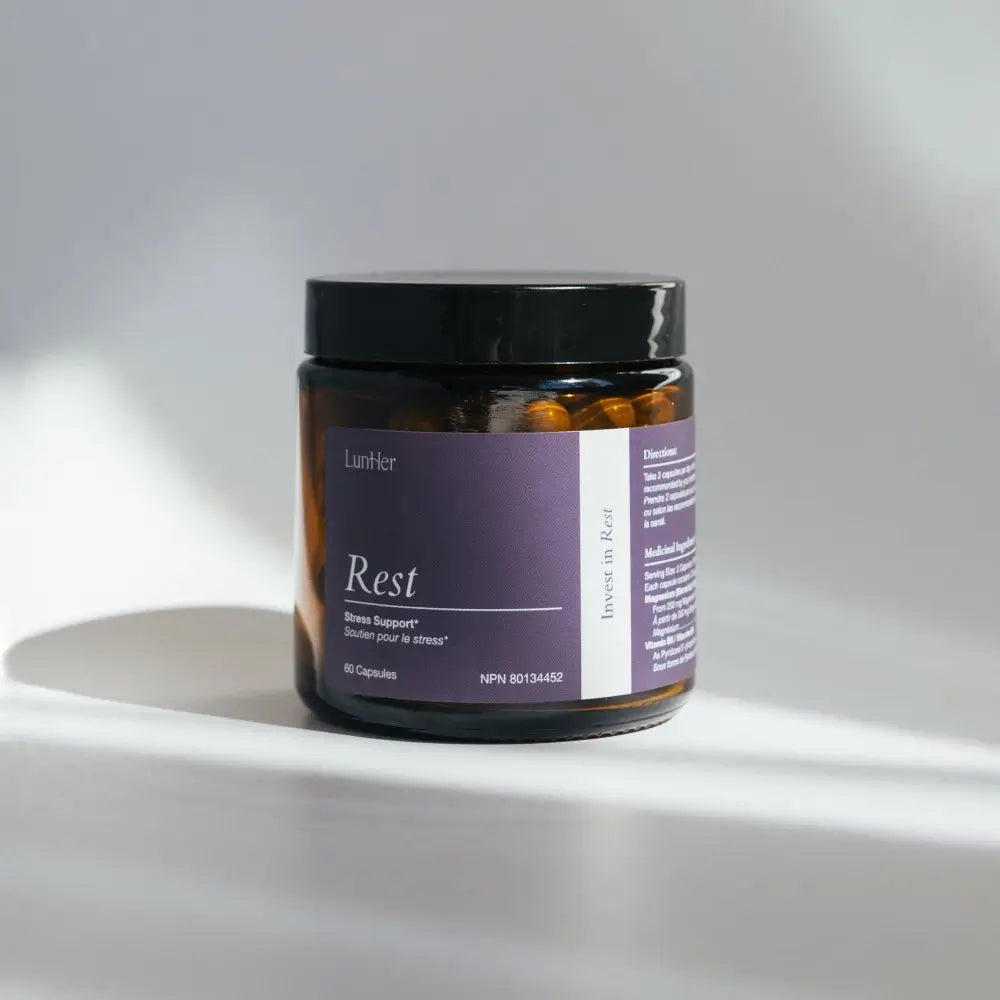
Rest is taken 30–60 minutes before bed. Timed to support melatonin rise and GABA production →
The information in this article is for general educational purposes only and is not intended to replace consultation with a qualified healthcare professional. Always consult a doctor or naturopath before starting any supplement, particularly if taking medications or managing a health condition. LunHer products are not intended to diagnose, treat, cure, or prevent any disease.