
Supplements for Burnout: What Actually Helps Women Running on Empty
Written by Our Editorial Team & Medically Reviewed by Dr. Aisling Lanigan, N.D.
Key takeaways
- Magnesium is the MVP for burnout: it supports over 300 enzyme reactions, calms an overactive nervous system, and improves sleep, but form and timing matter.
- B-vitamins in active, methylated forms fuel energy production and your stress response. Deficiencies directly worsen fatigue and brain fog.
- Adaptogens like holy basil help steady cortisol and build stress resilience over time, without blocking it completely.
- Timing matters: energizing nutrients in the morning, calming nutrients at night, so you work with your circadian rhythm instead of against it.
- Quality is everything: look for clinical doses, bioavailable forms, third-party testing, and a formula built for burnout, not a generic multivitamin.
If you are searching "supplements for burnout" at 2 AM while lying awake exhausted, you are not alone. Burnout does not just make you tired. It steals your focus, fragments your sleep, and leaves you running on empty no matter how much coffee you drink. Before you add another bottle to your cart, it helps to know which supplements for burnout are actually worth taking, and which are just pixie dust on a label.
What are the best supplements for burnout?
The supplements with the most evidence for burnout are magnesium, a full B-complex in active forms, adaptogens like holy basil, CoQ10, and L-theanine. Together they give a depleted nervous system the raw materials to recover: steadier energy by day, calmer sleep at night. None cure burnout on their own, but the right forms and doses genuinely help.
Why does burnout leave you running on empty?
Burnout is biological depletion, not just tiredness. When you live in fight-or-flight, your body burns through magnesium, B-vitamins, and vitamin C to keep making stress hormones, while sleep and cellular energy suffer. Over months, the exact nutrients your nervous system needs to recover are the ones chronic stress drains fastest.
That means:
- Your adrenal glands burn through B-vitamins and vitamin C to produce stress hormones like cortisol and adrenaline
- Magnesium gets depleted because your muscles stay tense and your nervous system is overactive
- Your mitochondria struggle to make cellular energy without enough CoQ10 and B-vitamins
- Sleep suffers because high evening cortisol blocks melatonin, feeding a vicious cycle
The depletion math starts before stress even arrives: analysis of national intake data found roughly half the population consumes less magnesium than required from food (Rosanoff et al., Nutrition Reviews, 2012), and chronic stress raises the demand on exactly these systems. It is like trying to drive on an empty tank while the check-engine light flashes.
Which nutrients does your body actually need to recover from burnout?
Five nutrients carry the most research for burnout recovery: magnesium to calm the nervous system, B-vitamins to rebuild energy production, adaptogens to steady cortisol, CoQ10 to fuel your cells, and L-theanine for calm focus. Form and dose matter far more than the name on the front of the label.
1. Magnesium
If you take only one supplement for burnout, make it magnesium. It is involved in over 300 enzymatic reactions, including energy production, muscle relaxation, and nervous system regulation.
Why it works for burnout:
- Calms your nervous system by supporting neurotransmitters like GABA and serotonin that reduce anxiety
- Improves sleep quality by supporting melatonin production and muscle relaxation
- Supports a steadier stress response by modulating your HPA axis
- Supports energy production by helping activate ATP
A 2017 systematic review found that magnesium supplementation may reduce anxiety and support stress resilience. Other research suggests many adults fall short of magnesium from diet alone, and stress depletes it even faster.
But not all magnesium is created equal. Different forms target different problems.
| Magnesium form | Best for | Why | LunHer |
|---|---|---|---|
| Magnesium threonate | Brain fog, focus, memory | The form best studied for crossing the blood-brain barrier | Found in Rise |
| Magnesium malate | Energy, muscle aches | Supports ATP production for cellular energy | Found in Rise |
| Magnesium taurate | Anxiety, nervous system calm | Calms the nervous system and supports cardiovascular health | Found in Rise |
| Magnesium bisglycinate | Sleep, muscle tension | Highly absorbable, non-laxative, promotes relaxation | 100 mg in Rest |
What to look for:
- Clinical dose: many protocols use 150 to 400 mg of elemental magnesium daily, split AM and PM
- Multiple forms: products with three to four types of magnesium target different burnout symptoms
- Avoid magnesium oxide, which is poorly absorbed and mostly acts as a laxative
A plain-language guide to the different types of magnesium →
2. B-vitamins
Think of B-vitamins as the spark plugs in your energy engine. Without them, your mitochondria cannot convert food into usable energy, which is why B-vitamin shortfalls directly drive fatigue, brain fog, and low mood.
Why they work for burnout:
- B1 (thiamine): helps convert carbs into energy and supports nervous system function
- B2 (riboflavin): powers cellular energy production, especially in brain cells
- B3 (niacin): the precursor to NAD, which hundreds of energy-producing reactions run through
- B5 (pantothenic acid): the precursor to coenzyme A, which energy metabolism and hormone synthesis both depend on
- B6 (P5P): supports the neurotransmitters that regulate mood and sleep
- B12: supports energy, brain function, and the nervous system
A 2018 study found preliminary evidence that B-group supplementation can help reduce oxidative stress. Even mild B-vitamin shortfalls appear to worsen fatigue and cognitive performance.
Pay attention to methylation. Roughly 10 to 15 percent of North Americans carry the MTHFR genotype with meaningfully reduced enzyme activity, and active forms like methylfolate bypass the conversion step for everyone either way, which is the honest version of the argument for them.
What to look for:
- Balanced B-complex: the B-vitamins in real doses, not trace amounts
- Methylated, active forms: especially if you have MTHFR variants or do not respond to standard B-vitamins
- Timed for energy: take in the morning with breakfast
3. Adaptogens
Adaptogens are a class of herbs that help your body adapt to stress. Unlike stimulants, which give a short boost followed by a crash, they work gradually to normalize your stress response and build resilience over time.
Holy basil is the adaptogen we chose, and here is the honest tier: the human evidence is emerging rather than proven. The best modern trial, 100 stressed adults over eight weeks, found reduced perceived stress versus placebo, and we would rather tell you that plainly than call it clinically proven.
Why it works:
- Early trial evidence points at lower perceived stress, with stress-hormone findings still preliminary
- Supports stress resilience through HPA axis function
- Supports mental clarity and eases brain fog
- Offers antioxidant support against chronic stress
A randomized controlled trial found that taking holy basil extract daily for six weeks reduced forgetfulness, exhaustion, and sleep problems.
What to look for:
- Clinical dose: many studies use 100 to 500 mg of standardized extract daily
- Extract ratio: look for 20:1 or higher, concentrated rather than plain powdered leaf
- Take in the morning to support healthy daytime cortisol and energy
Other adaptogens you will see:
| Adaptogen | Often used for | LunHer |
|---|---|---|
| Ashwagandha | Anxiety, sleep, cortisol | Left out on purpose |
| Rhodiola | Physical and mental fatigue, focus | |
| Schisandra | Traditional adaptogen; human trials still limited | 150 mg in Rest |
One note on that list: LunHer deliberately leaves ashwagandha out. A randomized trial shows it measurably moves thyroid hormones, thyroid disease is far more common in women, and there is a documented if uncommon liver-injury signal, which is not a caveat we want inside a daily product. If you want the fuller picture on calming your stress response, here is our guide to supplements to lower cortisol.
4. CoQ10
Coenzyme Q10 is essential for mitochondrial energy production. If your mitochondria are the little power plants in your cells, CoQ10 is part of what keeps them running.
Why it works for burnout:
- Supports ATP production, your body's energy currency
- Offers antioxidant support against the oxidative stress of chronic stress
- Supports physical and mental stamina
- Supports cardiovascular health, which matters because stress taxes your heart
A 2008 study found that CoQ10 supplementation improved subjective fatigue and physical performance during fatigue-inducing trials.
What to look for:
- Clinical dose: many products use 50 to 200 mg daily
- Skip the ubiquinol upsell: a human comparison found ubiquinol and ubiquinone produced comparable blood levels, and formulation plus taking it with fat matter more
- Take with fat: CoQ10 is fat-soluble, so pair it with a breakfast that includes healthy fats
5. L-theanine
L-theanine is an amino acid found in green tea that promotes relaxation without sedation. It suits burnout because it helps you feel calm and focused during the day and supports sleep quality at night.
Why it works:
- Supports calming neurotransmitters like GABA and serotonin without causing drowsiness
- Supports a calmer stress response
- Supports sleep quality by easing racing thoughts
- Supports focus, on its own or alongside a little caffeine
A 2019 study found that 200 mg of L-theanine daily has the potential to support mental health in people with stress-related concerns.
What to look for:
- Clinical dose: 100 to 200 mg, once or twice daily
- Timing: afternoon to ease "wired and tired," or about an hour before bed for sleep support
- Pure L-theanine, not green tea extract, which contains caffeine
How should you combine burnout supplements through the day?
Match nutrients to your circadian rhythm. In the morning, take energizing support: a magnesium blend, B-complex, CoQ10, holy basil, and vitamin D. At night, take calming support: magnesium bisglycinate, B5 and B6, L-theanine, and gentle herbs. AM for steady energy, PM for restorative sleep. Timing is half the work.
Morning stack (energy and focus)
Goal: support a healthy cortisol curve, energy production, and mental clarity.
- Magnesium blend
- B-complex
- CoQ10
- Holy basil extract
- Vitamin D3
Take with breakfast, ideally with some healthy fat for CoQ10 absorption.
Evening stack (calm and recovery)
Goal: calm the nervous system, support sleep quality, and support overnight repair.
- Magnesium bisglycinate
- B5 (pantothenic acid)
- B6 (P5P form)
- L-theanine
- Calming herbal blend
Take 30 to 60 minutes before bed, with or without food.
Your body has natural rhythms: cortisol peaks in the morning for energy and wakefulness, then drops in the evening to allow melatonin and sleep. Morning nutrients support that curve when you need it, and evening nutrients help your body wind down. Fighting those rhythms with poorly timed supplements is like swimming upstream.
What should you look for in a burnout supplement?
Look for clinical doses you can see on the label, not proprietary blends that hide amounts. Choose bioavailable forms: methylated B-vitamins, multiple magnesiums instead of oxide, standardized adaptogen extracts. Check for third-party testing and, in Canada, a Health Canada NPN, which means the product is licensed for safety, quality, and manufacturing standards.
Clinical dosing
Many supplements contain "pixie dust" amounts, just enough to list on the label, not enough to do anything. Compare labels to the clinical doses in this article. A red flag is any proprietary blend that hides individual ingredient amounts.
Bioavailable forms
Your body cannot make good use of cheap, synthetic forms. Look for methylated B-vitamins like methylfolate and methylcobalamin, multiple forms of magnesium rather than oxide, and standardized adaptogen extracts rather than plain powdered herb.
Third-party testing
Reputable brands test for purity, potency, and contaminants like heavy metals and microbes. Look for third-party testing or a Certificate of Analysis available on request.
Health Canada NPN (in Canada)
A Natural Product Number means the product has been reviewed by Health Canada and is licensed for safety, efficacy, and quality. It also signals the manufacturer is following Good Manufacturing Practices. Note that products are licensed by Health Canada, never "approved."
Free from junk
Skip products with artificial colors or flavors, unnecessary fillers, and titanium dioxide. The shorter and more transparent the label, the better.
How long do supplements take to work for burnout?
Give it a full eight weeks. Sleep usually steadies first, in the first week or two, as magnesium and L-theanine take effect. Energy tends to lift around weeks two to four, and stress resilience builds by weeks four to six as adaptogens support a steadier cortisol rhythm. Consistency matters more than any single dose.
| Week | What to expect |
|---|---|
| Week 1 to 2 | Sleep quality often improves first as magnesium and L-theanine take effect. You may notice less muscle tension and falling asleep more easily. |
| Week 2 to 4 | Energy starts to improve as B-vitamins and CoQ10 support cellular energy. You may wake feeling a little less exhausted. |
| Week 4 to 6 | Stress resilience builds as adaptogens support a steadier cortisol rhythm. You may feel less reactive and more focused. |
| Week 6 to 8 | Fuller benefits settle in as your body replenishes what stress depleted. Energy, mood, and sleep should feel noticeably steadier. |
Give any protocol a full eight weeks before deciding whether it works for you. In our 8-week observational study of 40 women (self-reported), 87% said they felt like themselves again and 88% reported improved sleep duration and quality.
Frequently asked questions about supplements for burnout
These are the questions women ask most when they start looking for supplements for burnout: what to take, where to start, and whether any of it is worth it. Short, honest answers below.
What are the best supplements for burnout?
The best-researched supplements for burnout are magnesium, a full B-complex in active forms, adaptogens like holy basil, CoQ10, and L-theanine. Together they support the nervous system, energy production, and sleep that chronic stress depletes. Look for clinical doses and bioavailable forms, and give any protocol a full eight weeks.
What is the single best supplement for burnout?
If you take only one, make it magnesium. It supports over 300 enzyme reactions, calms an overactive nervous system, and improves sleep quality, and chronic stress depletes it faster than almost anything else. Forms matter: glycinate for sleep, threonate for focus, malate for energy. Split it across morning and night.
Which supplements help with burnout recovery specifically?
Burnout recovery needs both daytime and nighttime support. In the morning, magnesium, B-vitamins, CoQ10, and holy basil rebuild energy and steady cortisol. At night, magnesium bisglycinate, L-theanine, and calming herbs help your nervous system wind down and repair. Recovery is gradual, so consistency across eight weeks matters more than any single dose.
Do supplements actually help with burnout, or is it hype?
Supplements will not fix an unsustainable life, and they are not a cure. What they can do is replace the specific nutrients chronic stress drains, so your nervous system has the raw materials to recover. Paired with rest and real change, the right forms and doses genuinely help. Skip anything hiding behind proprietary blends.
How LunHer supports burnout recovery
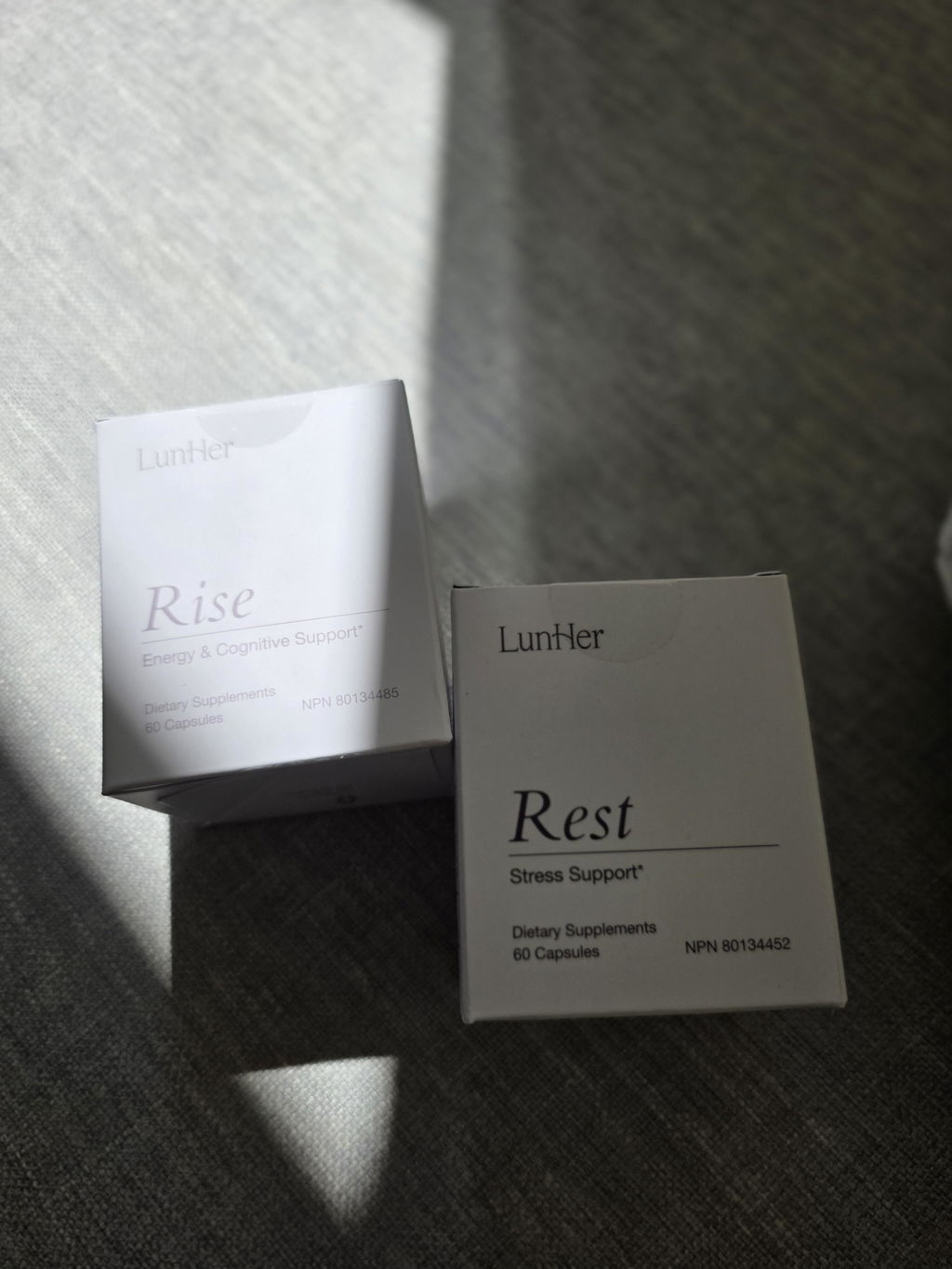
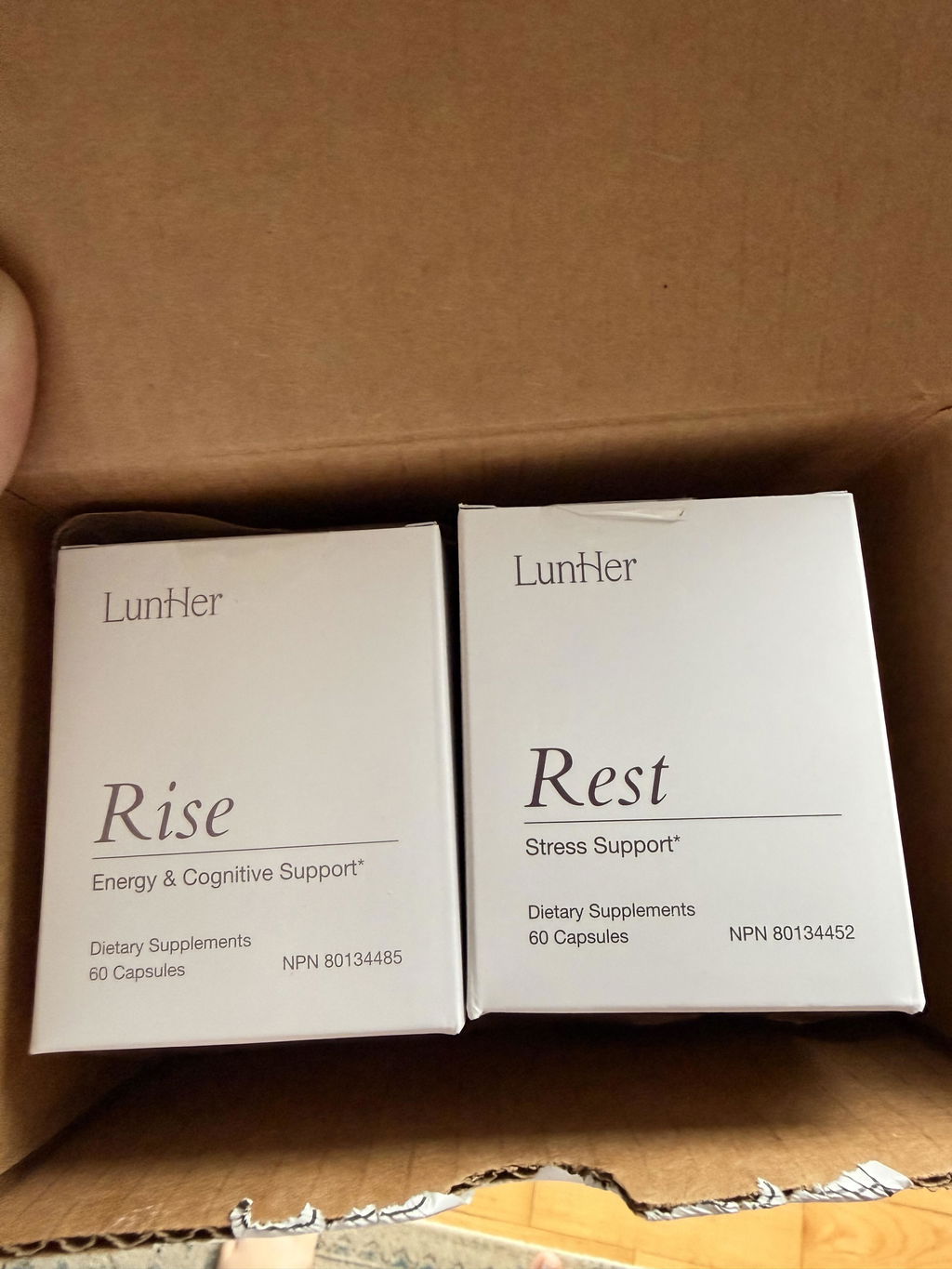
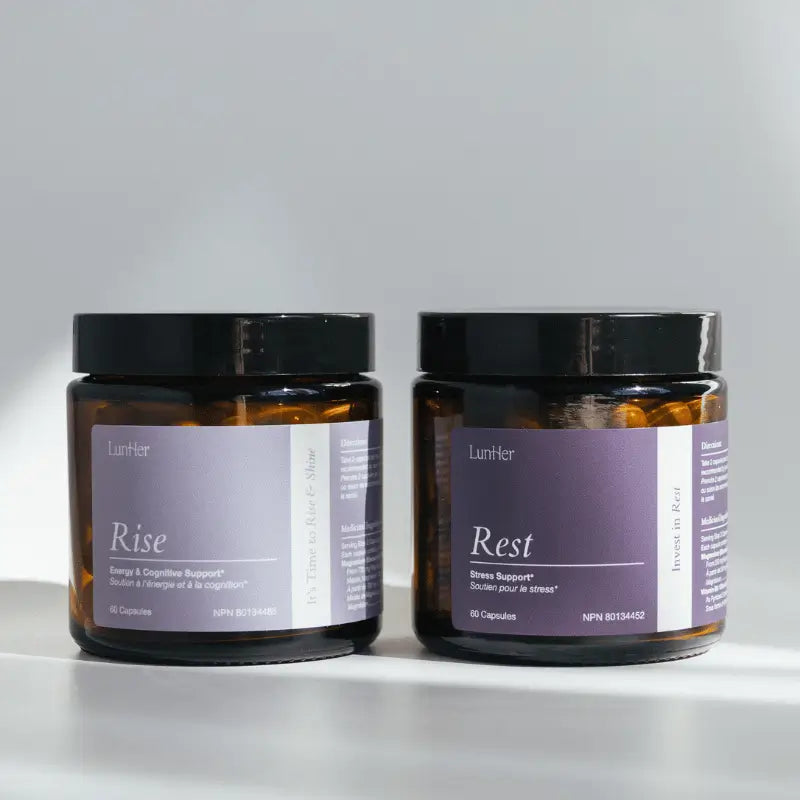
LunHer's Daily Ritual Bundle pairs Rise for the morning and Rest for the night into one system built for women running on empty. Rise supports daytime energy, focus, and a healthy stress response; Rest supports deep sleep and nervous system recovery. In our 8-week study, 87% of women said they felt like themselves again.
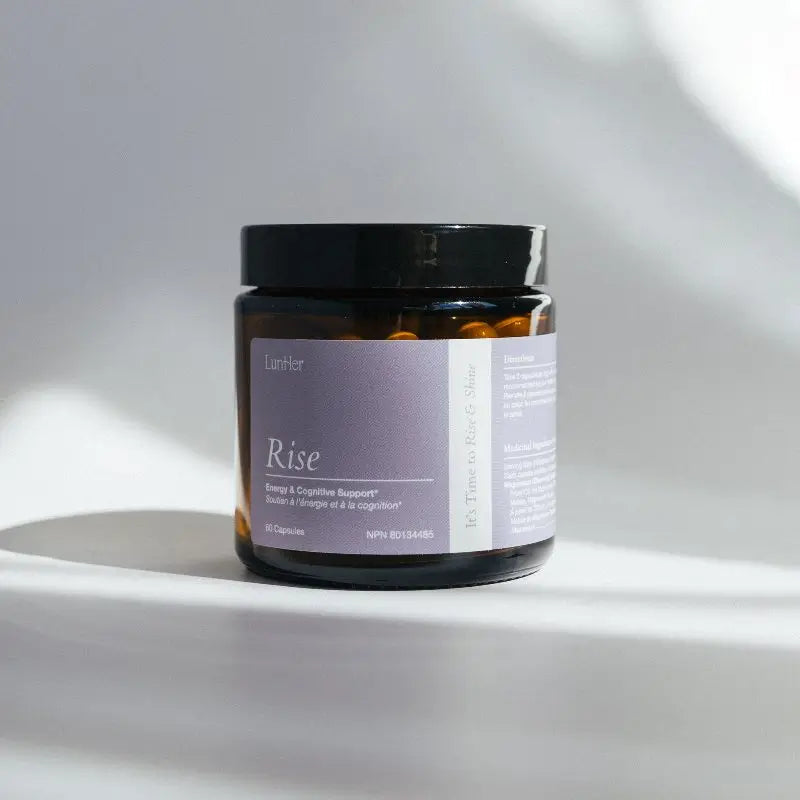
- Rise (AM): four forms of magnesium, methylated B-vitamins, holy basil, CoQ10, and vitamin D for daytime energy and a steady stress response
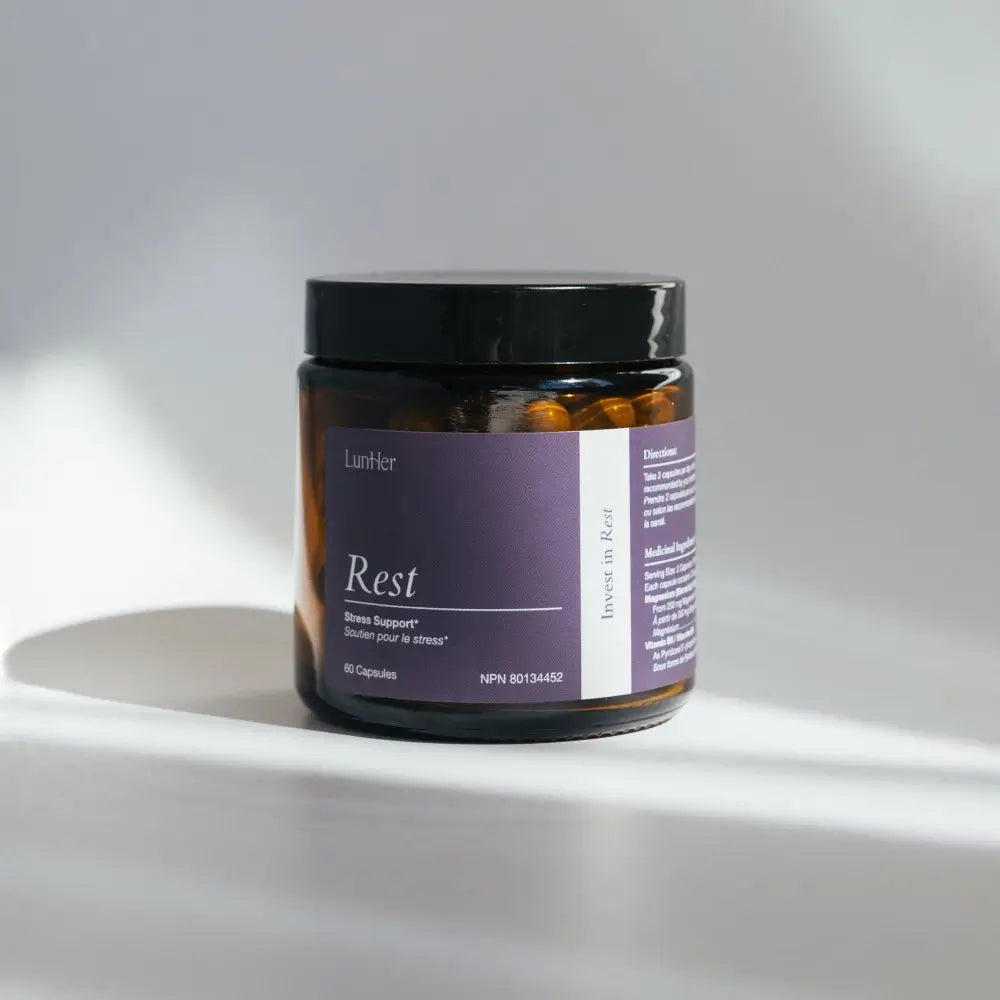
- Rest (PM): magnesium bisglycinate, B5 and B6, L-theanine, and a calming adaptogen blend for deep sleep and nervous system recovery
- Clinical dosing of every ingredient, not pixie-dust amounts
- Licensed by Health Canada and third-party tested
- 60-day money-back guarantee
This is not a generic multivitamin. It is a targeted AM and PM system that works with your circadian rhythm to support energy through the day and deep sleep at night.
Shop the Daily Ritual Bundle →
The information in this article is for general educational purposes only and is not intended to replace consultation with a qualified healthcare professional. Always consult a doctor or naturopath before starting any supplement, particularly if taking medications or managing a health condition. LunHer products are not intended to diagnose, treat, cure, or prevent any disease.