

What Actually Works When You're Running on Empty
Written by Our Editorial Team & Medically Reviewed by Dr. Aisling Lanigan, N.D.
It's 3pm. You've had two coffees and you're eyeing a third, or the can in the fridge with the loud label. You'll get through the afternoon. You always do.
And tomorrow you'll do it again.
If you've searched for a healthier energy drink, you've probably found a list. Swap the can for green tea. Swap it for a mushroom powder. Swap it for coconut water.
Here's the problem with all of that advice. It assumes the issue is which stimulant you're using, when the actual issue is that you're trying to borrow energy you don't have.
Stimulants don't make energy. They hide the fact that you're out of it.
That distinction is the whole thing, and it changes what you should reach for.
Key Takeaways
- Caffeine doesn't create energy. It blocks the signal that tells you you're tired. The tiredness is still there, waiting.
- The debt gets paid back through your sleep. Caffeine taken even six hours before bed measurably reduced total sleep time in a controlled study.
- Swapping caffeine for a different stimulating ingredient keeps you in the same loop. It's a substitution, not a solution.
- What actually rebuilds energy is unglamorous: the cofactors your cells need to make ATP, and sleep that's deep enough to matter.
- You don't need to quit coffee. You need to stop asking it to do a job it can't do.
What an energy drink is actually doing
All day, a molecule called adenosine builds up in your brain. It's your fatigue signal, and it's supposed to accumulate. It's how your body keeps score of how long you've been awake and how hard you've been running.
Caffeine works by sitting in the receptors where adenosine would normally bind. The adenosine is still there. It's still building. You just can't feel it.
That's the trick, and it's a good one for about four hours. Then the caffeine clears, the adenosine floods back into the receptors it was locked out of, and you feel every hour of the day at once. That's the crash. It isn't a side effect. It's the bill.
Add sugar to that and you're stacking a blood sugar spike on top of a receptor block, which is why energy drinks in particular produce that sharp lift and hard drop.
None of this is a moral failing. It's pharmacology. But it means the can was never giving you anything. It was deferring something.
The loop that keeps you here
Here's the part that matters most if you're already depleted.
In a controlled study, participants took 400 mg of caffeine at bedtime, three hours before bed, and six hours before bed. All three timings significantly disrupted sleep compared to placebo, including the six-hour one, and participants often didn't notice.
Six hours. That means the coffee you drink at 3pm to survive the afternoon is still shortening the sleep you get at 9pm. And you probably can't feel it happening.
So the loop closes:
You're exhausted, so you reach for caffeine. The caffeine degrades your sleep. The bad sleep leaves you more depleted. The deeper depletion means you need more caffeine tomorrow.
Every turn of that wheel digs the hole slightly deeper. It's the same depletion cycle that brought you to this article, and caffeine is quietly one of its engines.
Why swapping one stimulant for another doesn't fix it
Most "healthy energy drink alternative" lists just hand you a different push.
Rhodiola, ginseng, cordyceps, matcha, black tea, kombucha. Some of these are fine, and a few have decent evidence behind them. But look at what the list is doing. It's still answering the question "what can I take to feel more alert right now?"
That's the same question the energy drink was answering. The ingredient changed. The strategy didn't.
And one ingredient on nearly every list is worth calling out. Ashwagandha appears in almost every natural energy roundup, and we deliberately left it out of our formulas. The concern is long-term daily use: it can affect thyroid function and cortisol regulation over time, which makes it a poor fit for something you take every day for years. It's the kind of thing you find when you read the research on your own ingredients instead of copying the category.
Stimulation has a place. If you're depleted, it isn't the first place.
What actually rebuilds energy: cofactors, not stimulants
Here's the reframe that changes everything.
Your body doesn't get energy from stimulants. It makes energy, constantly, inside your cells, by converting food into ATP. That process is a production line, and it needs specific tools to run.
Those tools are the cofactors. And unlike caffeine, they don't push you. They enable you.
B vitamins are the clearest example. B1, B2, B3, B5, B6, and B12 are all required at different steps of the pathway that turns what you eat into usable cellular energy. They aren't stimulating. They're structural. When they're in short supply, the production line runs slower, and that shows up as exactly the fatigue and brain fog you're trying to caffeinate away (Tardy et al., 2020, Nutrients).
Magnesium is required for ATP to function at all. ATP is biologically active as a magnesium complex, which means the energy currency of every cell in your body literally needs magnesium to be spendable. Same review, same conclusion: it's a recognized player in fatigue.
CoQ10 sits in the electron transport chain inside your mitochondria, the final step where most of your ATP is actually generated.
None of these will make you feel anything in twenty minutes. That's not a flaw. That's the difference between refilling a tank and pressing harder on the accelerator of an empty one.
The forms matter too, which is a longer conversation covered in why methylated B vitamins matter and how to actually absorb magnesium.
Adaptogens that steady rather than push
Not every botanical is a stimulant.
Holy Basil (Ocimum tenuiflorum) is an adaptogen studied for stress rather than stimulation. In a randomized, double-blind, placebo-controlled trial in adults experiencing stress, a holy basil extract was associated with improvements in stress, mood, and sleep.
That's the category worth reaching for when you're depleted. Something that supports how your body handles the load, not something that whips it forward.
The unglamorous answer nobody wants
Sleep.
Sleep is the actual energy intervention, and it's the one every listicle skips because you can't sell it in a can.
The mechanism is simple enough to hold in one breath. Sleep supports cortisol. Cortisol supports energy. Energy supports focus. When your sleep is fragmented or unrefreshing, that chain breaks at the first link, and no amount of afternoon caffeine repairs it. It just borrows against tomorrow night.
This is why real recovery looks backwards at first. You fix the nights before you feel the days. Sleep steadies well before energy does, and the gap between those two things is where most people give up.
If you want the sequence, it's in how your circadian rhythm runs your sleep and energy.
You don't have to quit coffee
Let's be honest about the realistic version of this.
Nobody running on empty with a full day ahead is going to give up coffee because a supplement brand suggested it. We're not going to pretend otherwise.
So here's the useful advice instead:
- Keep the coffee. Move it earlier. Six hours before bed is the evidence-backed cutoff. For most people that means done by early afternoon.
- Don't lead with it on an empty stomach. Food first, then coffee, gives you a steadier line.
- Stop asking it to fill a gap it can't fill. Coffee is a nice thing you enjoy. It's not a nutrition strategy, and treating it as one is what turns two cups into five.
- Fix the supply, not the signal. Cofactors and sleep, running underneath, while the coffee stays a pleasure instead of a crutch.
That's it. No shame, no detox, no 30-day reset.
Where Rise fits
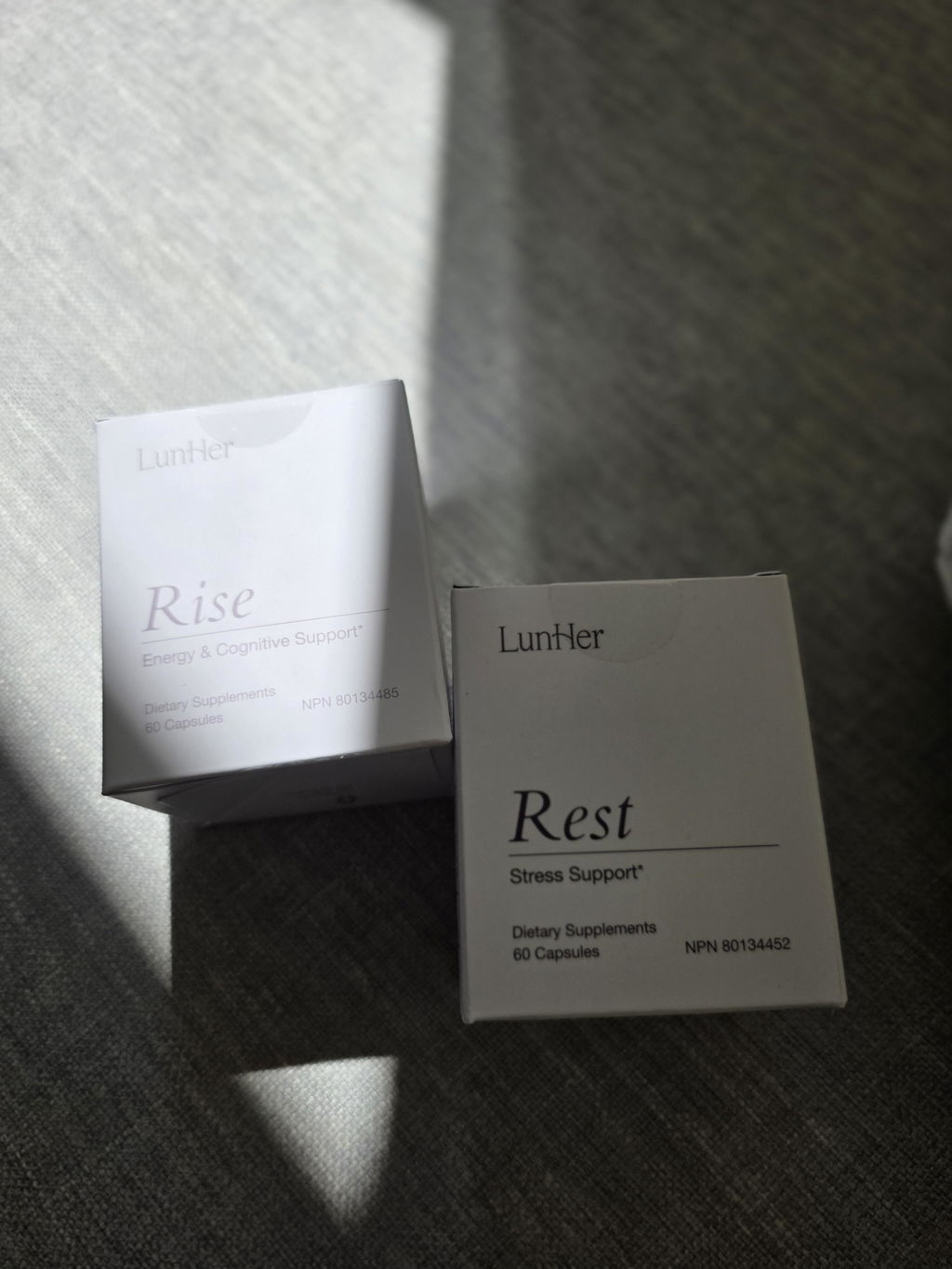
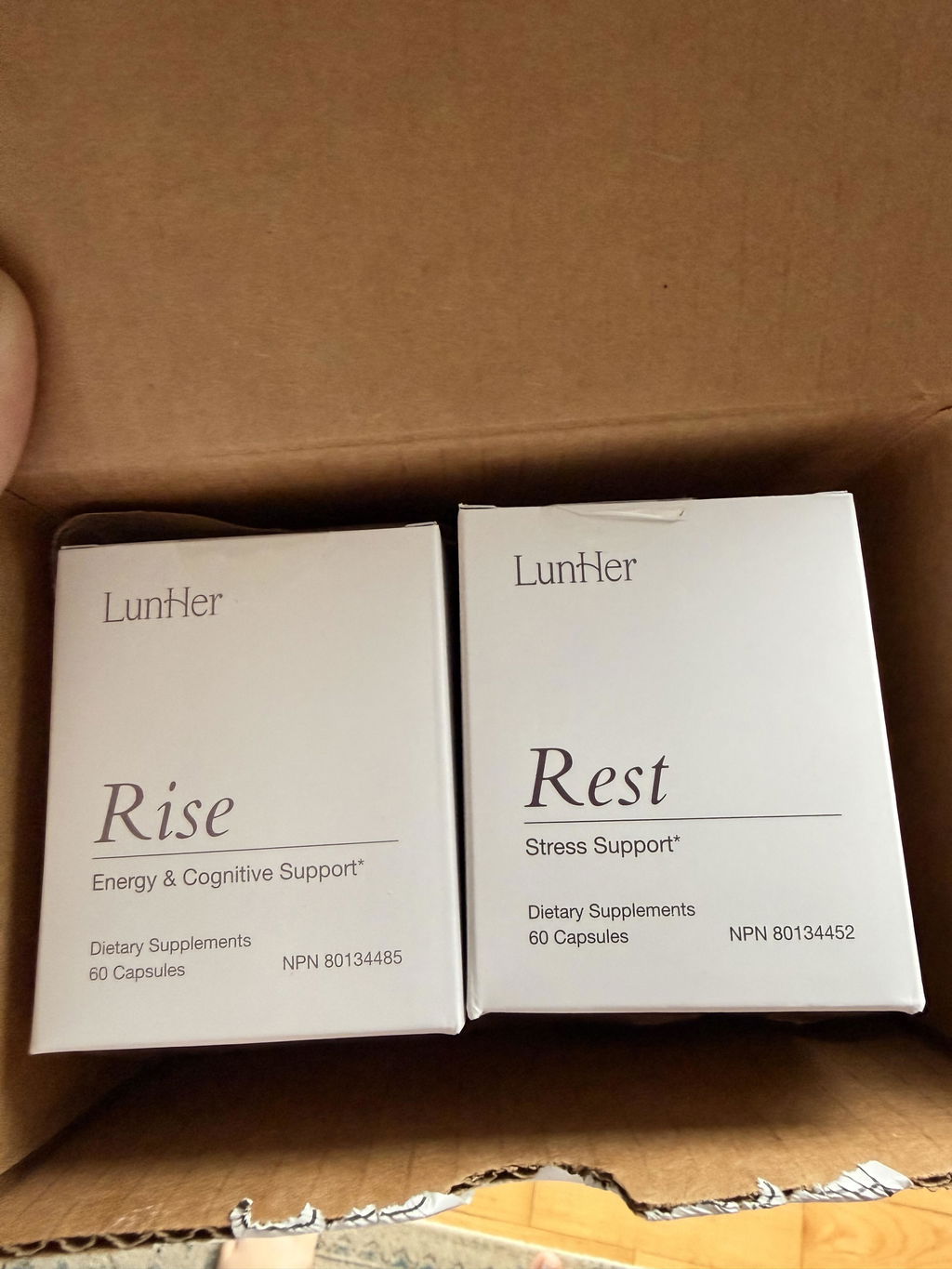
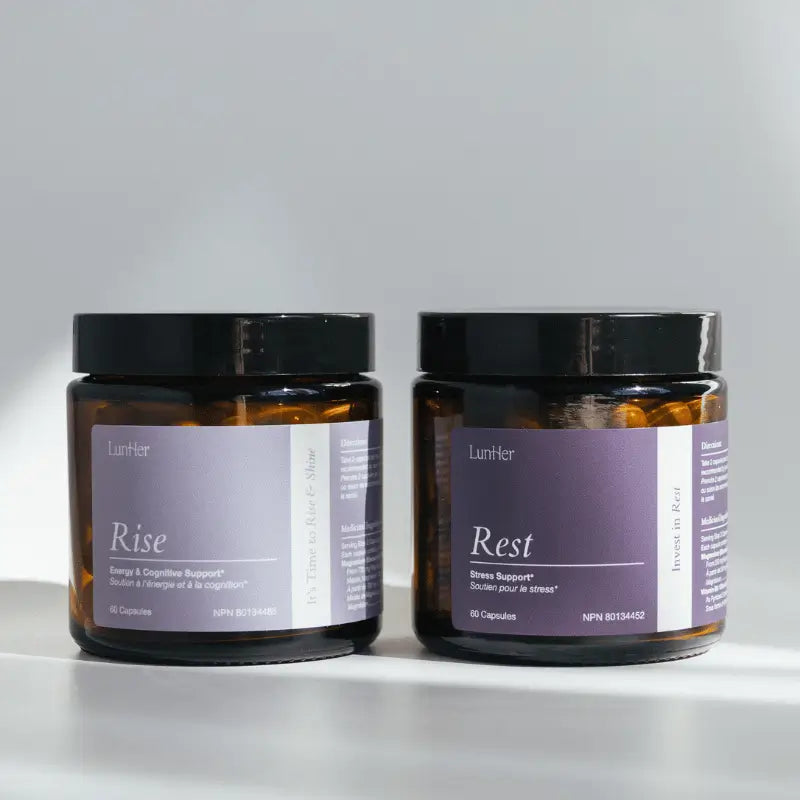
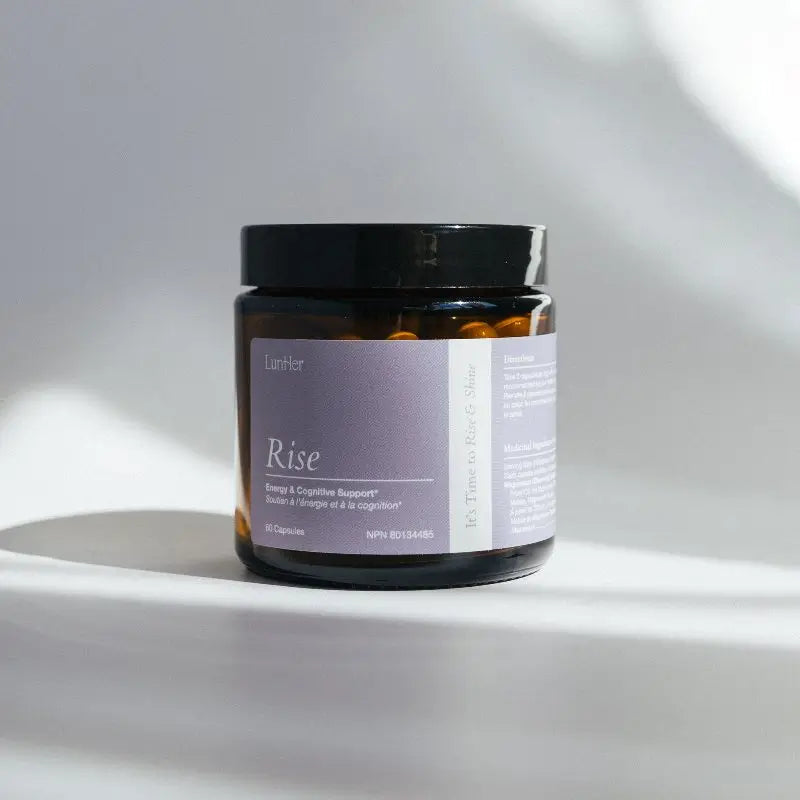
Rise is caffeine-free by design. It doesn't push you. It supplies the things your cells use to make energy themselves.
- Four B vitamins in active forms plus B12 (riboflavin-5-phosphate, P5P, thiamine, pantothenic acid, and hydroxocobalamin with cobamamide), the cofactors your ATP pathway actually runs on
- 150 mg of magnesium across three forms: L-threonate, malate, and taurate
- CoQ10, 50 mg, for mitochondrial energy production
- Holy Basil, an adaptogen that supports stress resilience rather than stimulating you
- Vitamin D3, which magnesium is required to activate
No caffeine. No sugar. No crash, because there's nothing to crash from.
The bottom line
An energy drink doesn't give you energy. It blocks the signal telling you that you don't have any, and it charges the difference to your sleep.
Swapping it for a different stimulating ingredient just changes the label on the loan.
The way out is slower and far less exciting: give your cells the cofactors they need to make energy, protect the sleep that rebuilds it, and let the coffee go back to being a nice thing you drink in the morning rather than the thing holding the day together.
You're not looking for a better boost. You're looking for a tank that isn't empty.
Energy without the borrowing
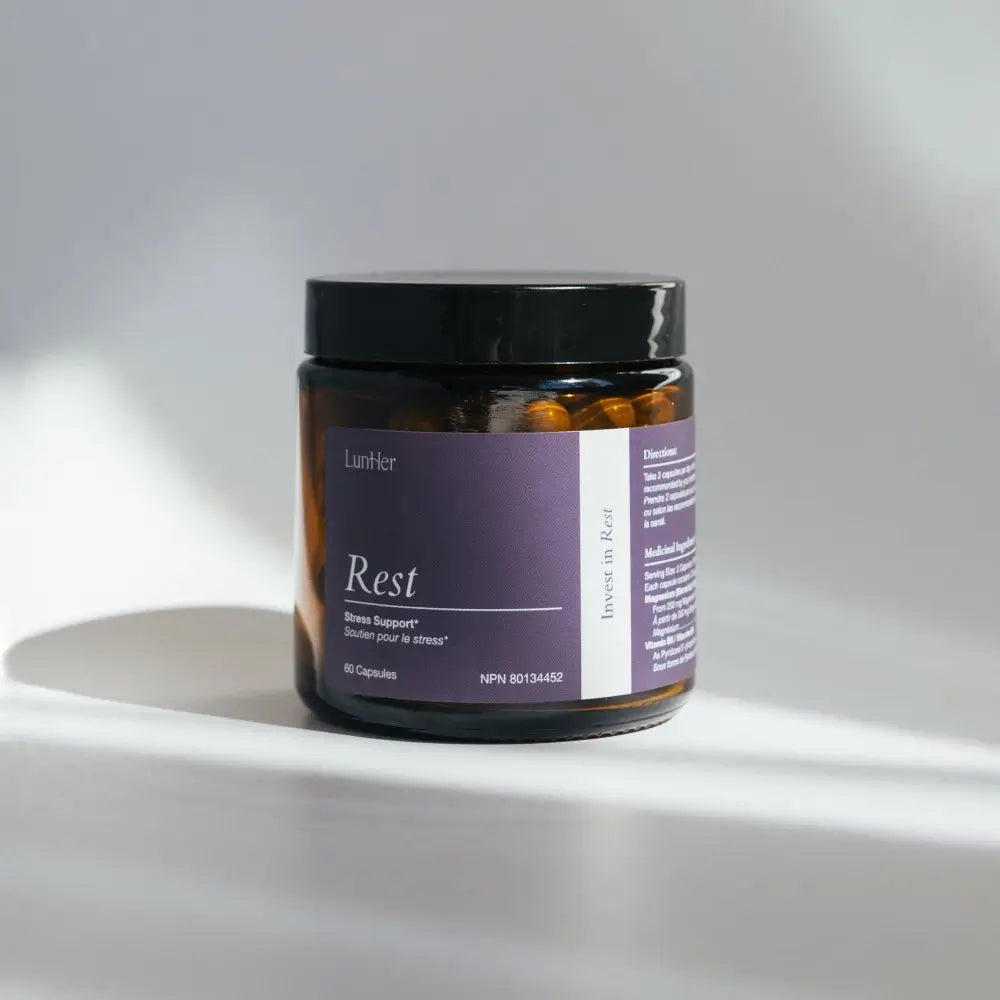
Rise is the caffeine-free morning formula in the Daily Ritual Bundle: active B vitamins, three forms of magnesium, CoQ10, vitamin D3, and Holy Basil. Paired with Rest at night, because energy is built while you sleep.
In our 8-week observational study, 93% reported improvement in energy and sleep, and 87% said they felt like themselves again.
Licensed by Health Canada (Rise NPN 80134486, Rest NPN 80154492). Third-party tested, made in Canada. Backed by a 60-day money-back guarantee.