
Why You're Still Exhausted After 8 Hours of Sleep
Written by Our Editorial Team & Medically Reviewed by Dr. Aisling Lanigan, N.D.
You went to bed at a reasonable hour. You were in bed for eight hours. You did everything right.
And you woke up feeling like you'd been hit by a truck.
Most sleep advice assumes your problem is that you're not getting enough hours. Go to bed earlier. Fix your schedule. Take something to fall asleep faster.
But that isn't the problem for a lot of depleted women, and it's probably not yours. You're getting the hours. You're just not getting anything back from them.
That's a different problem than sleep deprivation, and it needs a different answer.
Key Takeaways
- Sleep quantity and sleep quality are not the same thing. You can spend eight hours in bed and still be under-restored.
- The restoration happens in specific stages. When sleep is fragmented, you lose the deep stages even if the total hours look fine.
- Sleep disturbance, not just short sleep, is enough to drive the same downstream effects: fog, a stressed nervous system, and low-grade inflammation.
- Melatonin is a timing signal. Research shows it helps you fall asleep about seven minutes faster on average. It's not built to stop you waking at 3am.
- The goal isn't falling asleep faster. It's staying down and waking up restored.
Sleep debt and unrefreshing sleep are two different problems
Sleep deprivation is a quantity problem. You're not in bed long enough. The fix is more hours, and it's fairly simple even when it isn't easy.
Unrefreshing sleep is a quality problem. You're in bed plenty long. But the sleep you're getting is light, broken, or shallow, so you surface in the morning without having been restored.
The second one is far more common in burnout, and far more frustrating, because on paper you're doing everything right. There's no obvious thing to fix. You just feel terrible and can't point to why.
Here's what that usually looks like:
- You fall asleep fine, then wake at 2 or 3am and can't get back down
- You wake several times a night without fully remembering it
- You sleep straight through and still wake up exhausted
If any of those are yours, more hours in bed won't solve it. You'd just be spending longer in shallow sleep.
What your body is supposed to be doing while you're out
Sleep isn't one thing. It's a cycle your body moves through several times a night, and the different stages do different jobs.
Deep sleep (slow-wave sleep) is the physical restoration shift. It's when tissue repair happens, when growth hormone is released, and when the heaviest lifting of recovery gets done. It's also front-loaded, concentrated in the first half of the night.
REM sleep is the processing shift. It's where memory gets consolidated and emotional experience gets filed. It clusters toward the second half of the night, which is why waking at 4am repeatedly costs you disproportionately.
Both matter. And here's the key point: fragmented sleep costs you the deep stages first. Every time you surface, even briefly, even without remembering it, you drop back to a lighter stage and have to climb again. Eight broken hours can deliver far less deep sleep than seven solid ones.
Which is exactly why the hours on your sleep tracker can look respectable while you feel like you haven't slept at all.
What breaks when the sleep is shallow
The fog
Memory consolidation is a sleep process. So is the housekeeping that clears out the day's metabolic waste. When sleep is shallow or broken, that work doesn't fully finish, and you wake up with the specific quality of fog you know well: words that won't come, the sense of reading the same email four times, a brain that feels like it's running through wet sand.
That fog isn't a character flaw or an age thing. It's an unfinished night.
The stress loop
This is the engine.
When you're stressed, cortisol stays elevated when it should be dropping in the evening. That elevated cortisol fragments your sleep. The fragmented sleep leaves your nervous system less resourced to handle stress the next day. Which raises cortisol further.
Round and round. Each turn slightly worse than the last. This is the nervous system depletion cycle, and poor sleep is both a symptom of it and the thing that keeps it turning.
The energy that never arrives
Your energy the next day is largely built the night before. The chain runs in one direction, and it's worth memorizing.
Sleep supports cortisol. Cortisol supports energy. Energy supports focus.
Break the first link and every link after it goes. Which is why no amount of coffee genuinely fixes a bad night. It just masks it and charges the difference to tomorrow. (More on that in energy drink alternatives that actually work.)
The inflammation nobody mentions
This is the part that gets left out of most articles, and it's the one that matters most for your argument with yourself about whether this is a big deal.
In a major review of sleep and immune function, researchers noted that sleep deficiency in the form of sleep disturbance, not only short sleep duration, appears to trigger low-grade inflammation.
Read that again, because it's the whole point of this article. Disturbed sleep counts. You don't get a pass because the hours added up. If the sleep was broken, your body registers it.
Why melatonin usually isn't the answer here
If your sleep is bad, melatonin is the obvious thing to reach for. It's everywhere, it's cheap, and it's in almost every sleep gummy on the shelf.
But look at what it actually does.
Melatonin is a timing signal. Its job is to tell your body that night has arrived. It's genuinely useful for that: jet lag, shift work, a body clock that's drifted late.
What it isn't is a depth agent.
A meta-analysis of 19 randomized placebo-controlled trials found melatonin helped people fall asleep about 7 minutes faster and increased total sleep time by about 8 minutes. The authors were direct about the size of the effect: modest. And notably, the increase in total sleep time showed up on subjective measures only. When sleep was measured objectively, melatonin did not increase sleep time.
So now line that up against your actual problem.
If you fall asleep fine and wake at 3am, melatonin is aimed at a symptom you don't have. Seven minutes of faster sleep onset does nothing for the two hours you spend staring at the ceiling at 3:15.
There's a second reason we left it out. Melatonin is a hormone your body already makes. Supplying it from outside, every night, indefinitely, can signal your body to produce less of its own. That's a trade worth making for a week of jet lag. It's a poor one for a nightly ritual you intend to keep for years.
That's why there's no melatonin in Rest.
What actually supports deeper sleep
The goal shifts once you understand the problem. You're not trying to knock yourself out faster. You're trying to help your nervous system settle enough to stay down and go deep.
Magnesium bisglycinate. In a randomized, placebo-controlled trial in 155 adults with self-reported poor sleep, magnesium bisglycinate produced a small but statistically significant improvement in insomnia severity, with most of the change appearing within the first two weeks. Bisglycinate is bound to glycine, a calming amino acid that does work of its own overnight.
L-theanine. In a randomized, placebo-controlled crossover trial, 200 mg daily of L-theanine improved sleep quality scores and reduced stress-related symptoms in healthy adults.
Supporting your own melatonin pathway instead of replacing it. Your body makes melatonin from serotonin, and serotonin from tryptophan, and vitamin B6 in its active form is a cofactor in that conversion. Supporting the pathway is a different strategy than overriding it, and it's the one that doesn't ask your body to stop doing its job.
Calming botanicals. Passionflower, chamomile, and schisandra support relaxation and the wind-down rather than sedating you.
And the unglamorous foundations still apply: a consistent wake time, morning light, caffeine done by early afternoon, a cool dark room. Your circadian rhythm sets the stage that everything else plays on.
Where Rest fits
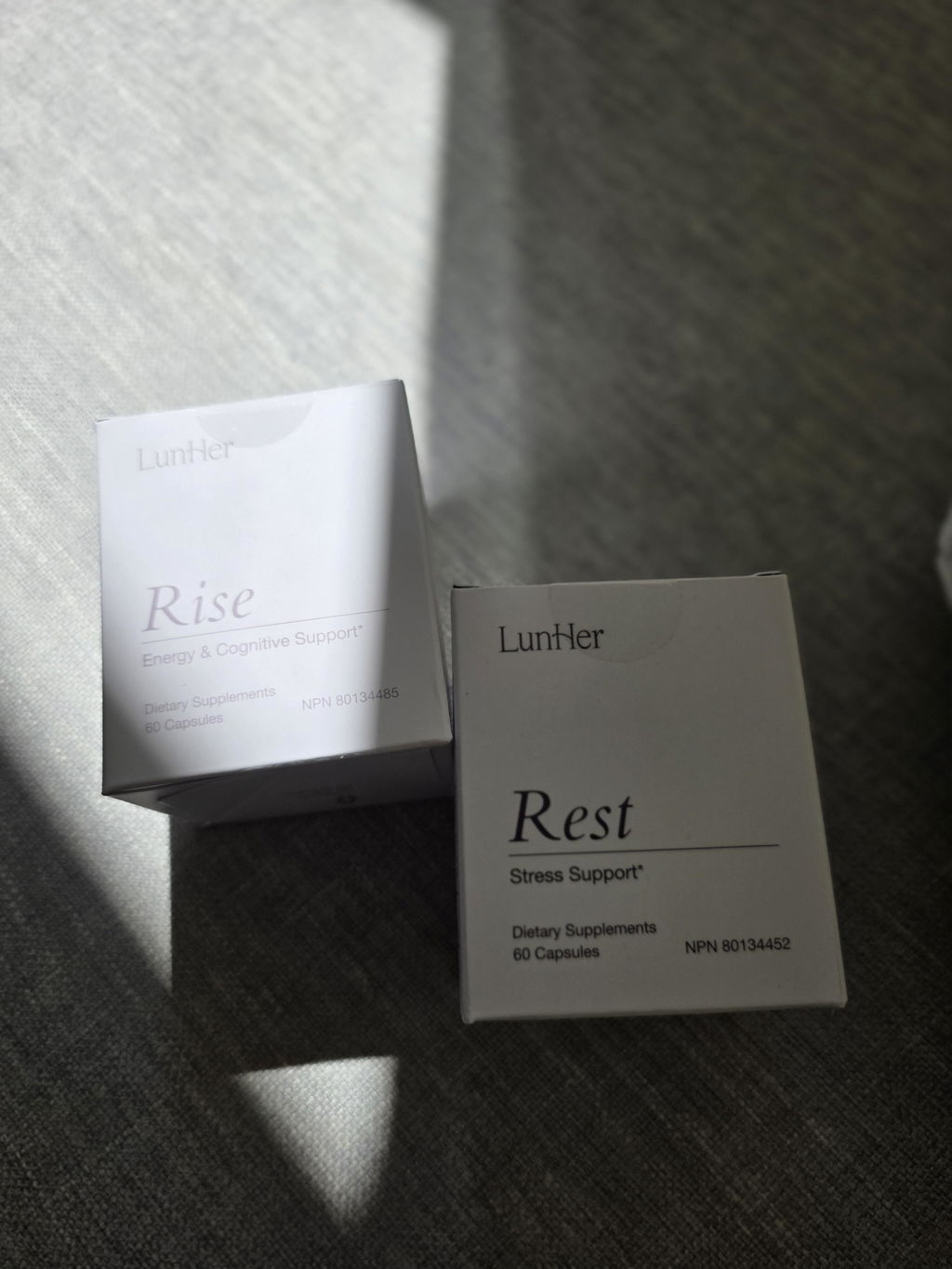
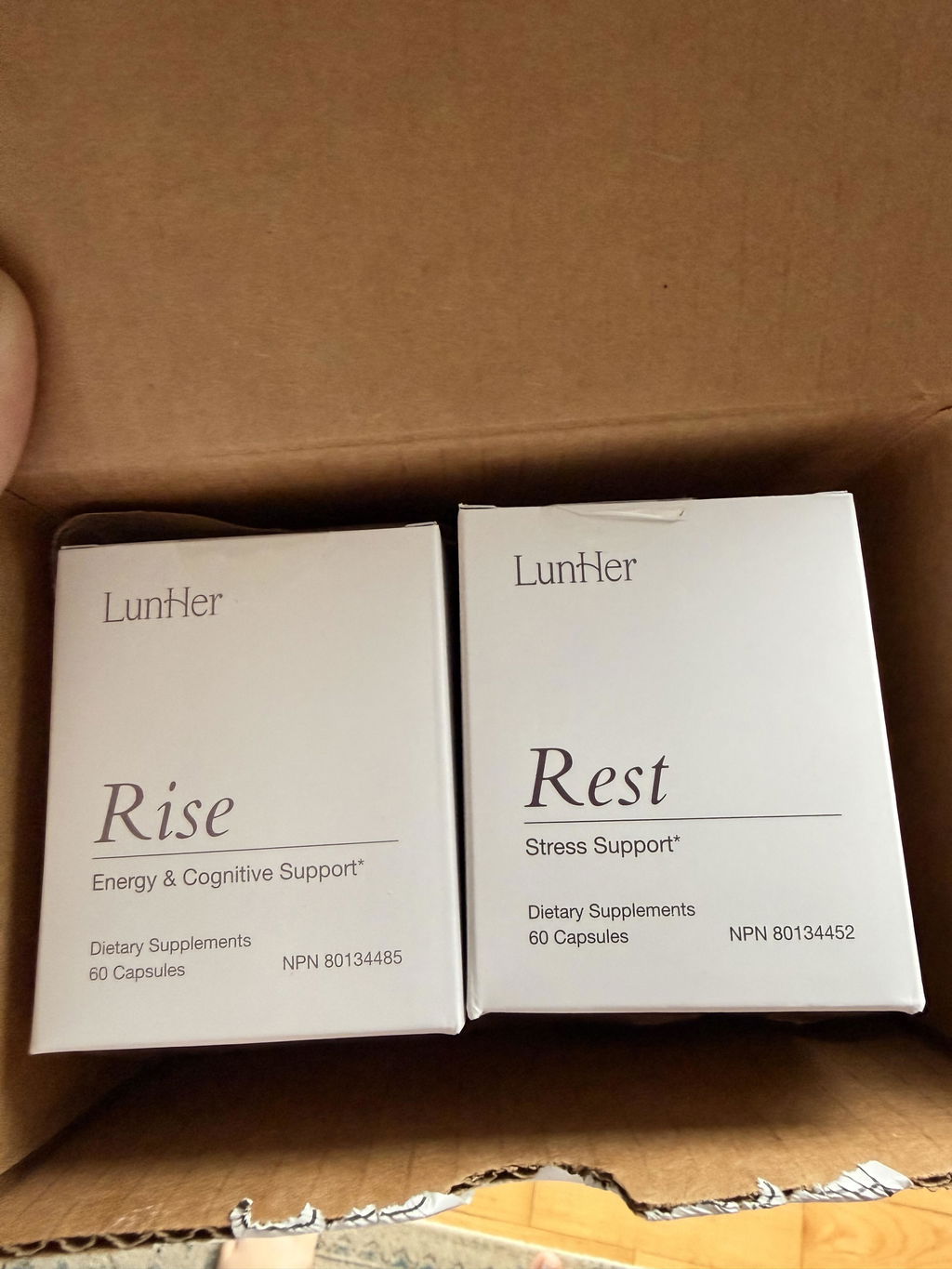
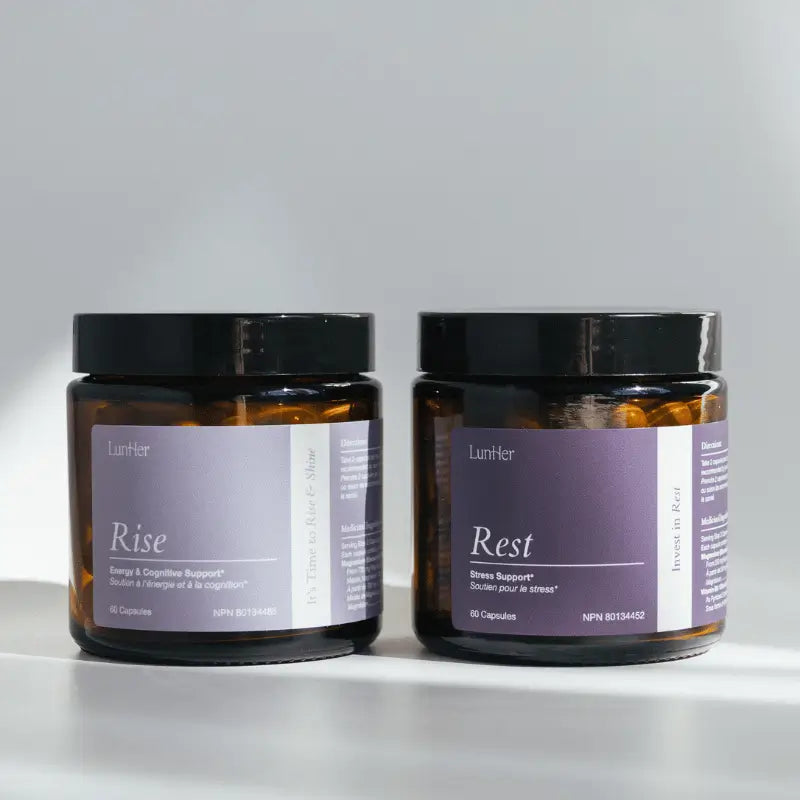
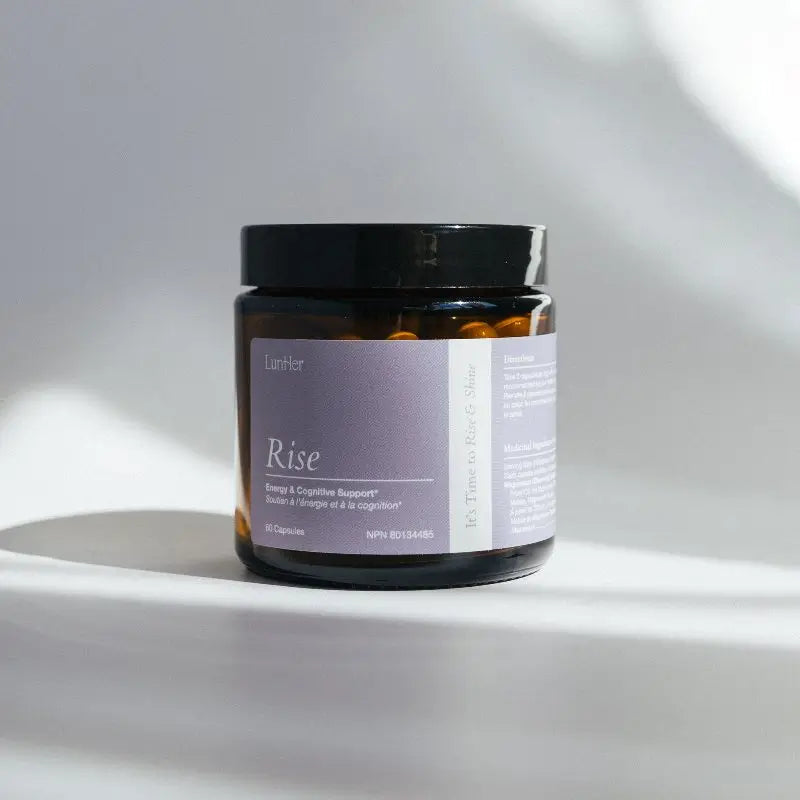
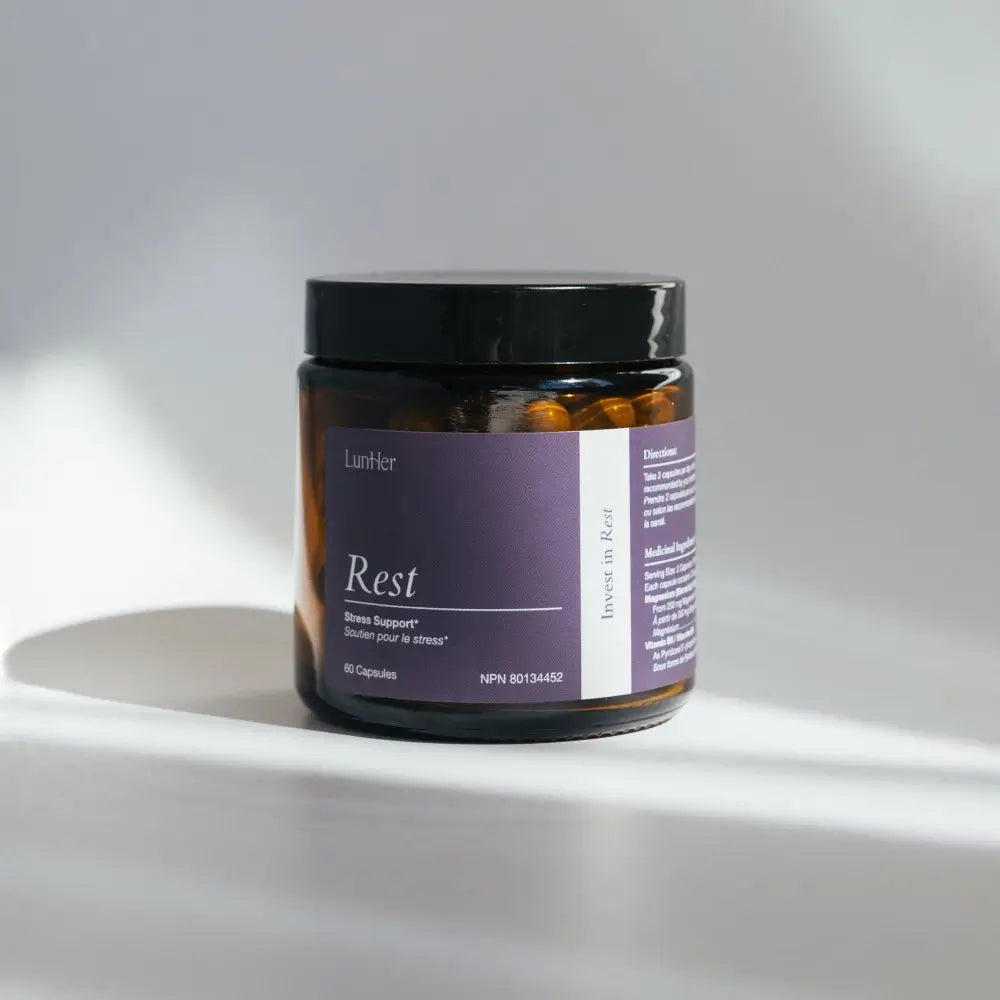
Rest is built for the problem this article describes. Not falling asleep faster. Staying down and waking restored.
- Magnesium bisglycinate, 100 mg elemental, the form most associated with calm and sleep quality
- L-theanine, 200 mg, the dose used in the research
- Vitamin B6 as P5P, 25 mg, supporting your body's own tryptophan to serotonin to melatonin pathway
- Pantothenic acid, 75 mg, supporting adrenal recovery overnight
- Passionflower, chamomile, and schisandra, for the wind-down
No melatonin. No dependency. Support for the systems you already have, so they can do what they're built to do.
The bottom line
If you're sleeping eight hours and waking up exhausted, you don't have a sleep debt. You have a sleep quality problem, and they are not the same thing.
More hours won't fix it. Falling asleep seven minutes faster won't fix it. What helps is giving your nervous system enough support to settle, stay settled, and reach the deep stages where the restoration actually happens.
The nights come first. The days follow. That order is not negotiable, and it's the reason sleep is the first thing to steady and energy is the second.
For the nights that aren't giving anything back
Rest is the evening formula in the Daily Ritual Bundle: magnesium bisglycinate, L-theanine, active B6, and calming botanicals. No melatonin.
In our 8-week observational study, 90% of women reported improved sleep and 87% said they felt like themselves again.
Licensed by Health Canada (Rise NPN 80134486, Rest NPN 80154492). Third-party tested, made in Canada. Backed by a 60-day money-back guarantee.