
How to Actually Balance Your Hormones with Food
Written by Our Editorial Team & Medically Reviewed by Dr. Aisling Lanigan, N.D.
Key Takeaways
- Your diet directly dictates your hormone health
Hormones are your body's chemical messengers and when they're not balanced, red flags will start to show up
A whole-food, anti-inflammatory diet provides the exact raw materials your body needs to create hormones
The phrase “balance your hormones” gets thrown around on the internet like it’s some magical, elusive state of zen. Let’s get real: it’s not magic; it’s chemistry. And you can’t hack your chemistry if you aren’t giving your body the right building blocks.
Your diet directly dictates your hormone health. Especially when it comes to reproductive health, fertility, and your menstrual cycle. Here’s exactly what hormone balance means, how your plate drives it, and the actual science behind it.
What Are Hormones, Anyway?
Hormones are your body's chemical messengers. Produced by your endocrine system, they travel through your blood to tell your organs exactly what to do. When we talk about reproductive health, we’re looking at the heavy hitters: estrogen, progesterone, and testosterone, plus their supporting cast (insulin, cortisol, and thyroid hormones).
What Does “Balance” Actually Look Like?
- A predictable menstrual cycle (21 to 35 days)
- Clear skin (or at least predictable breakout patterns)
- Consistent energy and manageable PMS
The Food Connection: You Are What You Synthesize
Hormones don’t just magically appear. Your body manufactures them from the nutrients you consume. For instance, cholesterol isn't inherently evil. It is the literal precursor your body requires to synthesize estrogen, progesterone, and testosterone.
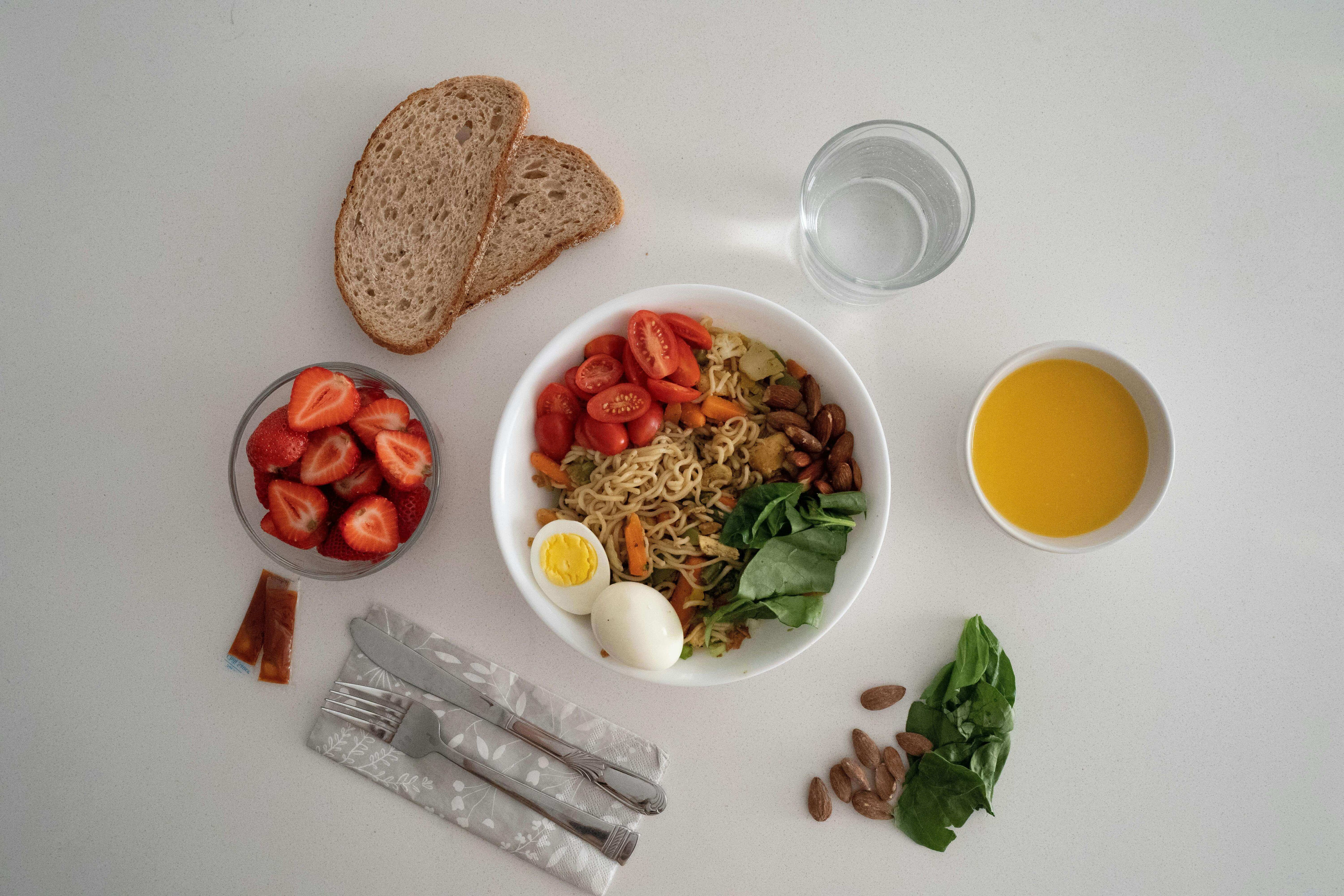
If you want your endocrine system to do its job, you have to feed it. A whole-food, anti-inflammatory diet (heavy on healthy fats, low-glycemic carbs, and antioxidants) provides the exact raw materials your body needs.
The Heavy Hitters (Backed by Science)
When food isn’t enough to bridge the gap, targeted supplementation works. But don't just take our word for it, here's the research:
1. Inositol for Insulin & PCOS
If you have PCOS, insulin resistance is often the primary culprit messing with your sex hormones.
The Science: Inositol acts as an insulin sensitizer. Clinical trials demonstrate that supplementing with myo-inositol significantly improves insulin sensitivity (HOMA index) and helps restore regular menstrual cyclicity in women with PCOS.
2. Omega-3s for Testosterone Control
Healthy fats do more than keep you full; they actively suppress excess androgens.
The Science: In randomized trials involving women with PCOS, Omega-3 supplementation significantly reduced serum concentrations of testosterone and luteinizing hormone (LH), helping to regulate the menstrual cycle.
3. Zinc for Brutal PMS
If your PMS is taking you out every month, you might be deficient in zinc.
The Science: High-quality randomized controlled trials show that a simple zinc regimen significantly reduces both the physical and psychological symptoms of PMS, including insomnia, feeling overwhelmed, and physical pain.
4. Vitamin D for Reproductive Health
It’s not just for bones. Vitamin D acts more like a hormone itself and has a directly established relationship with reproductive hormone regulation.
The Bottom Line
The path to health looks different for everyone, but it always begins with knowledge. You can’t control everything about your cycle, but you can control what’s on your plate. Focus on healthy fats (salmon, olive oil, walnuts), low-glycemic carbs (quinoa, oats), and antioxidant-rich greens.
Give your body the building blocks, and let your hormones do the rest.
The information in this article is for general educational purposes only and is not intended to replace consultation with a qualified healthcare professional. Always consult a doctor or naturopath before starting any supplement, particularly if taking medications or managing a health condition. LunHer products are not intended to diagnose, treat, cure, or prevent any disease.