

Burnout Symptoms in Women: 15 Warning Signs Not to Ignore
Written by Our Editorial Team & Medically Reviewed by Dr. Aisling Lanigan, N.D.
You know that moment when someone asks how you are and you say "fine, just tired," even though you are running on empty, your brain feels like fog, and you cannot remember the last time you woke up genuinely rested? That is not ordinary tiredness. It is often burnout, and it has usually been building for a while.
Burnout rarely arrives as one obvious sign. It shows up as small symptoms you explain away as normal life stress, until one day you realize you have not felt like yourself in months. Below are the 15 burnout symptoms women most often ignore, what each one is really telling you, and where to start.
What are the most common burnout symptoms in women?
The most common burnout symptoms in women are exhaustion that sleep does not fix, brain fog, disrupted sleep, muscle tension, headaches, digestive issues, low motivation, and cycle changes like irregular or more painful periods. They tend to appear together, not alone, because they share one root: a depleted, dysregulated nervous system running on empty.
Is burnout different in women than in men?
Yes. Women report higher levels of work-related burnout than men, especially emotional exhaustion. Part of the reason is the invisible mental load of managing a household alongside a job, and part is biological: the stress-response system interacts with women's hormones, so the same pressure can land harder and disrupt sleep and mood more.
The invisible mental load
Women often carry the cognitive and emotional labor of running a household: remembering everyone's schedules, planning meals, anticipating problems, coordinating care for children and aging parents. A recent study found this cognitive load is highly gendered and linked to more stress, burnout, and lower wellbeing. It is a second, unpaid job, and burnout is the result.
Hormones and the stress response
Women's hormones interact with the stress response in ways that can amplify it. Progesterone tends to drop under stress, which can worsen anxiety and sleep, and chronic stress disrupts hormones further. The result is a loop where stress and hormonal symptoms feed each other and neither fully settles.
The perfectionism trap
Many women feel they have to be flawless just to be seen as good enough, judged more harshly for mistakes and given less credit for wins. That pressure to prove competence again and again keeps the nervous system switched on, and perfectionism is one of the fastest routes to burnout.
What are the 15 burnout symptoms women ignore?
These 15 symptoms fall into three groups: physical (exhaustion, muscle tension, headaches, digestive trouble, frequent illness, appetite changes), mental and emotional (poor sleep, brain fog, indecision, lost motivation, never feeling you have done enough), and hormonal (irregular or painful periods, fertility struggles, worsening PMS, skin and hair changes). Here is what each one is telling you.
1. Chronic exhaustion that sleep does not fix
This is not "I need a nap" tired. This is "I slept eight hours and woke up feeling hit by a truck" tired. No amount of rest seems to help because your stress-response system is dysregulated and your body is not regulating energy, mood, and sleep efficiently.
Why women ignore it: "I'm just not sleeping well" or "I need more coffee."
Why it matters: This is often the first sign of a stress response that is breaking down. Left unchecked, it progresses to more severe symptoms.
2. Constant muscle tension or body aches
Your shoulders feel like rocks. Your jaw is clenched. Your lower back aches. You wake up stiff and sore for no apparent reason.
Why women ignore it: "I must have slept wrong" or "I need a massage."
Why it matters: Chronic muscle tension is your nervous system stuck in fight-or-flight. Your muscles are literally braced to run from danger, which contributes to chronic pain and inflammation.
3. Frequent headaches or migraines
Tension headaches, stress migraines, or that constant dull pressure behind your eyes.
Why women ignore it: "I've always gotten headaches" or "It's hormonal" (it might be, but stress makes it worse).
Why it matters: Chronic headaches are linked to elevated cortisol, poor sleep, and nervous system dysregulation, and they quietly erode quality of life and focus.
4. Digestive issues (IBS, bloating, nausea)
Your gut is often called your second brain, and it is directly wired to your stress response. Chronic stress can drive IBS, constipation, diarrhea, bloating, nausea, and acid reflux.
Why women ignore it: "My stomach is just sensitive" or "I have IBS" without connecting it to stress.
Why it matters: The gut-brain axis is real. Chronic stress disrupts your microbiome, increases inflammation, and impairs nutrient absorption, which makes every other symptom worse.
5. Getting sick often (weakened immune system)
You catch every cold or virus going around. You get chronic low-grade infections, or wounds heal slowly.
Why women ignore it: "I just have a weak immune system" or "Everyone gets sick."
Why it matters: Chronic stress has been linked to altered immune function and greater susceptibility to infections in some studies.
6. Changes in appetite (eating too much or too little)
Either you are stress-eating constantly, especially carbs and sugar, or you have no appetite and force yourself to eat.
Why women ignore it: "I'm just stressed" or "I'll eat normally when things calm down."
Why it matters: Appetite swings signal a stressed system. Stress eating drives blood-sugar crashes and cortisol spikes, while undereating starves your body of the nutrients it needs to recover.
7. Sleep disruption (can't fall asleep or stay asleep)
You are exhausted but cannot fall asleep, or you drop off and then wake repeatedly through the night, often around 2 or 3 AM, unable to get back down.
Why women ignore it: "I've always been a bad sleeper" or "My mind just won't shut off."
Why it matters: Sleep is when your body repairs, consolidates memory, and regulates hormones. Fragmented sleep worsens every other burnout symptom and keeps the whole cycle spinning.
8. Brain fog and memory issues
You walk into a room and forget why. You lose your train of thought mid-sentence. You forget words, names, and appointments.
Why women ignore it: "I'm just getting older" or "I have too much on my plate."
Why it matters: Brain fog is a sign of chronic inflammation and cortisol disruption affecting the parts of the brain that handle memory and focus.
9. Difficulty making decisions (even small ones)
You spend twenty minutes deciding what to eat for lunch. You agonize over simple choices and constantly second-guess yourself.
Why women ignore it: "I'm just indecisive" or "I overthink everything."
Why it matters: Decision fatigue is a sign your thinking brain is overwhelmed. When cognitive resources are depleted, even small decisions feel impossible.
10. Loss of motivation or passion
Things that used to excite you feel like chores. Hobbies feel like obligations. You are going through the motions and feeling nothing.
Why women ignore it: "I'm just in a rut" or "I need a vacation."
Why it matters: Loss of pleasure is a core symptom of burnout. It signals that your brain's reward system is dysregulated from chronic stress.
11. Feeling like you're never doing enough
No matter how much you accomplish, you feel behind. You cannot celebrate wins because you are already onto the next thing, and you feel guilty for resting.
Why women ignore it: "I just have high standards" or "I'm ambitious."
Why it matters: This is the perfectionism trap, and it is a fast track to burnout because you never allow recovery time. Your nervous system never gets the signal that you are safe.
12. Irregular or painful periods
Your cycle becomes unpredictable: shorter, longer, heavier, or skipped. PMS worsens with severe cramps, mood swings, and bloating.
Why women ignore it: "My period has always been irregular" or "It's just stress."
Why it matters: Your menstrual cycle is a vital sign. Chronic stress can lower progesterone and throw your hormones off balance, which affects far more than your period.
13. Difficulty getting or staying pregnant
Unexplained trouble conceiving, a longer time to conception, or recurrent early losses.
Why women ignore it: "It's just taking longer than I thought" or "I'm unlucky."
Why it matters: Chronic stress can affect fertility. Elevated cortisol can disrupt ovulation, lower progesterone, and raise inflammation, all of which matter when you are trying to conceive.
14. Worsening PMS or PMDD symptoms
Severe mood swings, rage, low mood, or physical symptoms in the week before your period.
Why women ignore it: "I've always had bad PMS."
Why it matters: Stress amplifies PMS by disrupting progesterone and serotonin. PMDD affects a meaningful share of women and is closely tied to a dysregulated stress response.
15. Acne, hair loss, or skin changes
Adult acne, thinning hair, brittle nails, dry skin, or eczema flare-ups.
Why women ignore it: "My skin is just acting up."
Why it matters: Your skin, hair, and nails are windows into your hormonal health. Cortisol can drive breakouts, affect the thyroid, and impair the collagen your skin depends on.
Why do women dismiss burnout symptoms?
Women dismiss burnout symptoms because they have been taught to push through and keep every plate spinning. The signs are easy to explain away one at a time: "I'm just tired," "everyone feels this way," "I'll rest when things calm down." Because burnout builds slowly, no single day feels alarming enough to stop.
But burnout is cumulative. Small ignored symptoms compound into serious consequences over time, which is exactly why naming them early matters so much.
What should you do if you recognize these burnout symptoms?
Start by naming it honestly instead of saying you are fine. Burnout recovery is not a weekend of rest; it is rebuilding a depleted nervous system over weeks. Protect your sleep, ease the pressures draining you, get professional support if symptoms are severe, and give your body the raw materials it needs to recover.
- Stop saying "I'm fine": Be honest with yourself about how you actually feel.
- Treat rest as a necessity: Rest is biological, not a reward you earn.
- Address the root causes: If your days are fundamentally unsustainable, the right supplements for burnout and self-care help, but structural change matters too.
- Know the timeline: Recovery has a rhythm and a doubt window in the middle. Here is how long burnout recovery usually takes.
- Seek professional help when needed: If symptoms are severe, please work with a therapist, doctor, or naturopath. You do not have to do this alone.
Frequently asked questions about burnout symptoms in women
The questions below come up again and again from women trying to work out whether what they are feeling is burnout, how long it lasts, and when to get help. Short, honest answers, big-sister style.
How are burnout symptoms different in women?
Women more often report emotional exhaustion, cycle and hormonal changes, and symptoms tied to the invisible mental load of running a home and a job at once. The core signs overlap with men's, but that hormonal layer and the two-jobs load mean burnout in women can look different and get dismissed more easily.
How long do burnout symptoms last?
Burnout symptoms do not lift in a weekend. They ease as your nervous system replenishes, which usually takes weeks to a few months of consistent rest, a lighter load, and support. Sleep tends to steady first, then energy and focus follow. How long depends on how depleted you were and what you can change.
When should you see a doctor about burnout symptoms?
See a doctor if your symptoms are severe or getting worse, if exhaustion or low mood make daily life hard, or if you notice physical signs like chest pain, major weight changes, or a cycle that has stopped. A professional can rule out other conditions and help you build a recovery plan.
Can burnout cause physical symptoms like headaches or period changes?
Yes. Burnout is not only mental. Ongoing stress keeps the body in fight-or-flight, which can show up as headaches, muscle tension, digestive issues, frequent illness, and changes to your menstrual cycle. These are real physical signals that your nervous system and stress response need support, not signs of weakness.
What is the difference between burnout and depression?
Burnout and depression overlap and can happen together, but burnout is tied to chronic stress and depletion, and it often eases when the load lifts and your body recovers. Depression can persist regardless of circumstances. If low mood, hopelessness, or loss of interest linger, talk to a professional to sort out what you are facing.
Ready to support your body's burnout recovery?
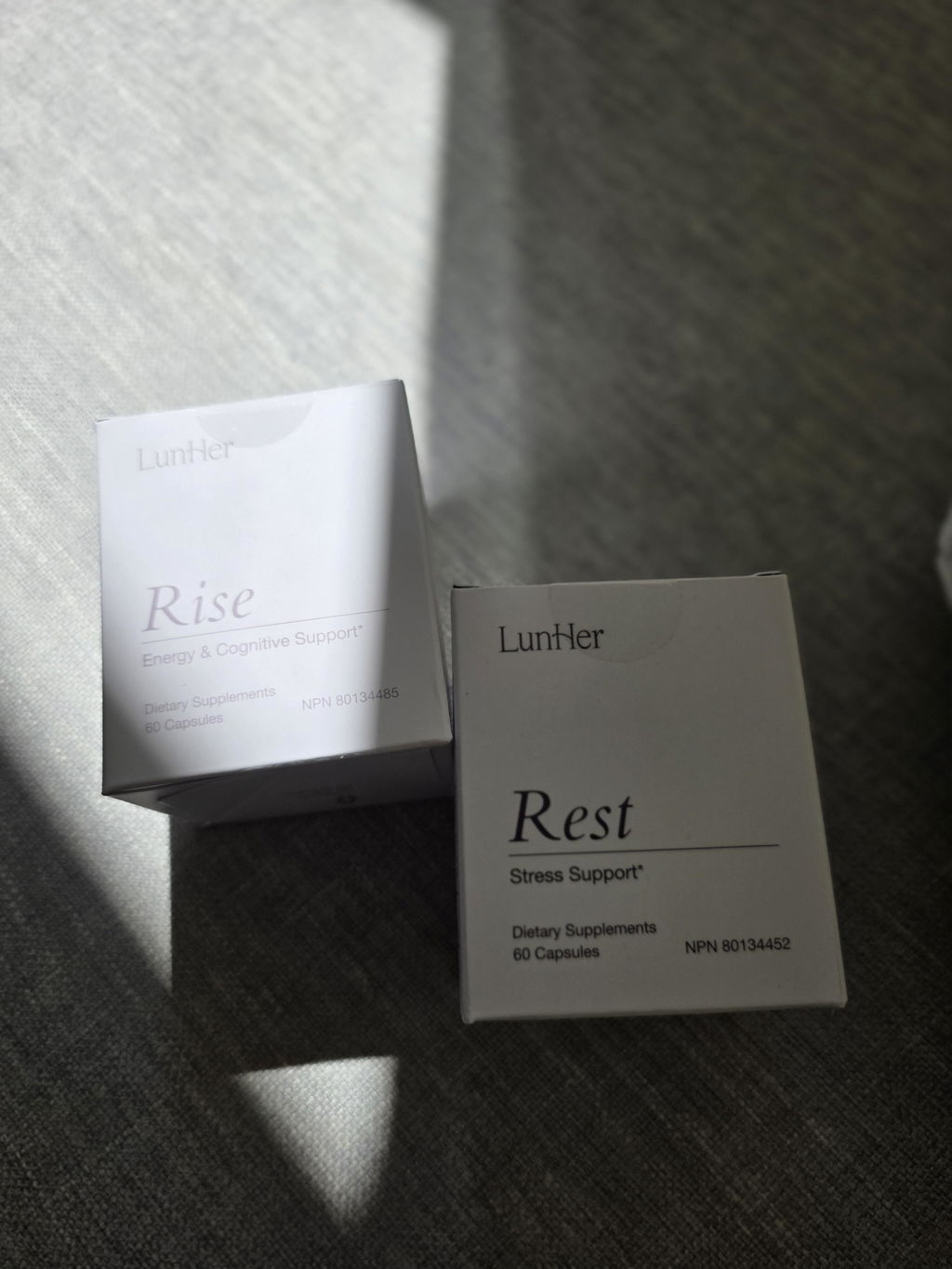
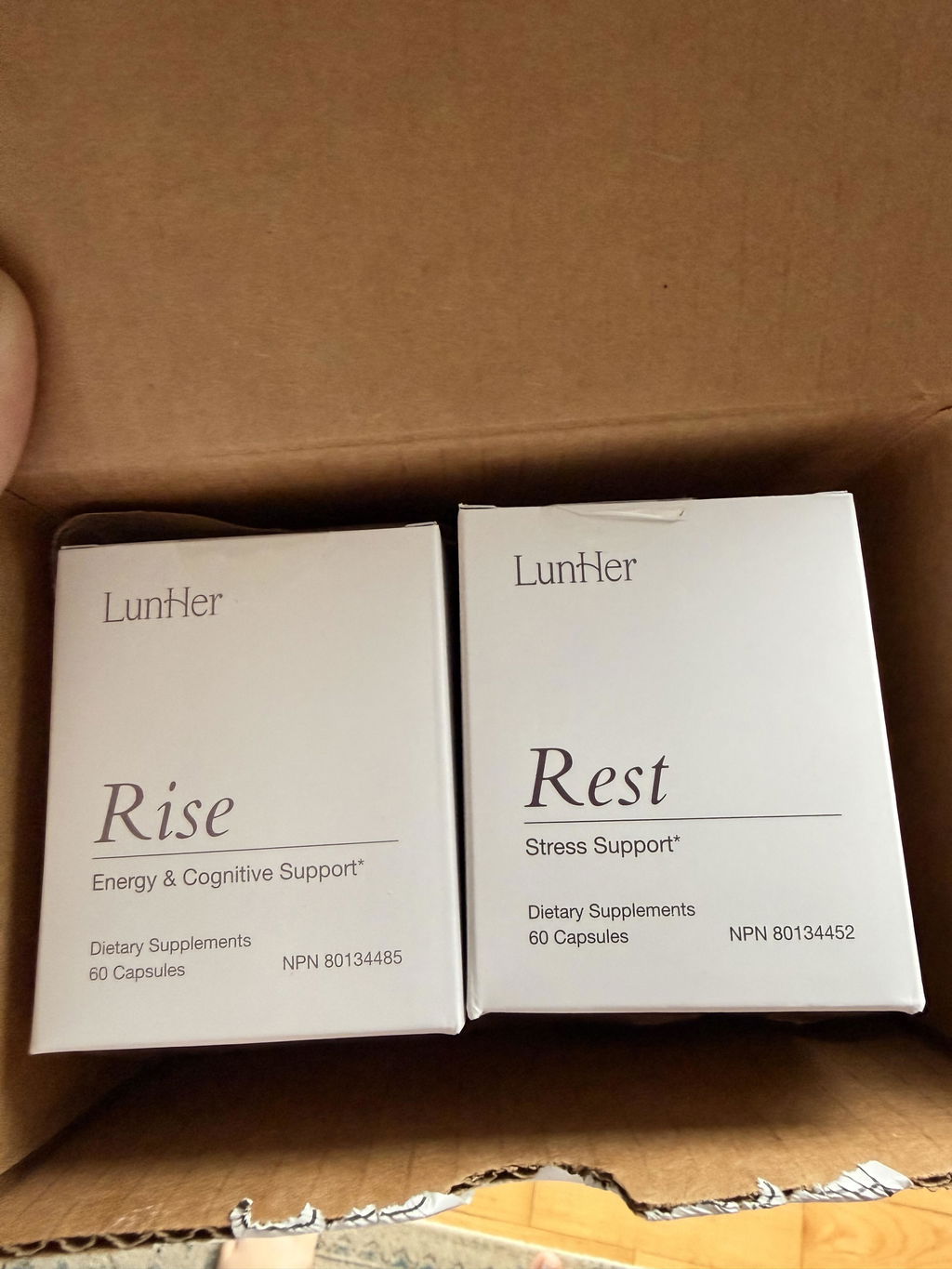
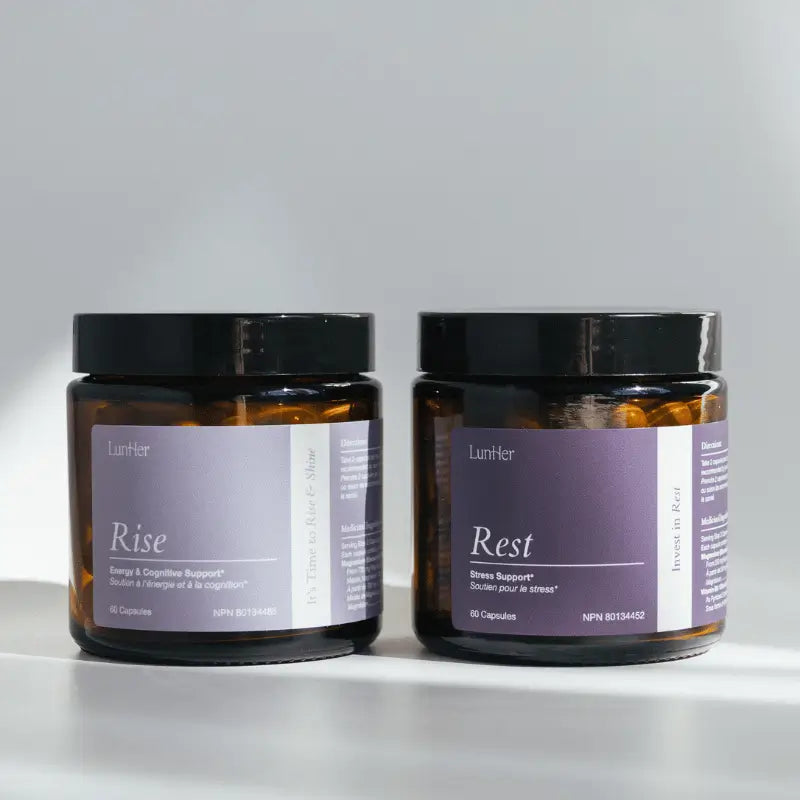
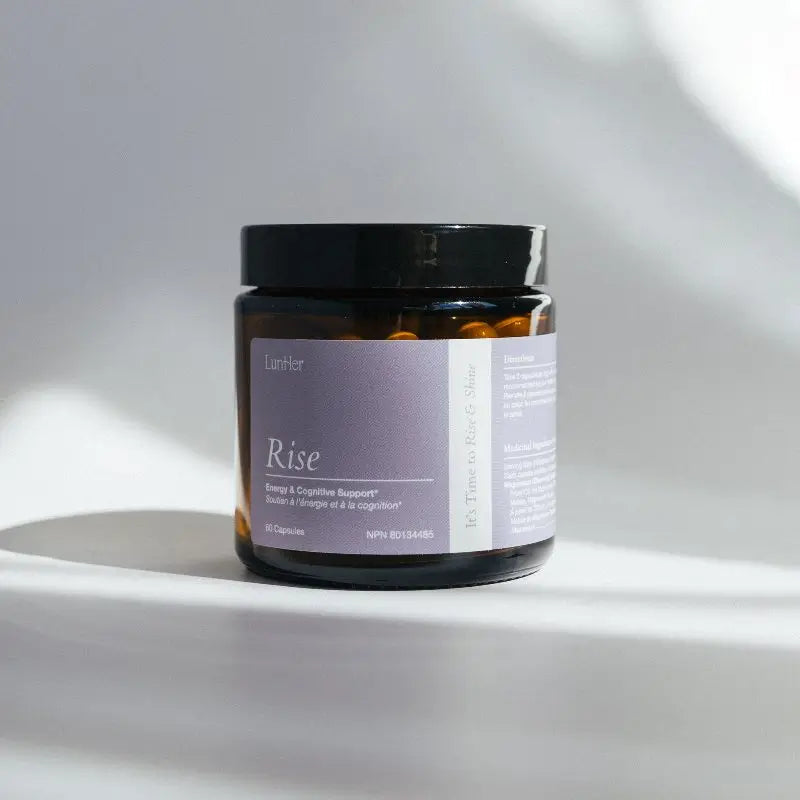
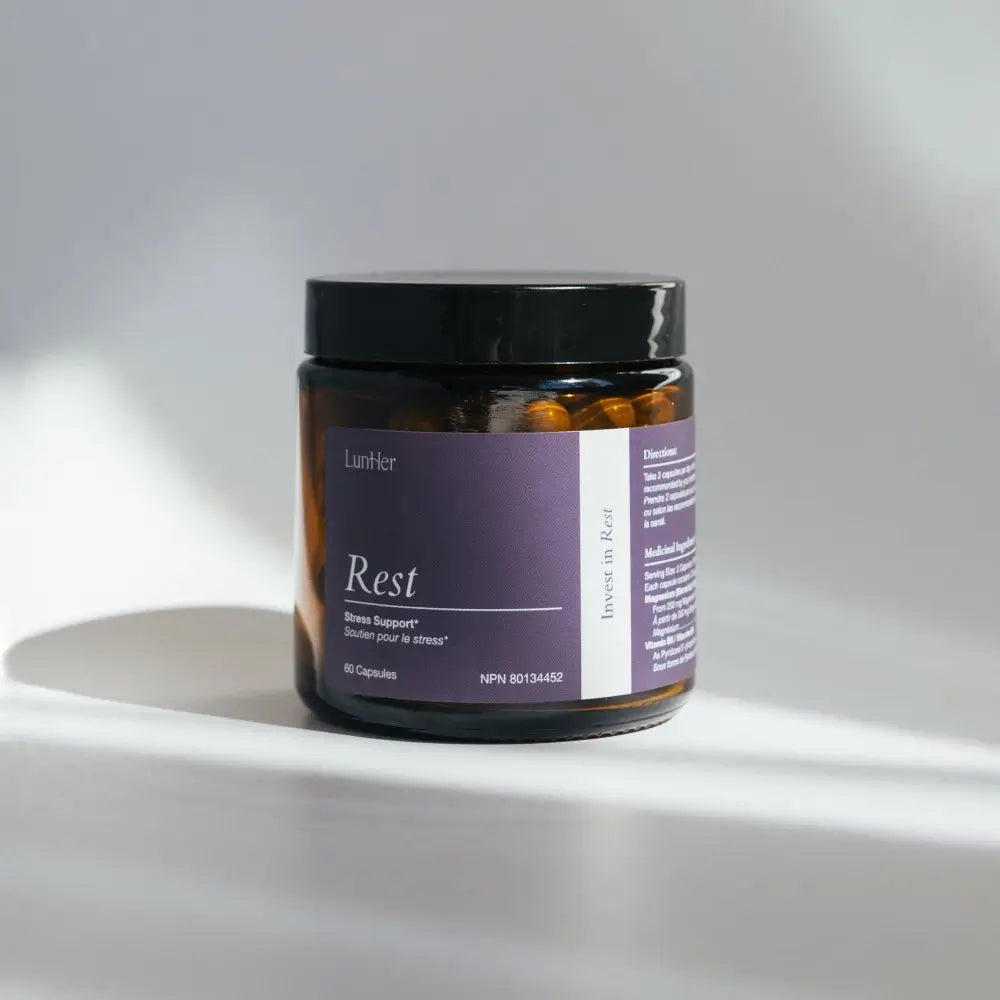
LunHer's Daily Ritual Bundle was built for women rebuilding after burnout. Rise supports steadier daytime energy and focus, Rest supports deep, restorative sleep, and together they support your nervous system morning and night. In our 8-week observational study of 40 women, 87% said they felt like themselves again. Both formulas are licensed by Health Canada and third-party tested.
The information in this article is for general educational purposes only and is not intended to replace consultation with a qualified healthcare professional. Always consult a doctor or naturopath before starting any supplement, particularly if taking medications or managing a health condition. LunHer products are not intended to diagnose, treat, cure, or prevent any disease.