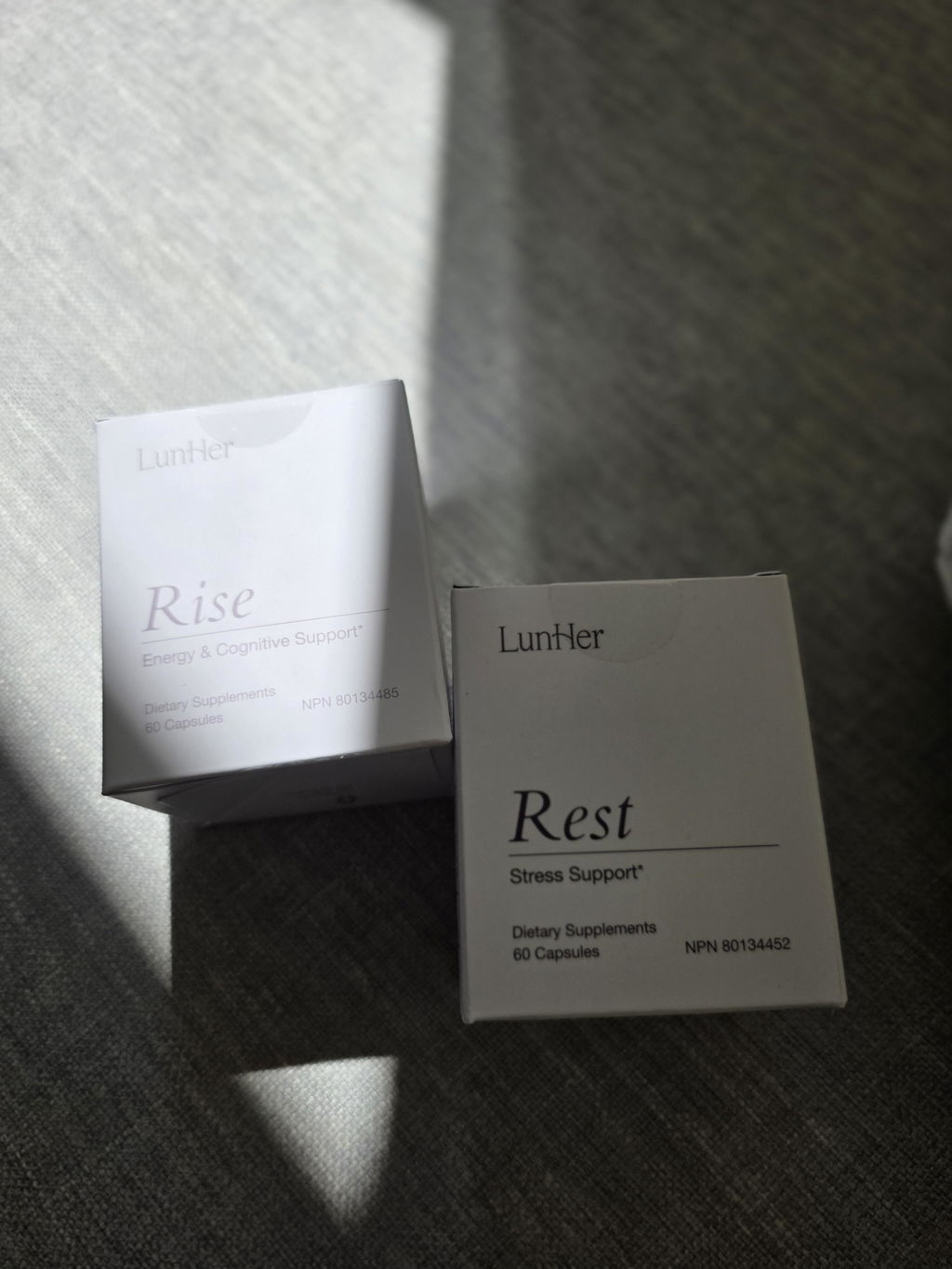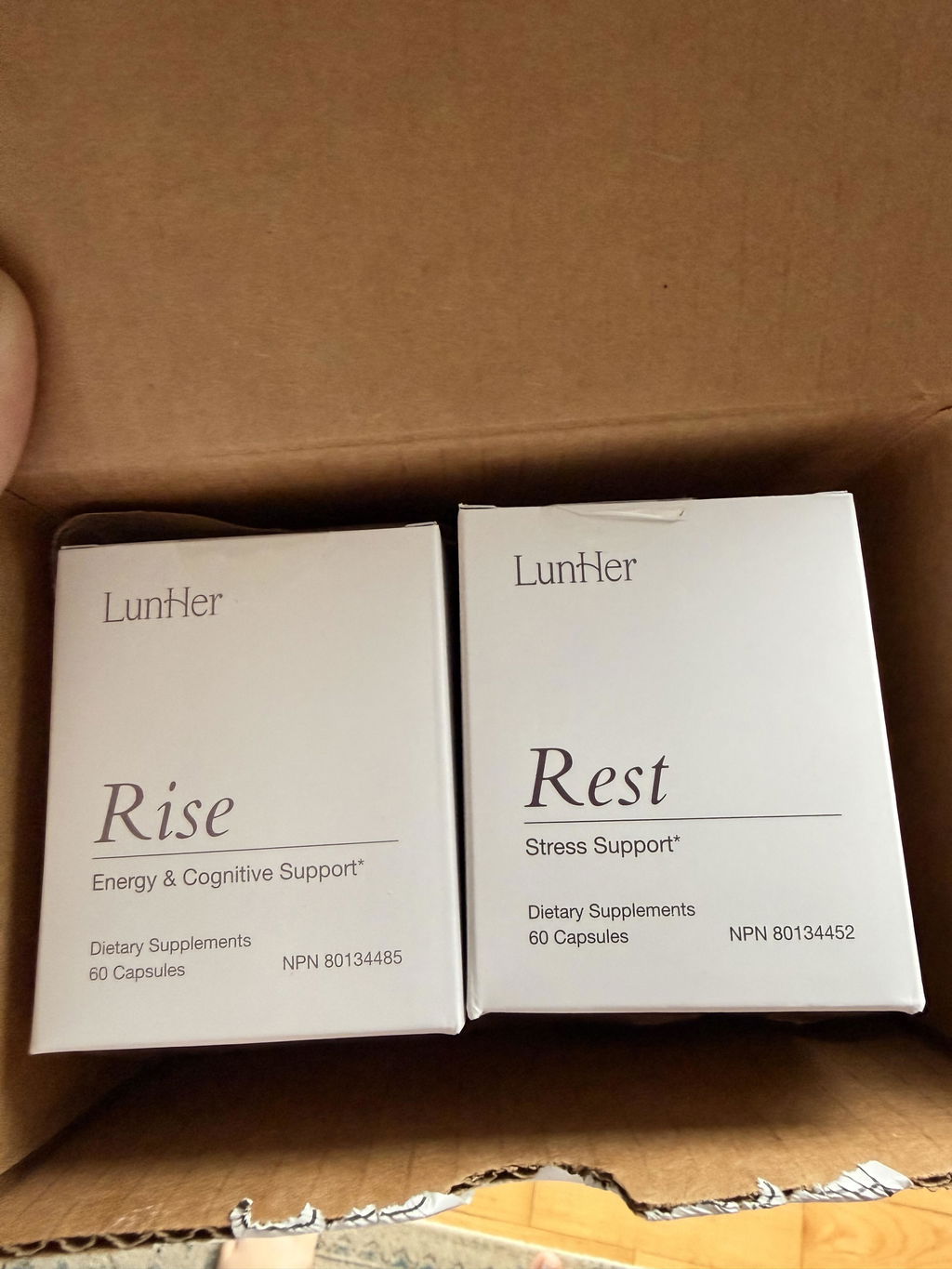





Wired but Tired: Why You Can't Sleep When You're Exhausted
Written by Our Editorial Team & Medically Reviewed by Dr. Aisling Lanigan, N.D.
It is 11:30 at night. You have been running on empty since about two in the afternoon. Your body feels like it weighs a thousand pounds. Then your head hits the pillow and your mind starts filing: tomorrow's list, today's emails, that thing you said three years ago.
Wired but tired. Exhausted body, switched-on brain, and no obvious way to get one to agree with the other.
There is real biology underneath this, and none of it is a discipline problem. Here is what is actually happening, and what helps.
Key takeaways: Wired but tired is a cortisol and nervous system pattern, not a character flaw. Your stress hormone is running high into the evening when it should be tapering, and your nervous system is holding a state of alert it never got to release. Racing thoughts at night are a symptom of that, not the cause. Magnesium, L-theanine, activated B-vitamins, and calming herbs support your evening chemistry, and light, caffeine timing, and a real wind-down window support the rhythm underneath it.
What does "tired but wired" mean?
Tired but wired describes a specific state: your body is physically depleted while your nervous system stays switched on. You feel heavy and drained all day, then alert the moment you lie down. It is one system stuck in the wrong gear, not two separate problems.
It is like driving with one foot on the gas and one on the brake. Your body wants rest. Your stress response will not sign off on it.
Signs you are in the wired but tired pattern:
- You drag all day, then get a second wind after 9pm
- Your mind starts racing the moment you lie down, even though you were tired an hour earlier
- You fall asleep eventually, then wake repeatedly and cannot get back down
- Caffeine is load-bearing by mid-morning and stops working by mid-afternoon
- You feel restless or on edge in the evening even when nothing stressful happened
If that reads like a description of your week, you are far from the only one. This pattern is one of the most common ways burnout shows up before anyone calls it burnout.
Why can't you fall asleep when you are exhausted?
Because sleepiness and calm are not the same thing. Exhaustion is a fuel problem; falling asleep is a safety signal. When cortisol stays high into the evening and your nervous system reads the day as unfinished, your brain will not hand over the keys no matter how depleted you feel.
This is the part that makes it so maddening. You did everything right. You are tired enough. And your body still will not let go, because the signal it is waiting for is not tiredness, it is safety.
What happens to your cortisol curve when you are burned out?
In a steady system, cortisol peaks shortly after you wake and tapers through the evening so melatonin can rise. Under chronic stress that curve flattens and shifts. Mornings feel underpowered, afternoons crash, and the evening brings a second wind exactly when your body should be winding down.
What a steady cortisol rhythm looks like:
| Time of day | Cortisol | What it does |
|---|---|---|
| 6 to 8am | Highest, peaking shortly after waking | Gets you up and gives you morning energy |
| Midday | Moderate | Sustains focus and steady energy |
| Evening | Low | Allows the wind-down to begin |
| Night | Lowest | Melatonin rises, deep sleep happens |
What it often looks like when you are depleted:
| Time of day | Cortisol | What it feels like |
|---|---|---|
| Morning | Blunted | Cannot wake up, coffee before conversation |
| Afternoon | Low or crashing | The 2 to 3pm wall, brain fog |
| Evening | Higher than it should be | Second wind, racing thoughts |
| Night | Elevated or erratic | Wired but tired, fragmented sleep |
The research on the flattening is fairly consistent. A meta-analysis of 80 studies covering more than 36,000 people found that a flatter daily cortisol slope is associated with worse mental and physical health outcomes across a wide range of measures, and the authors frame it as stress-related disruption of the body's circadian timing rather than one specific disease process.
The evening end of the curve is where sleep gets hit. In a study of adults with chronic insomnia, 24-hour cortisol secretion was higher than in matched controls, with the greatest elevations in the evening and the first half of the night. A separate review notes that evening cortisol levels track with the number of awakenings the following night, and that excess HPA axis activity and fragmented sleep feed each other in a loop.
Which is the honest summary: it is a loop, not a linear cause. Worth saying that the morning end of the picture is less settled in the research than the evening end, so treat "flat in the morning" as a common pattern rather than a rule.
Supplements to reduce cortisol: what the evidence actually supports →
Why does your mind start racing the second you lie down?
Rumination at night is not a personality flaw. By evening the part of your brain that filters intrusive thoughts is depleted, your stress response is less regulated, and the neurotransmitters that produce calm are running low. So the worry that stayed quiet all day finally has the floor.
Your executive function is spent
All day, your prefrontal cortex does the unglamorous work of suppressing intrusive thoughts and keeping your emotional responses proportionate. By 11pm it is tapped out. Worry floods in because nothing is holding the door, and your brain defaults to replaying problems instead of solving them.
Your calming chemistry is running low
Sleep depends on a handful of things being available at the right time: GABA to quiet neuron firing, serotonin to convert into melatonin, and magnesium and B-vitamins as the cofactors that make both possible. Chronic stress draws down all of them.
- Low magnesium means less support for GABA activity, so muscles stay tense and the brain stays busy
- Without enough B-vitamins on hand, the serotonin to melatonin pathway has less to work with
- Elevated evening cortisol works against melatonin directly
It is hard to play the symphony when half the instruments are missing. Your brain does not have the building blocks to make sleepiness on demand.
Is wired but tired a sign your nervous system is stuck in fight-or-flight?
Often, yes. Your autonomic nervous system has two modes: sympathetic (alert, braced, ready) and parasympathetic (calm, digesting, recovering). Months of unrelenting stress can leave you parked in the first one. Nothing has to be wrong tonight for your body to behave as though something is.
There is measurable physiology behind that feeling. A review of chronic hyperarousal in insomnia describes enhanced sympathetic activation with higher heart rate during both sleep and wakefulness, elevated nocturnal norepinephrine, and a modest 6 to 9% increase in 24-hour metabolic rate. Your body is running hotter around the clock, not only at bedtime.
A physiology review of sympathetic nerve activity in sleep disorders is more cautious: findings across studies are mixed, though people with insomnia showed exaggerated blood pressure and sympathetic nerve responses to a stress challenge, which fits the hyperarousal picture. So the direction is clear, the magnitude is still being worked out.
The practical version: this is not you being bad at relaxing. It is a nervous system that has not been given a reason to stand down in a long time.
What makes being wired but tired worse?
Four everyday habits reliably make the pattern worse: caffeine too late in the day, bright screens in the hour before bed, alcohol as a wind-down, and heavy or late dinners. None of them cause wired but tired on their own. All of them make an already dysregulated evening harder to settle.
Afternoon caffeine
Caffeine has a half-life of roughly five to six hours, so a 3pm coffee still has meaningful amounts circulating at 9pm, blocking the adenosine that builds your sleep pressure. Cutting off by early afternoon helps. If you genuinely cannot function without the 3pm cup, that is information about how depleted you are, not a willpower issue.
Screens in bed
A 2025 analysis in JAMA Network Open found that daily screen use in bed was associated with shorter sleep and a 33% higher prevalence of poor sleep quality compared with no screen use. The per-night difference was small, a few minutes, but the sleep-quality gap was not. Night mode helps a little. Putting the phone in another room helps more.
Alcohol as a sleep aid
Alcohol makes you drowsy, then disrupts the second half of the night as your body metabolizes it. You fall asleep faster and wake more. If you drink, leaving three hours before bed limits the damage.
Late or heavy dinners
Eating close to bedtime asks your body to digest when it should be winding down, and a blood sugar dip in the small hours can trigger a cortisol release that wakes you at 2 or 3am. Finish dinner about three hours before bed. If you need something later, protein and fat hold blood sugar steadier than carbohydrate alone.
How do you fix being wired but tired?
You work on two things at once: the timing of your cortisol rhythm and the calm your nervous system needs at night. Morning light, protein, and a real wind-down window handle the timing. Magnesium, L-theanine, and calming herbs give your evening chemistry something to work with.
In the morning:
- Get outside for 10 to 15 minutes within half an hour of waking, even when it is grey. Light is the strongest anchor your body clock has
- Eat protein within an hour of waking to steady blood sugar and support a normal cortisol response
- Take your energy-supporting nutrients then: B-vitamins, CoQ10, and the daytime magnesium forms (malate and threonate)
In the evening:
- Drop the light level after sunset. Lamps instead of overheads, amber bulbs if you have them
- Keep genuinely activating things (intense training, work email, difficult conversations) out of the last two hours
- Support the wind-down chemistry rather than sedating yourself out of it
None of this works as a one-off. It works because your body learns the pattern, which is why timing and consistency matter more than any single tactic.
Circadian rhythm 101: how your body clock runs your sleep and energy →
Which nutrients help when you are exhausted but cannot sleep?
The evening nutrients with the most support behind them are magnesium bisglycinate, L-theanine, activated B6 and B5, and calming herbs like passionflower, chamomile, and schisandra. They are not sedatives. They give your body the raw materials to produce its own calm, so nothing is being overridden.
Magnesium bisglycinate
Bisglycinate is the form to look for at night. It is well absorbed, it supports GABA activity and muscle relaxation, and the glycine it is bound to supports sleep in its own right. It is the opposite of magnesium oxide, which is cheap, poorly absorbed, and mostly acts as a laxative.
L-theanine
L-theanine is an amino acid from green tea that promotes alpha brain wave activity, the state associated with calm alertness settling into relaxation. It takes the edge off a busy mind without sedating you, which is why it suits the racing-thoughts version of this pattern specifically.
Activated B6 and B5
B6 in its active P5P form supports the conversion of tryptophan to serotonin to melatonin, your body's own sleep pathway rather than a replacement for it. B5 supports adrenal recovery overnight, which is the part of the equation most evening formulas ignore entirely.
Calming herbs
Passionflower supports GABA-A receptor activity for sleep onset. Chamomile contains apigenin, which supports relaxation. Schisandra supports stress resilience overnight. Worth noting what is deliberately missing: melatonin, because it can suppress your own production, and ashwagandha, which has real short-term data but is not our pick for something you take every night indefinitely.
What does a wind-down routine for wired but tired look like?
A wind-down that works starts earlier than most people expect, around two to three hours before bed, and lowers stimulation in steps: light, then food, then screens, then thinking. The point is not a perfect routine. It is teaching your body, night after night, that evening means safety.
7:00pm Dim the lights. Lamps on, overheads off.
7:30pm Dinner finished, roughly three hours before bed.
8:00pm Evening supplements, about an hour before you want to be asleep.
8:30pm Screens down. Reading, stretching, a bath, anything analogue.
9:00pm Brain dump. Tomorrow's list and tonight's worries, on paper, out of your head.
9:15pm Slow breathing or gentle stretching for a few minutes.
9:30pm Into bed. Dark, cool, quiet.
10:00pm Lights out.
Adjust the clock to your life. The sequence matters more than the times, and doing a rough version most nights beats doing the perfect version twice.
How long does it take to stop feeling wired but tired?
Sleep usually shifts first, often within the first week or two, but the deeper change takes longer because your cortisol rhythm resets slowly. Most women notice the pattern loosening somewhere between weeks four and eight. Days ten to twenty are the stretch where it feels like nothing is happening.
That middle stretch is worth naming, because it is where most people quit. Sleep steadies before energy does, and the days lag the nights by a few weeks. The progress is happening on the nights you cannot feel it.
In LunHer's 8-week observational study (n=40, self-reported, not a clinical trial), 90% of women reported improved sleep and 87% said they felt like themselves again by the end. Not a brand-new version. The one that has been buried.
The bottom line
Wired but tired is not a sign you are bad at sleeping. It is what happens when cortisol runs high into the evening and a nervous system that has been braced for months does not know how to stand down. Two things need support: the rhythm, and the chemistry.
Supplements help, and they help most alongside light, caffeine timing, and an evening that gets quieter in stages. You are not taking something to knock yourself out. You are teaching your body that night is safe again.
And the bar for progress is lower than you think. Falling asleep fifteen minutes faster than last week counts. Waking once instead of four times counts. It compounds.
Frequently asked questions
What does tired but wired mean?
Tired but wired means your body is exhausted while your nervous system stays activated. You feel heavy and depleted through the day, then alert and restless at night. It usually reflects a cortisol rhythm that has shifted later and a stress response that has not switched off, rather than a sleep problem on its own.
Why can't I sleep when I'm exhausted?
Exhaustion and sleepiness are different signals. Being depleted means you are low on fuel; falling asleep requires your body to register that it is safe to let go. If cortisol is still elevated in the evening and your system is braced, sleep will not arrive no matter how tired you are.
Is wired but tired the same as insomnia?
Not quite. Insomnia is a clinical diagnosis based on how often and how long sleep is disrupted, and how much it affects your days. Wired but tired describes the feeling underneath it: exhausted body, activated nervous system. They overlap often. If it has gone on for months, see your doctor.
What should I do when I'm exhausted but can't sleep?
Get out of bed rather than lying there negotiating with yourself. Keep the lights low, do something dull and analogue for twenty minutes, then go back. In the longer term, work on the evening itself: earlier caffeine cutoff, dimmer light after sunset, and a wind-down that starts before you are desperate.
Can supplements help with wired but tired?
They can support the pattern, not override it. Magnesium bisglycinate, L-theanine, and calming herbs give your body what it needs to produce its own calm, and activated B6 supports the natural serotonin to melatonin pathway. Give it four to eight weeks, alongside light, caffeine timing, and a real wind-down.
The information in this article is for general educational purposes only and is not intended to replace consultation with a qualified healthcare professional. Always consult a doctor or naturopath before starting any supplement, particularly if taking medications or managing a health condition. LunHer products are not intended to diagnose, treat, cure, or prevent any disease.