
Article: LunHer Reviews: What 275+ Women Actually Say

LunHer Reviews: What 275+ Women Actually Say
Key takeaways
- Rise and Rest hold 4.8 stars across 275+ verified reviews, with under one percent of orders returned on the 60-day guarantee.
- The most repeated review arc matches the study data: sleep first, steadier days after, feeling like yourself again by around week eight.
- The study behind the numbers is 8-week, self-reported, and observational, n=40, and we label it that way deliberately.
- Critical reviews are fair: the day 10 to 20 stretch feels quiet, and real doses cost real money.
- Everything is auditable: public NPNs, third-party testing, full label doses, published exclusions.
If you searched for LunHer reviews, you are doing exactly what we would do: checking whether a supplement brand's claims survive contact with the people who actually paid for it. Fair. This page is our attempt at the straightest possible answer, including the parts a review roundup written by the brand would normally leave out.
Everything below sticks to what we can verify: reviews from confirmed purchasers, the numbers from our own study with its limits labelled, and what the critical reviews say alongside the glowing ones.
What do the numbers say?
Rise and Rest hold a 4.8-star average across more than 275 verified reviews, and fewer than one percent of orders are returned under the 60-day money-back guarantee. Both products are licensed by Health Canada, third-party tested, and made in Canada in cGMP certified facilities, with every dose printed on the label.
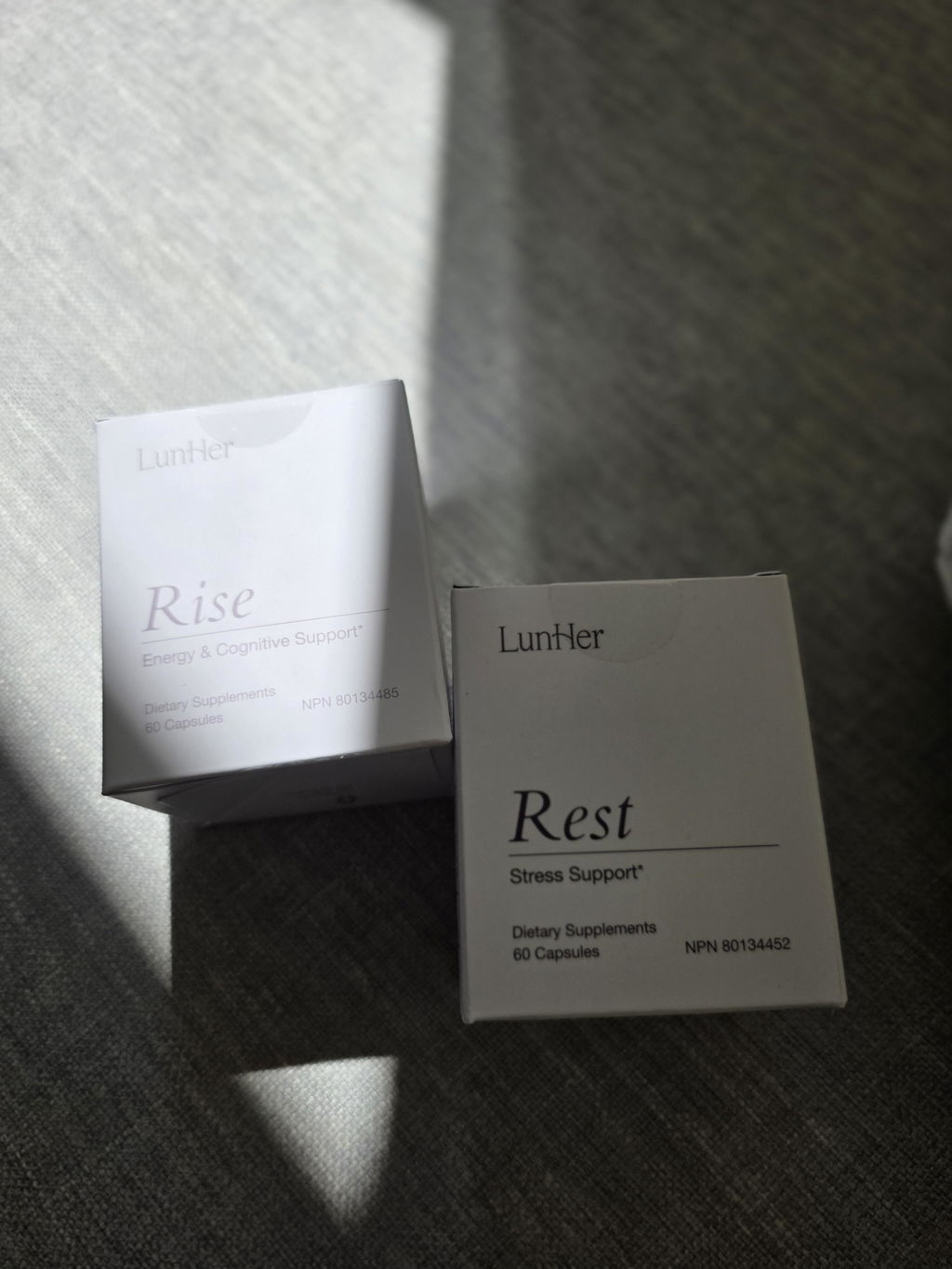
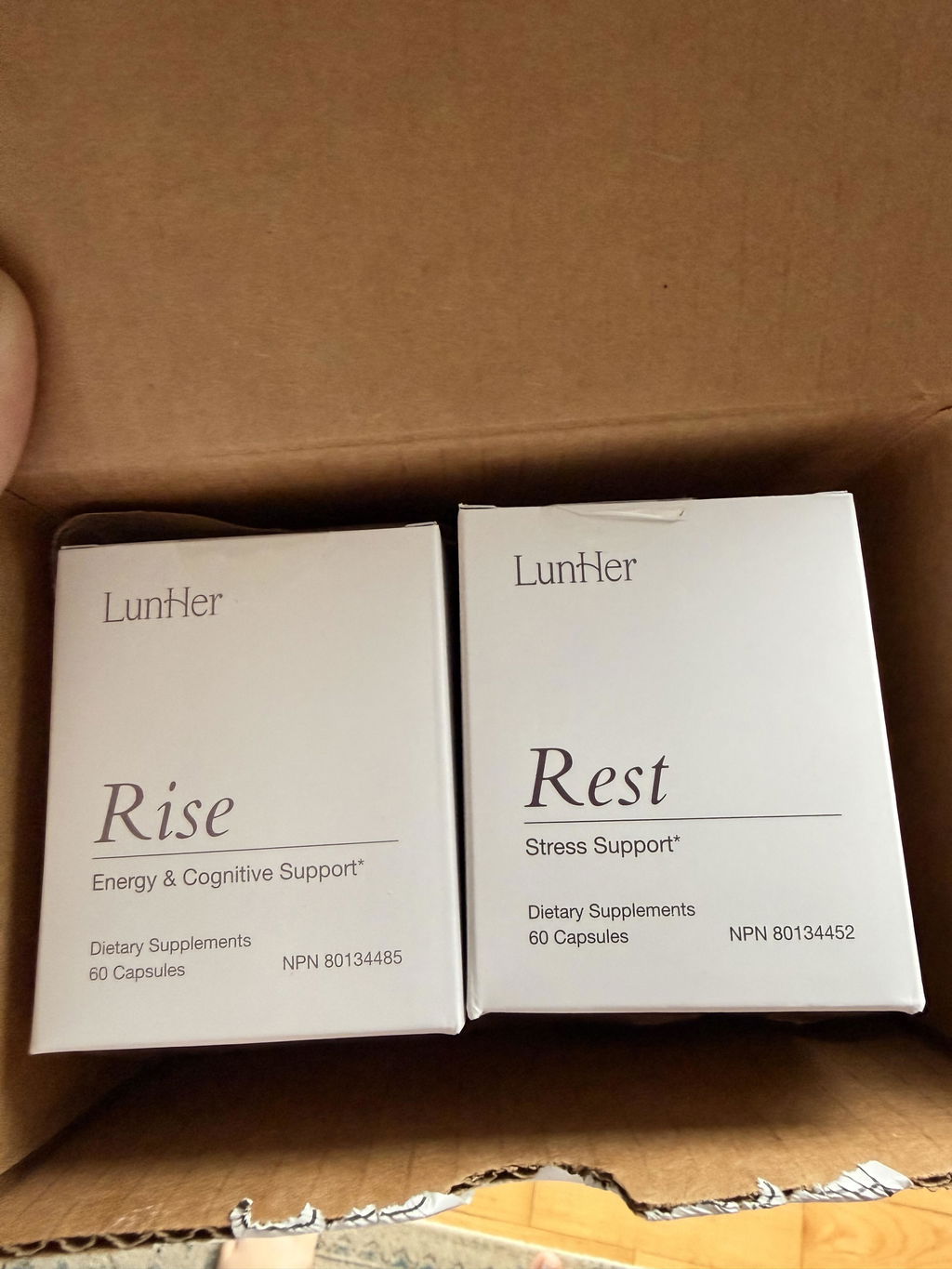
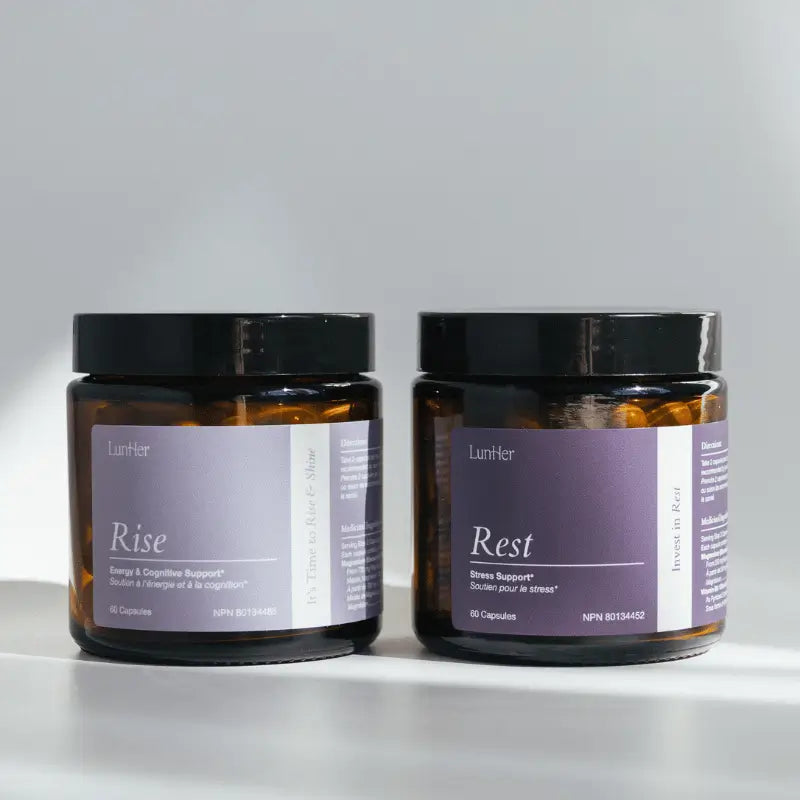
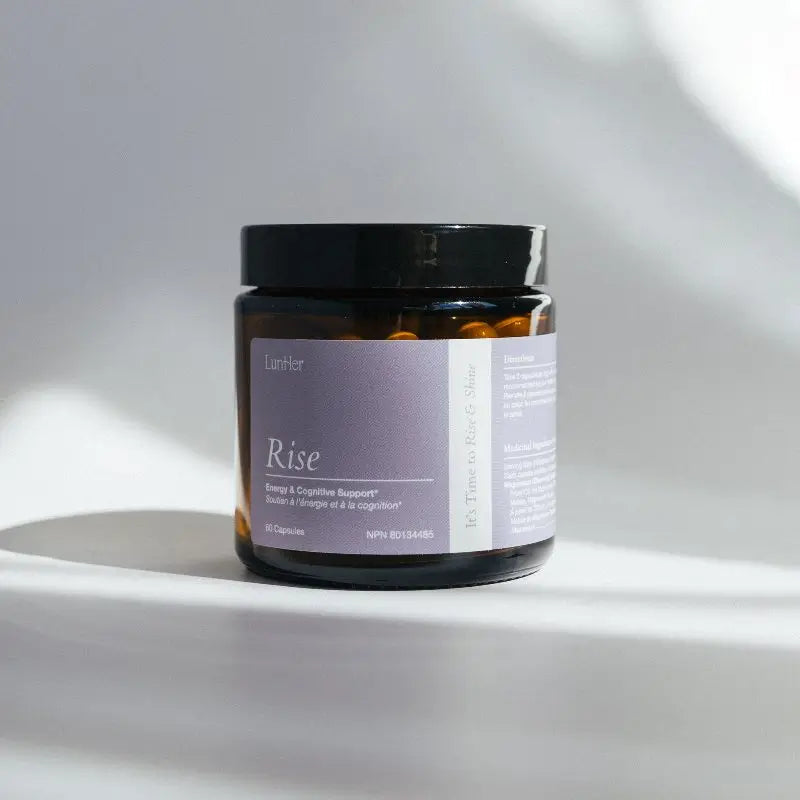
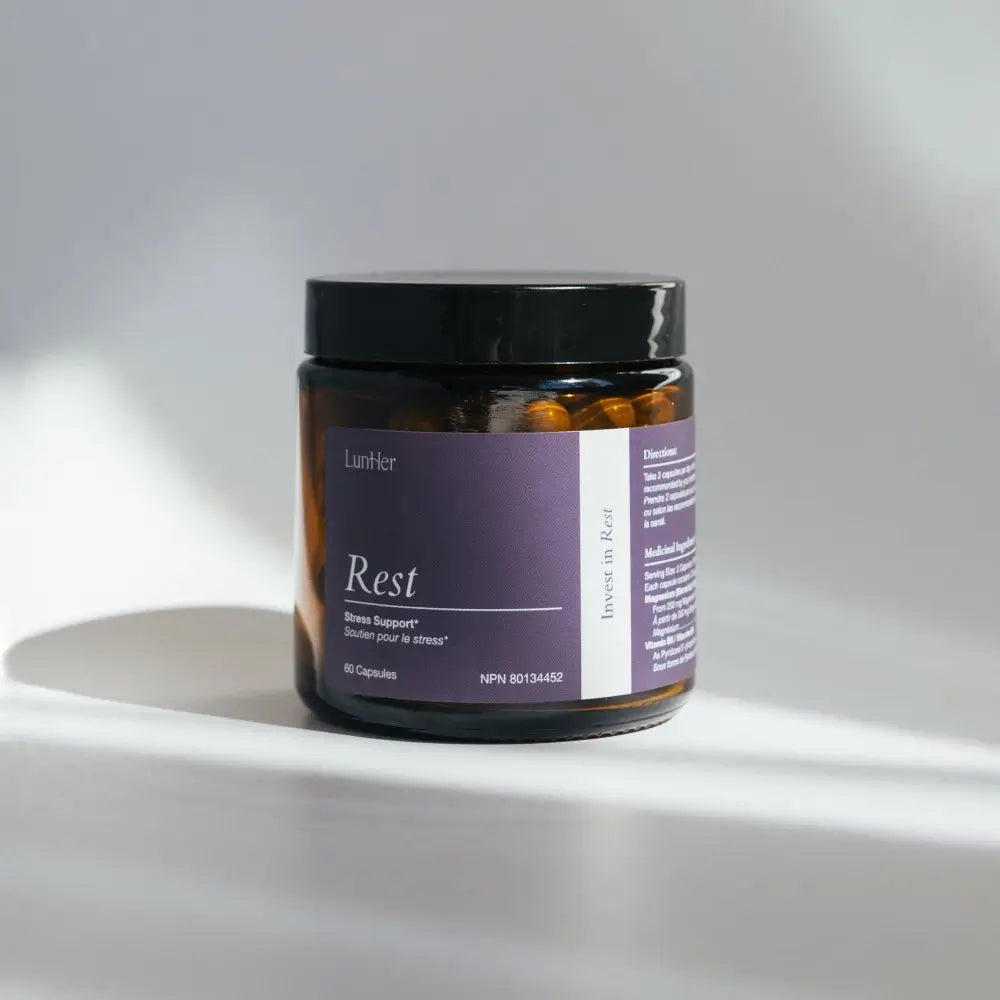
Each of those claims is checkable rather than decorative. The reviews are collected from confirmed purchasers, the natural product numbers are public (Rise NPN 80134485, Rest NPN 80134452), and the no-proprietary-blends policy means you can compare our doses against the research yourself, which we would genuinely encourage. Our standards page lays out the testing and manufacturing detail.
What do women say most often?
Three themes repeat across the reviews. Sleep changes first, usually described as deeper nights and waking actually rested rather than just having slept. Steadier days follow, with fewer afternoon crashes. And then there is the phrase that appears again and again in different wordings: I feel like myself again.
That phrase is also the primary endpoint of our 8-week observational study, so the reviews and the data rhyme. In that study of 40 women, 87 percent reported feeling like themselves again by week eight, 88 percent reported improved sleep duration and quality, 90 percent improved mental clarity and focus, and 93 percent improved overall mood and calm. When the same group was surveyed again at three to four months, the felt-like-themselves number had climbed to 95 percent. All of it is self-reported and observational rather than a placebo-controlled clinical trial, and we label it that way every time, because a brand built on label honesty does not get to blur that line.
What do the critical reviews say?
Two things, mostly. The first is that the early weeks can feel subtle, especially somewhere between day ten and day twenty, when sleep has improved a little but energy has not caught up, and it is fair to wonder whether anything is happening. The second is price, because well-dosed active forms cost more than commodity formulas.
On the first, the honest answer is that the quiet stretch is how nutrient repletion works: sleep steadies before energy does, and the compounding arrives around weeks four to six as sleep, stress, and energy start reinforcing each other. Our guide on how long supplements take to work maps that arc for supplements generally. On price, we would rather defend the cost of real doses in absorbable forms than quietly shrink them, and the 60-day guarantee exists so the risk of finding out sits with us rather than with you.
What about the Reddit question?
People search for LunHer reviews on Reddit for a sensible reason: third-party spaces feel harder to curate than a brand's own review widget. We think that instinct is right, and we would rather meet it than fight it, so here is what we can offer in that spirit.
Read the one-star and three-star reviews as well as the five-star ones. Check the NPN numbers against the Health Canada database. Compare the label doses against the studies, starting with the ingredients where evidence is strongest, and notice where we say the evidence is early rather than proven, including on our own ingredient pages. A brand that publishes its exclusions and its doses is making itself auditable, which is the closest thing to an honest answer the supplement industry offers. What we make and why is on the story page, in the founder's own words.
Who does LunHer seem to work best for?
The reviews cluster around a recognizable situation: women running on empty, sleeping without feeling restored, foggy through the afternoon, and tired of single-ingredient experiments that fixed nothing. That is who the system was formulated for, and the reviews from women in that situation are the strongest ones we have.
It is not for everyone, and saying so plainly costs us less than the wrong customer's disappointment would. It is not recommended during pregnancy or breastfeeding. If your fatigue arrived suddenly, comes with other symptoms, or has never been looked at, a doctor and a blood panel come before any supplement, ours included, and our piece on supplements for burnout says the same thing in more depth. And if you take it for eight weeks and feel nothing, the guarantee means that experiment cost you time but not money. If the situation above sounds like yours, the Daily Ritual bundle is the version of the system most reviewers are describing.
Reviews describe individual experiences and our study is self-reported and observational; results vary. LunHer products support normal body functions and are not intended to diagnose, treat, cure, or prevent any disease.