


The Complete Guide to Postpartum Stress & Sleep Support: Science-Backed Solutions for the Fourth Trimester (2026)
You made it through pregnancy. You survived labor. Your beautiful baby is here.
So why do you feel like you're barely surviving?
If you're reading this at 3am (again), unable to fall back asleep even though your baby finally is... or if you're so wired and exhausted simultaneously that you don't know whether to cry or scream... or if your brain feels like it's wrapped in fog so thick you can't remember what day it is. You're definitely not alone.
Over 60% of postpartum women report fatigue, but what most don't realize is that postpartum depletion isn't just about missing nutrients, it's about a nervous system pushed beyond its limits, stress hormones running wild, and a circadian rhythm completely shattered by round-the-clock caregiving.
The conventional advice? "Sleep when the baby sleeps." "This is just part of motherhood." "It gets easier."
But what if there was a science-backed approach to actually supporting your body's stress response, optimizing your sleep quality, and restoring your energy, without adding more to your impossible to-do list?
This complete guide will show you exactly how to support your postpartum nervous system, why your circadian rhythm matters more than ever, and what actually works for stress and sleep in the fourth trimester and beyond.
Table of Contents:
Understanding Postpartum Stress & Depletion
Let's start with the truth that nobody warns you about.
The Postpartum Stress Storm
Essential nutrients like iron, zinc, vitamin B12, B9, iodine, selenium, omega-3 fatty acids, and amino acids from proteins leave the mother's body to support the baby during gestation and continue through breastfeeding.
But nutrient depletion is only part of the story.
Your postpartum body is also dealing with:
-
Hormonal whiplash: Estrogen and progesterone plummet dramatically within 24 hours of birth
-
Cortisol dysregulation: Chronic sleep disruption keeps stress hormones elevated 24/7
-
Nervous system exhaustion: Your sympathetic nervous system (fight-or-flight) is stuck in overdrive
-
Circadian rhythm destruction: Around-the-clock feeding obliterates your natural sleep-wake cycle
-
Adrenal fatigue: Constant stress depletes your adrenal glands' ability to respond appropriately
-
Neurotransmitter depletion: Serotonin, dopamine, and GABA get depleted by stress and lack of sleep
Postpartum depletion can persist for months or even years after childbirth if left unaddressed.
The Symptoms Nobody Talks About
Physical:
-
Exhaustion that doesn't improve with rest
-
Wired but tired feeling (can't calm down even when exhausted)
-
Racing heart or palpitations
-
Muscle tension, especially neck and shoulders
-
Digestive issues
-
Headaches
-
Dizziness or lightheadedness
Mental/Emotional:
-
Brain fog and difficulty concentrating
-
Memory problems ("mom brain" on steroids)
-
Anxiety or panic attacks
-
Irritability or rage
-
Feeling overwhelmed by simple tasks
-
Emotional dysregulation (crying over everything or feeling numb)
-
Sense of dread or impending doom
Sleep-Related:
-
Can't fall asleep even when baby sleeps
-
Mind racing at night
-
Waking frequently even without baby waking
-
Unrefreshing sleep (wake up exhausted)
-
Second wind at bedtime (getting more wired as night goes on)
If you're experiencing these symptoms, nutrient depletion could be playing a bigger role than you realize, but so is nervous system dysregulation.
Why "Just Rest" Doesn't Work
Well-meaning advice like "sleep when the baby sleeps" fails because:
-
Your nervous system is hypervigilant: Even when you lie down, your body stays in alert mode, listening for baby's cries
-
Your cortisol rhythm is broken: Cortisol should be low at night (allowing sleep) and high in morning (providing energy). Postpartum, it's often reversed or just chronically elevated
-
Your brain is depleted: The nutrients and neurotransmitters needed for quality sleep are used up
-
Your circadian rhythm is scrambled: Your body doesn't know when to be awake or asleep anymore
You don't just need more sleep. You need to restore your body's ability to regulate stress, produce calming neurotransmitters, and follow a natural circadian rhythm.
Why Your Sleep Is Different Now (And It's Not Just the Baby)
Yes, your baby wakes you up. But that's not the whole story.
The Postpartum Sleep Architecture Problem
Even when you get the opportunity to sleep, postpartum sleep is often:
-
Fragmented: Waking multiple times even without baby intervention
-
Unrefreshing: Not cycling through proper sleep stages
-
Anxiety-driven: Lying awake worrying or unable to "turn off"
-
Hormonally disrupted: Low progesterone and estrogen affect sleep quality
What's happening biochemically:
GABA depletion:
-
GABA (gamma-aminobutyric acid) is your brain's primary calming neurotransmitter
-
Chronic stress depletes GABA
-
Low GABA = racing mind, anxiety, inability to relax
Serotonin/Melatonin disruption:
-
Serotonin (produced during day) converts to melatonin (sleep hormone) at night
-
This conversion requires specific nutrients (B vitamins, magnesium)
-
Depletion breaks this natural cycle
Cortisol-Melatonin imbalance:
-
High nighttime cortisol blocks melatonin production
-
You lie awake wired while desperately needing sleep
-
Morning comes and cortisol is now too low (exhaustion all day)
Magnesium deficiency: Magnesium, commonly referred to as the "mama mineral," is very commonly deficient in new moms. It's a mineral we use up rapidly when stressed, yet it's also calming and is involved in thousands of enzyme reactions in the body.
The Sleep Debt Trap
Poor sleep → More stress → Higher cortisol → Worse sleep → More stress...
Breaking this cycle requires more than "getting more sleep." It requires supporting the biochemistry of stress regulation and sleep initiation.
The Circadian Rhythm Connection
Your circadian rhythm is your body's internal 24-hour clock. It regulates:
-
When you feel alert vs. sleepy
-
Hormone production (cortisol, melatonin, growth hormone)
-
Body temperature
-
Metabolism
-
Immune function
-
Tissue repair
Postpartum, this clock is completely scrambled.
Why Circadian Rhythm Matters More Than Ever
Each tissue or organ in the body has its own circadian rhythm and its own peripheral clock, for example, your liver produces enzymes in anticipation of when you normally eat and drink.
When your circadian rhythm is disrupted:
-
Energy is low when you need it (daytime)
-
Alertness is high when you don't want it (nighttime)
-
Hormones are released at wrong times
-
Recovery and repair are impaired
-
Mood regulation fails
The Cortisol-Melatonin Seesaw
Natural (healthy) rhythm:
-
Morning: Cortisol peaks (alertness, energy)
-
Throughout day: Cortisol gradually declines
-
Evening: Melatonin rises (sleepiness, relaxation)
-
Night: Melatonin peaks, cortisol at lowest point
Postpartum dysregulated rhythm:
-
Morning: Cortisol low or erratic (exhaustion)
-
Throughout day: Cortisol spikes unpredictably (stress, anxiety)
-
Evening: Cortisol stays elevated (wired feeling)
-
Night: Melatonin can't rise properly (can't fall asleep)
The solution isn't just to "get more sleep", it's to restore the natural rhythm.
What Your Postpartum Body Actually Needs
Supporting postpartum stress and sleep requires a multi-layered approach targeting:
-
Nervous system regulation (calm the fight-or-flight response)
-
Neurotransmitter support (GABA, serotonin, dopamine)
-
Adrenal function (cortisol regulation)
-
Circadian rhythm restoration (proper timing of energy and calm)
-
Magnesium repletion (the foundation of relaxation)
-
B-vitamin support (energy production and neurotransmitter synthesis)
The Adaptogens: Nature's Stress Regulators
Adaptogenic herbs help your body adapt to stress by:
-
Modulating cortisol (not just lowering it, but regulating it)
-
Supporting adrenal function
-
Improving stress resilience
-
Reducing anxiety without sedation
-
Enhancing energy without stimulation
Key adaptogens for postpartum:
Holy Basil (Tulsi):
-
Reduces cortisol levels
-
Anxiolytic (anti-anxiety) effects
-
Improves stress resilience
-
Supports cognitive function
-
Doesn't cause drowsiness
Schisandra:
-
Adaptogenic powerhouse
-
Supports liver function (hormone metabolism)
-
Enhances mental clarity and focus
-
Improves physical endurance
-
Reduces fatigue
The Calming Botanicals: GABA Support
These herbs support GABA activity and promote genuine relaxation:
L-Theanine:
-
Amino acid from tea leaves
-
Increases GABA, serotonin, and dopamine
-
Promotes alpha brain waves (relaxed alertness)
-
Reduces anxiety without drowsiness
-
Improves sleep quality
Passionflower:
-
Increases GABA in the brain
-
Reduces anxiety and racing thoughts
-
Improves sleep quality
-
Gentle, non-habit forming
-
Safe for breastfeeding
Chamomile:
-
Binds to GABA receptors (mild sedative effect)
-
Reduces anxiety
-
Promotes relaxation
-
Anti-inflammatory
-
Digestive support
The Essential Nutrients: Building Blocks
Magnesium (multiple forms): Magnesium is used for muscle and nerve function during labor, and postpartum it's important for relaxing muscles, reducing cramps, and promoting restful sleep.
-
Magnesium L-Threonate: Crosses blood-brain barrier, cognitive support
-
Magnesium Malate: Energizing, cellular energy production
-
Magnesium Taurate: Calming, cardiovascular support
-
Magnesium Bisglycinate: Highly absorbable, calming, sleep support
B-Complex Vitamins: B vitamins are needed for energy production, nerve repair, and mood stability postpartum.
-
B1 (Thiamine): Nervous system function, energy metabolism
-
B2 (Riboflavin): Women with lower levels of riboflavin were significantly more likely to experience postpartum depression
-
B3 (Niacin): Energy production, hormone synthesis
-
B5 (Pantothenic Acid): Adrenal support, stress response
-
B6 (P-5-P): Neurotransmitter production (serotonin, dopamine, GABA)
-
B12 (Hydroxocobalamin/Cobamamide): Energy, nerve function, methylation
-
Folate (L-5-MTHF): Neurotransmitter synthesis, mood regulation
Vitamin D3: Vitamin D is essential for mood regulation, immune health, and bone strength. Low vitamin D is linked to depression and disrupted circadian rhythm.
CoQ10 (Coenzyme Q10):
-
Cellular energy production
-
Antioxidant protection
-
Mitochondrial support
-
Reduces fatigue
-
Supports cardiovascular function
Morning Support: Energy Without Overstimulation
The postpartum morning challenge: You're exhausted, but you need energy to function. Coffee helps temporarily but often makes anxiety worse and disrupts sleep later.
What your morning actually needs:
Steady Energy Production
B-Vitamins for cellular energy:
-
Thiamine (B1): 10 mg - Converts carbs to energy
-
Riboflavin (B2): 15 mg - Cellular energy production
-
Niacin (B3): 5 mg - NAD+ production (cellular fuel)
-
Pantothenic Acid (B5): 10 mg - Adrenal support
-
B6 (P-5-P): 25 mg - Neurotransmitter production
-
B12: 300 mcg - Energy, cognition, nerve function
These provide real energy at the cellular level, not stimulation.
Cortisol Regulation
Holy Basil (100 mg):
-
Helps normalize cortisol rhythm
-
Reduces anxiety without sedation
-
Improves mental clarity
-
Supports sustained energy
Mitochondrial Support
CoQ10 (50 mg):
-
Powers cellular energy production
-
Reduces oxidative stress
-
Supports cardiovascular function
-
Combats fatigue
Magnesium for Morning Function
Magnesium blend (150 mg):
-
L-Threonate: Brain function, mental clarity
-
Malate: Energizing form, reduces fatigue
-
Taurate: Calm energy, cardiovascular support
Vitamin D3 (1000 IU):
-
Supports circadian rhythm
-
Mood regulation
-
Immune function
-
Works synergistically with B vitamins
The result: Natural energy, mental clarity, stress resilience, without jitters, anxiety, or afternoon crashes.
Evening Support: Rest Without Sedation
The postpartum evening challenge: You're exhausted but wired. You need to sleep but your mind won't stop racing. You finally fall asleep but wake up anxious.
What your evening actually needs:
Nervous System Calming
L-Theanine (200 mg):
-
Increases GABA naturally
-
Promotes alpha brain waves (relaxed state)
-
Reduces racing thoughts
-
Doesn't cause drowsiness, but enhances sleep quality
-
Takes effect within 30-60 minutes
Passionflower (100 mg):
-
Increases brain GABA levels
-
Reduces anxiety
-
Improves sleep onset (falling asleep faster)
-
Improves sleep quality (deeper, more restorative)
Chamomile (150 mg):
-
GABA receptor agonist
-
Mild sedative effect
-
Reduces anxiety
-
Promotes relaxation
-
Anti-inflammatory benefits
Schisandra (150 mg):
-
Adaptogenic support for evening recovery
-
Supports liver function (processes stress hormones overnight)
-
Improves sleep quality
-
Non-sedating adaptogen
Magnesium for Sleep
Magnesium Bisglycinate (100 mg):
-
Most absorbable form
-
Activates parasympathetic nervous system (rest/digest)
-
Relaxes muscles
-
Calms nervous system
-
Supports GABA receptor function
-
Improves sleep quality
Neurotransmitter Support
B6 (P-5-P) (25 mg):
-
Required for serotonin production
-
Serotonin converts to melatonin at night
-
Supports natural sleep hormone production
B5 (Pantothenic Acid) (75 mg):
-
Adrenal support (helps regulate cortisol)
-
Supports overnight recovery
-
Reduces morning cortisol dysregulation
Folate (L-5-MTHF) (250 mcg):
-
Supports serotonin and dopamine production
-
Methylation support
-
Works with B12 for neurotransmitter synthesis
The result: Natural relaxation, easier sleep onset, better sleep quality, reduced nighttime waking, without morning grogginess or habituation.
The Rise & Rest Approach: Circadian-Optimized Support
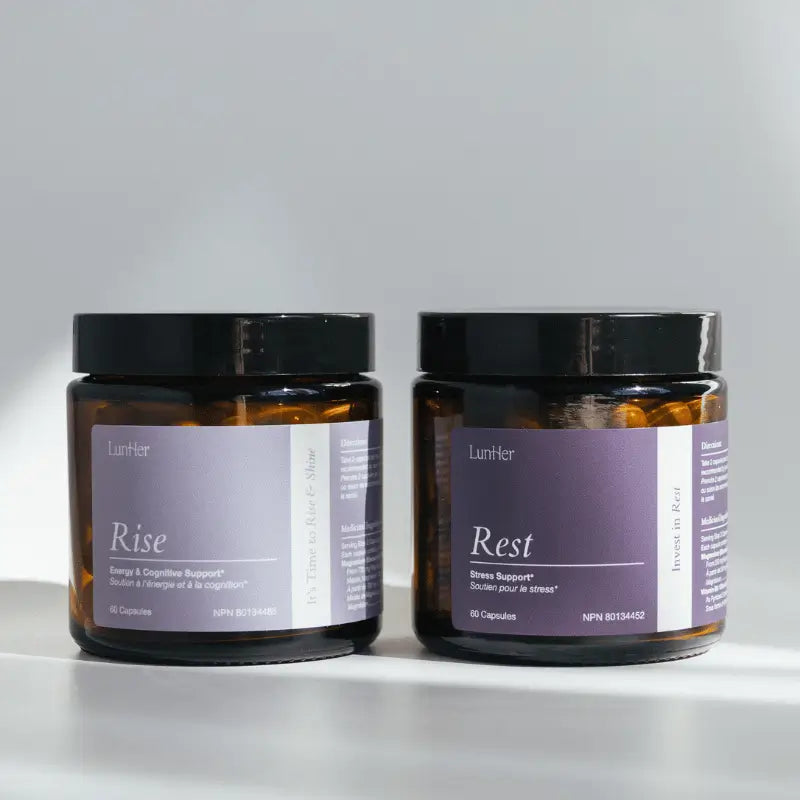
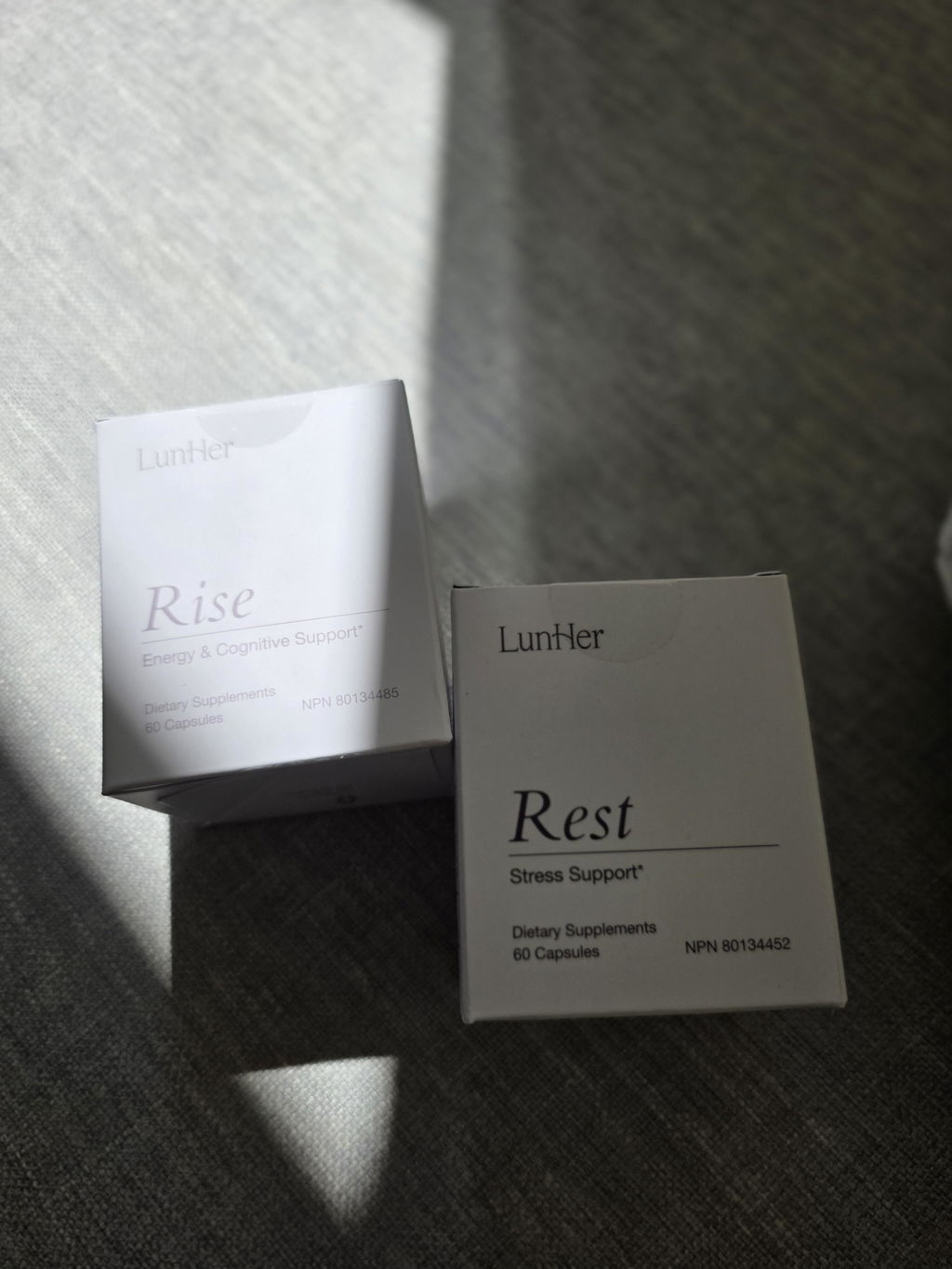
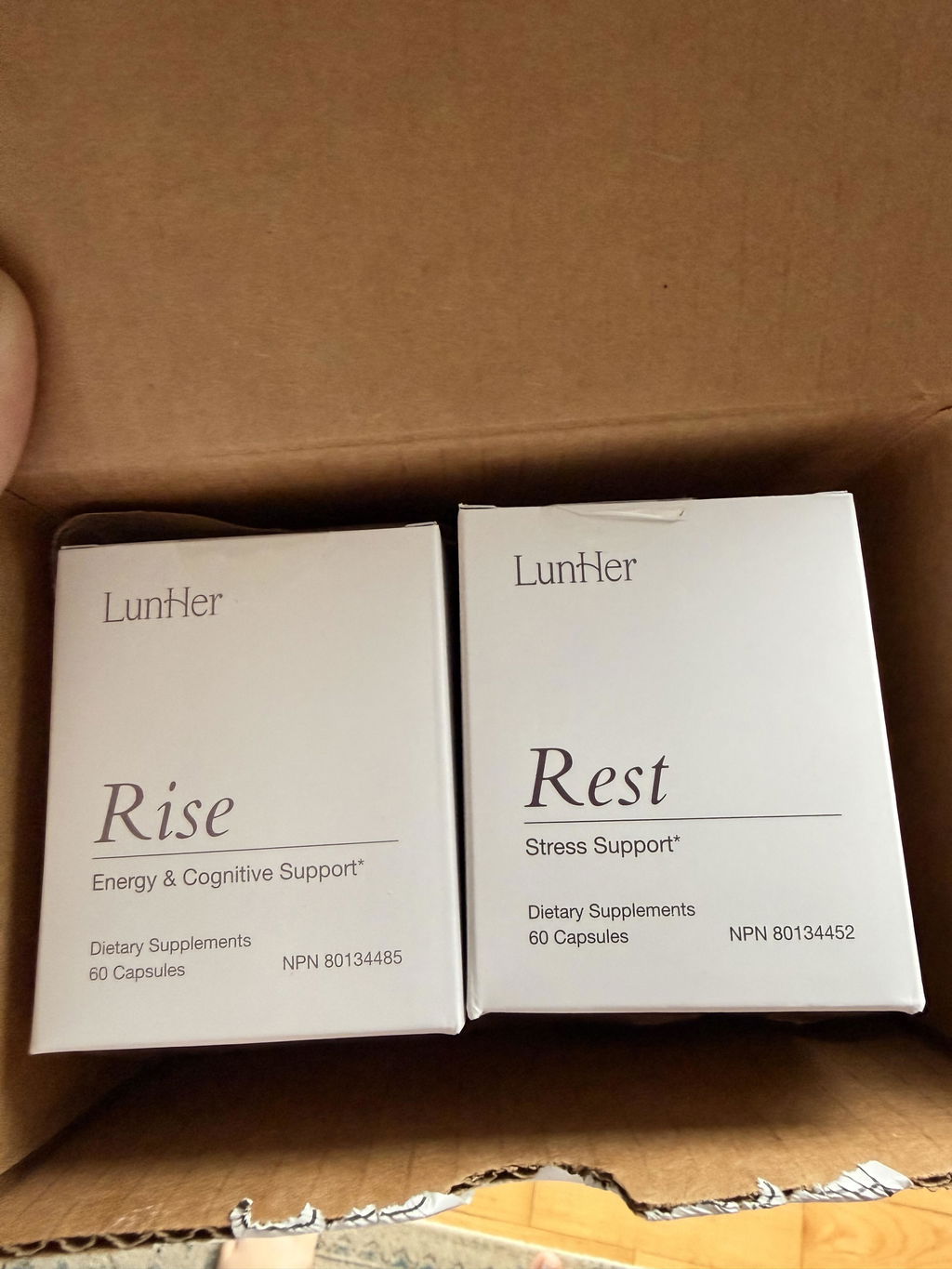
Most supplements ask you to take everything at once. Rise & Rest takes a different approach: two complementary formulas designed around your body's natural 24-hour rhythm.
Why AM/PM Matters
Your body has different needs at different times:
Morning needs:
-
Energy production (not stimulation)
-
Cortisol regulation
-
Mental clarity
-
Stress resilience
-
Sustained function throughout the day
Evening needs:
-
Nervous system calming
-
Cortisol reduction
-
Sleep initiation support
-
Overnight recovery
-
Next-day cortisol rhythm restoration
By separating nutrients and adaptogens into AM and PM formulas:
✓ Support energy when you need it
✓ Support relaxation when you need it
✓ Restore natural circadian rhythm
✓ Prevent stimulating nutrients from disrupting sleep
✓ Prevent calming nutrients from causing daytime drowsiness
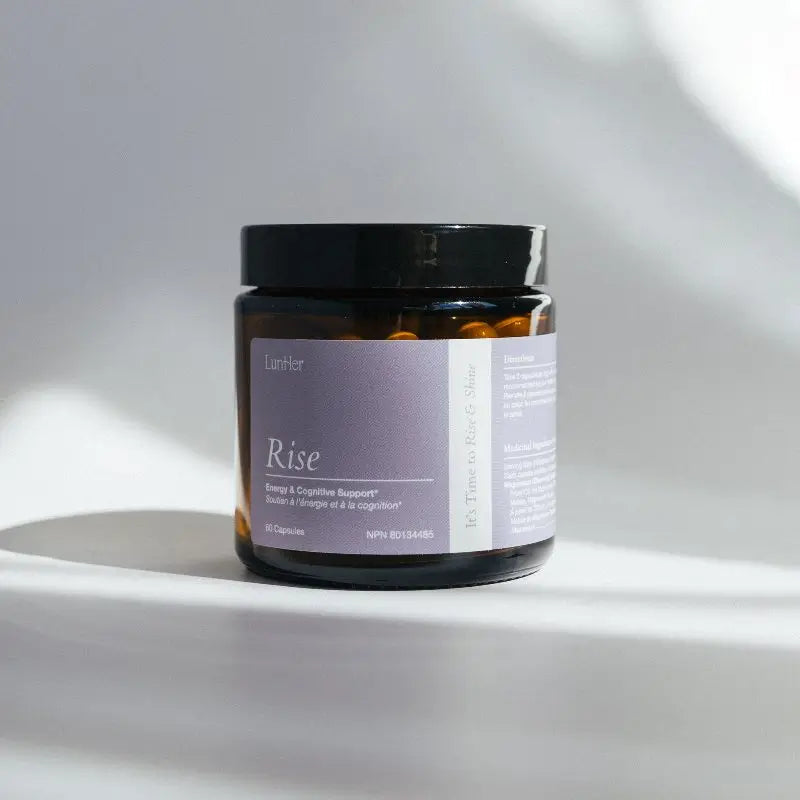
Rise (AM Formula): Sustainable Energy & Stress Resilience
Serving Size: 2 capsules with breakfast
Complete Formula:
Magnesium Blend (150 mg elemental):
-
Magnesium L-Threonate (cognitive function)
-
Magnesium Malate (energizing)
-
Magnesium Taurate (cardiovascular support)
Full B-Complex (Active Forms):
-
Thiamine (B1): 10 mg
-
Riboflavin (B2) as Riboflavin 5'-Phosphate: 15 mg
-
Niacin (B3) from Inositol Hexanicotinate: 5 mg
-
B6 as Pyridoxal 5'-Phosphate: 25 mg
-
Pantothenic Acid (B5): 10 mg
-
B12 from Hydroxocobalamin & Cobamamide: 300 mcg
Vitamin D3: 1000 IU (25 mcg)
CoQ10: 50 mg
Holy Basil: 100 mg (20:1 extract, equivalent to 1000 mg dry leaf)
Why these ingredients work together:
-
B-vitamins provide real energy by supporting cellular ATP production (not stimulation)
-
Magnesium supports B-vitamin function and prevents overstimulation
-
Holy Basil regulates cortisol to prevent stress spikes
-
CoQ10 powers mitochondrial energy production
-
Vitamin D3 supports circadian rhythm and mood
What you'll notice:
-
Steady energy throughout the day (no crashes)
-
Better stress resilience (things don't overwhelm you as easily)
-
Mental clarity (less brain fog)
-
Sustained function (can actually get things done)
-
No jitters or anxiety
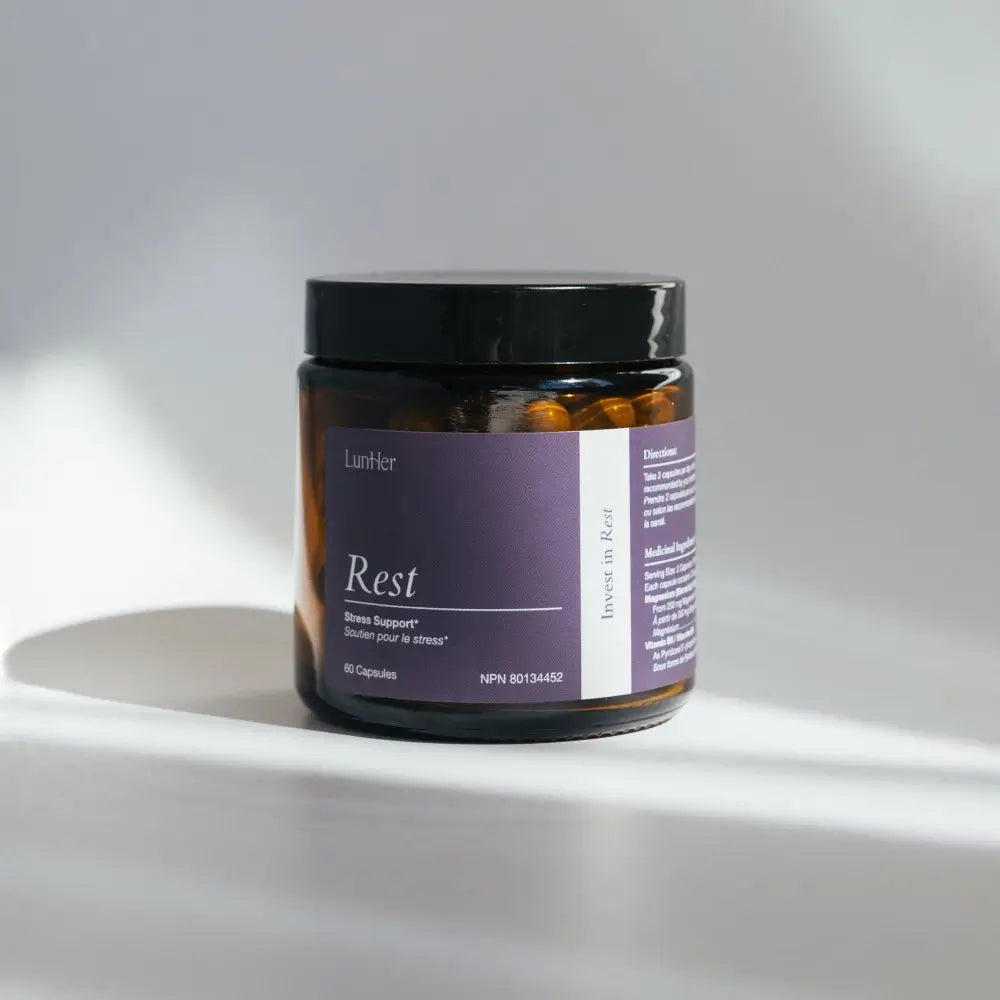
Rest (PM Formula): Deep Relaxation & Sleep Support
Serving Size: 2 capsules with dinner or 1 hour before bed
Complete Formula:
Magnesium Bisglycinate (100 mg elemental):
-
Highly absorbable
-
Calming form
-
Supports GABA function
-
Muscle relaxation
Neurotransmitter Support:
-
B6 as Pyridoxal 5'-Phosphate: 25 mg
-
Pantothenic Acid (B5): 75 mg
-
Folate as L-5-MTHF: 250 mcg
Calming Botanicals:
-
L-Theanine: 200 mg
-
Passionflower: 100 mg (10:1 extract, equivalent to 1000 mg dry leaf)
-
Chamomile: 150 mg (10:1 extract, equivalent to 1500 mg dry leaf)
-
Schisandra: 150 mg (10:1 extract, equivalent to 1500 mg dry leaf)
Why these ingredients work together:
-
L-Theanine & Passionflower increase GABA naturally (calm racing mind)
-
Chamomile enhances GABA receptor function (promotes relaxation)
-
Magnesium activates parasympathetic nervous system (rest mode)
-
B6 & Folate support serotonin → melatonin conversion
-
B5 supports adrenal recovery overnight
-
Schisandra supports liver detox of stress hormones during sleep
What you'll notice:
-
Easier to relax in the evening (mind stops racing)
-
Fall asleep faster
-
Sleep more deeply
-
Wake less frequently
-
Feel more rested upon waking
-
Less morning anxiety
The Synergistic Effect
Week 1-2:
-
Improved stress resilience during day
-
Easier to fall asleep at night
-
Slightly better energy
Week 3-4:
-
Noticeable reduction in anxiety
-
Consistent energy throughout day
-
Sleep quality significantly improved
-
Less brain fog
Week 6-8:
-
Restored circadian rhythm
-
Consistent energy without stimulants
-
Restorative sleep becomes normal
-
Stress feels manageable
-
"Yourself again"
Quality You Can Trust
Natural Product Numbers (NPN):
-
Rise: NPN #80134485
-
Rest: NPN #80134452
(Health Canada licensed, meaning reviewed for safety, efficacy, and quality)
Manufacturing:
-
cGMP certified facilities
-
Third-party tested
-
Vegan capsules (Hypromellose)
-
Minimal excipients (only Microcrystalline Cellulose)
-
No artificial colors, flavors, or preservatives
Forms Matter:
-
All B vitamins in active, methylated forms (no conversion needed)
-
Multiple magnesium forms for synergistic effects
-
High-ratio botanical extracts (10:1, 20:1 for potency)
-
Bioavailable forms throughout
Beyond Supplements: Lifestyle Strategies
Supplements are powerful, but they work best as part of a comprehensive approach.
Morning Routine (Support Rise Formula)
Upon waking:
-
Expose yourself to bright light (ideally sunlight) within 30 minutes
-
This sets your circadian rhythm for the day
With breakfast:
-
Take Rise (2 capsules)
-
Eat protein and healthy fats (stabilizes blood sugar)
-
Limit caffeine to before 10am if needed
Morning movement:
-
Even 5-10 minutes of movement helps regulate cortisol
-
Walking with baby in carrier counts
-
Gentle yoga or stretching
Throughout the Day
Blood sugar stability:
-
Eat every 3-4 hours
-
Include protein at each meal
-
Avoid long fasting periods (worsens cortisol dysregulation)
Stress management:
-
Deep breathing exercises (activates parasympathetic nervous system)
-
4-7-8 breathing: Inhale 4 counts, hold 7 counts, exhale 8 counts
-
Do this 3-4 times when feeling overwhelmed
Hydration:
-
Especially important if breastfeeding
-
Dehydration worsens fatigue and anxiety
-
Aim for half your body weight in ounces
Evening Routine (Support Rest Formula)
2-3 hours before bed:
-
Dim lights throughout house
-
Reduce screen time (blue light disrupts melatonin)
-
Use blue light blocking glasses if using screens
1 hour before bed:
-
Take Rest (2 capsules) with dinner or light snack
-
Begin wind-down routine
-
Warm bath or shower (temperature drop after helps sleep onset)
Bedroom optimization:
-
Cool temperature (65-68°F / 18-20°C ideal)
-
Complete darkness (blackout curtains or eye mask)
-
White noise machine (masks baby sounds so you don't wake at every noise)
-
Remove screens from bedroom
If you wake at night:
-
Don't check phone/time (stimulates cortisol)
-
Practice 4-7-8 breathing
-
If mind racing, do a "brain dump" on paper in dim light
-
Avoid turning on bright lights
What to Avoid
Worsen stress/sleep:
-
Excessive caffeine (especially after 10am)
-
Alcohol (disrupts sleep architecture even in small amounts)
-
High sugar intake (blood sugar crashes = cortisol spikes)
-
Skipping meals (triggers stress response)
-
Intense exercise late in day (raises cortisol)
Common mistakes:
-
Trying to "catch up on sleep" on weekends (disrupts circadian rhythm further)
-
Staying in bed when can't sleep (creates negative association)
-
Using phone/screens when baby wakes at night
-
Eating heavy meals close to bedtime
Frequently Asked Questions
Q: Is this safe while breastfeeding?
Yes. All ingredients in Rise & Rest are considered safe for breastfeeding mothers. The botanicals used (Holy Basil, Passionflower, Chamomile, Schisandra) have traditional use during lactation and no contraindications. However, always consult your healthcare provider, especially if you have any medical conditions or take medications.
Q: Will Rest make me groggy in the morning?
No. Rest contains natural calming botanicals and nutrients that support your body's own sleep mechanisms, not sedative drugs. You should wake feeling refreshed, not groggy. The magnesium and B vitamins actually support morning cortisol production, helping you wake naturally.
Q: Can I take Rise if I'm still drinking coffee?
Yes. Rise provides cellular energy support, not stimulation. It can actually help you reduce caffeine dependence over time as your natural energy improves. If you're very sensitive to B vitamins, you might want to reduce coffee slightly at first, but most women can take both.
Q: How long until I notice results?
Most women notice:
-
Improved stress response within 3-7 days
-
Better sleep quality within 1-2 weeks
-
Consistent energy improvement within 2-4 weeks
-
Significant overall improvement within 6-8 weeks
Q: Can I take just Rise or just Rest?
You can, but the system works best together. Rise supports your daytime function while Rest supports nighttime recovery. Together, they restore your natural circadian rhythm. That said, if you have specific needs (only struggling with sleep, for example), Rest alone can be beneficial.
Q: What if I'm not postpartum, can I still use this?
Yes! While formulated with postpartum needs in mind, Rise & Rest benefits anyone experiencing:
-
Chronic stress
-
Sleep difficulties
-
Adrenal fatigue
-
Circadian rhythm disruption
-
Energy crashes
-
Anxiety
Q: Do I need to take this forever?
No. Think of it as supporting your body through recovery. Most women use Rise & Rest for 3-6 months to restore their stress response and circadian rhythm. Some continue long-term because they feel so much better. Others transition off once they've established healthy sleep patterns and stress resilience.
Q: Can I take this with my prenatal/postnatal vitamin?
Yes! Rise & Rest focuses on stress, energy, and sleep support, not comprehensive vitamin/mineral repletion. It's designed to complement (not replace) a good multivitamin. The B-vitamins and magnesium in Rise & Rest are additional support for stress and sleep, working synergistically with your multivitamin.
Q: Will this interact with medications?
Rise & Rest uses natural ingredients, but interactions are possible. Consult your healthcare provider if you take:
-
Anti-anxiety medications (benzodiazepines)
-
Antidepressants (SSRIs, MAOIs)
-
Blood pressure medications
-
Blood thinners
-
Thyroid medications
-
Diabetes medications
Q: What if I'm vegan?
Rise & Rest is 100% vegan. The capsules are Hypromellose (plant-based), and all ingredients are vegan-friendly.
Q: How should I store these?
Store in a cool, dry place away from direct sunlight. No refrigeration needed. Keep out of reach of children.
Your Postpartum Stress & Sleep Recovery Plan
Week 1: Foundation
Start Rise & Rest: ☐ Take Rise (2 capsules) with breakfast
☐ Take Rest (2 capsules) with dinner or 1 hour before bed
☐ Set phone reminders if needed
Baseline tracking:
☐ Rate your energy level each day (1-10)
☐ Rate your sleep quality each night (1-10)
☐ Rate your stress level each day (1-10)
☐ Note any significant changes
Basic habits:
☐ Get morning sunlight within 30 minutes of waking
☐ Eat protein with breakfast
☐ Dim lights 2 hours before bed
☐ Practice 4-7-8 breathing when stressed
Week 2-3: Building Momentum
Continue Rise & Rest consistently:
☐ Don't skip doses (consistency is key)
☐ Take at roughly the same times each day
Optimize timing:
☐ Experiment with Rest timing (with dinner vs. 1 hour before bed)
☐ Find what works best for your sleep
Add practices:
☐ 5-10 minute walk daily (morning ideal)
☐ Reduce caffeine to morning only
☐ Start wind-down routine 1 hour before bed
☐ Practice breathing exercises 2-3 times daily
Track improvements:
☐ Note changes in energy patterns
☐ Note changes in sleep quality
☐ Note changes in stress response
☐ Celebrate small wins
Week 4-6: Optimization
Fine-tune your routine:
☐ Adjust supplement timing if needed
☐ Refine sleep environment (darkness, temperature)
☐ Establish consistent sleep/wake times
Deepen practices:
☐ Increase movement/activity gradually
☐ Work on blood sugar stability (regular meals)
☐ Practice stress management proactively (not just reactively)
☐ Protect your evening wind-down time
Assess progress:
☐ Compare current ratings to Week 1 baseline
☐ Identify areas still needing support
☐ Adjust lifestyle factors accordingly
Week 8+: Maintenance & Beyond
Continue what's working:
☐ Maintain Rise & Rest if beneficial
☐ Keep healthy habits you've established
☐ Protect your circadian rhythm
Consider next steps:
☐ If fully recovered, gradually reduce or cycle off
☐ If still improving, continue another 4-8 weeks
☐ If plateaued, address other factors (nutrition, thyroid, etc.)
Long-term resilience:
☐ Return to Rise & Rest during stressful periods
☐ Maintain healthy sleep hygiene
☐ Continue stress management practices
☐ Prioritize self-care (not selfish, necessary)
The Bottom Line
Postpartum depletion isn't just about missing nutrients. It's about a nervous system pushed beyond its capacity, stress hormones running unchecked, and a circadian rhythm shattered by the demands of new motherhood.
If postnatal depletion isn't addressed, mothers can experience physical, mental, and emotional symptoms for up to a decade after giving birth.
You don't have to live in survival mode.
Rise & Rest offers a science-backed approach to:
-
Restore your natural energy (without stimulants)
-
Regulate your stress response (without sedatives)
-
Optimize your sleep quality (without dependency)
-
Rebuild your circadian rhythm (naturally)
-
Reclaim your sense of calm and capability
This isn't about being a "perfect" mother. It's about giving your body the support it needs to function, so you can be present, capable, and resilient during one of life's most demanding seasons.
Your body just performed a miracle. It deserves support, not just survival.
Ready to feel like yourself again?
👉 Try Rise & Rest Risk-Free - Start your journey back to balance
👉 Take the Stress & Sleep Assessment - Discover your personalized recovery plan
Important Disclaimers:
These statements have not been evaluated by the Food and Drug Administration. This product is not intended to diagnose, treat, cure, or prevent any disease.
This information is for educational purposes only and should not replace medical advice. Always consult with your healthcare provider before starting any new supplement regimen, especially during pregnancy, breastfeeding, or if you have any medical conditions or take medications.
Individual results may vary. The timeline and effects described represent typical experiences but are not guaranteed.



,%20unable%20to%20fall%20back%20asleep%20ev...)