
Adrenal Fatigue Supplements: 9 Options That May Help (Science-Backed)
You wake up exhausted after a full night. Coffee stops touching it by 2pm. Your brain runs through mud, and somewhere along the way you typed "adrenal fatigue supplements" into a search bar, because nothing else you have read explains why you feel this drained. Here is the honest version of that answer, including the part most supplement pages leave out.
Key takeaways: "Adrenal fatigue" is not a recognized medical diagnosis, and a systematic review of 58 studies found no evidence that worn-out adrenal glands are causing your symptoms. What you are feeling is still real. The adrenal support supplements worth your money are magnesium, activated B vitamins, holy basil, and L-theanine, and they work by supporting your stress response and your sleep, not by reviving tired glands. Anything promising to revive your adrenals is selling you a story.
What are the best adrenal fatigue supplements?
The options with the most credible research behind them are magnesium, activated B vitamins, holy basil, and L-theanine, plus vitamin C and vitamin D if a blood test shows you are running low. None of them repair adrenal glands. They support the stress response and the restorative sleep your recovery actually depends on.
That distinction matters more than it sounds. If you buy a supplement believing it will refill an empty gland, you will judge it by the wrong timeline and quit before anything real happens. If you understand what it is actually supporting, you give it the eight weeks it needs.
Is adrenal fatigue a real medical diagnosis?
No. Adrenal fatigue is not recognized by any endocrinology society. A 2016 systematic review in BMC Endocrine Disorders reviewed 58 studies and concluded there is no substantiation that adrenal fatigue is an actual medical condition. That does not mean your symptoms are imagined. It means the explanation you were handed was wrong.
The review authors were blunt about it, calling adrenal fatigue a myth after finding heterogeneous study designs, poor fatigue assessment, and unvalidated cortisol testing across the literature (Cadegiani and Kater, BMC Endocrine Disorders, 2016). We would rather tell you that up front than sell you a fix for a condition that does not exist.
There is a separate, real condition called adrenal insufficiency, including Addison's disease, where the adrenal glands genuinely underproduce hormones. It is diagnosed with blood tests and treated by a doctor. If your exhaustion comes with dizziness, unexplained weight loss, or very low blood pressure, that is a conversation for your practitioner, not a supplement aisle.
Is adrenal fatigue real? The full breakdown of what the evidence says →
If adrenal fatigue is not real, why do you feel this depleted?
Because chronic stress changes how your whole stress system behaves, not how much your adrenal glands can manufacture. Researchers study this as HPA-axis dysregulation, a shift in the signalling loop between your brain and your adrenal glands. Your glands are not empty. The loop that tells them what to do has been running flat out for years.
Be careful with anyone who tells you exactly what your cortisol is doing, though. A 2020 systematic review in Neuroscience and Biobehavioral Reviews looked at basal and reactive cortisol across depression and exhaustion syndromes and found the evidence too limited and too inconsistently measured to draw firm conclusions (systematic review, Neuroscience and Biobehavioral Reviews, 2020). The honest position is that the system is dysregulated, and the exact pattern varies from woman to woman.
This is also why single-symptom fixes keep failing you. Nights that do not restore, days that run on empty, stress that steals from tomorrow. It is one depleted system stuck in a loop, which is why fixing one piece never fixed the rest. The supplement side of supporting that system is mapped in our nervous system supplements guide, and the 3am wake-ups get their own explanation in why you wake at 3am.
Supplements to reduce cortisol: what the research actually supports →
If what you are really dealing with is burnout, start here instead: the full guide to supplements for burnout →
What are the symptoms people call adrenal fatigue?
The usual list is exhaustion that sleep does not fix, brain fog, trouble waking up and trouble falling asleep, salt and sugar cravings, and motivation that has quietly disappeared. Not one of these is specific to your adrenal glands, which is exactly why they deserve a proper workup rather than a self-diagnosis from a symptom quiz.
- Fatigue that a full night of sleep does not touch
- Brain fog and word-finding trouble
- Hard to wake up, hard to wind down
- Waking at 3am and struggling to get back down
- Salt cravings and sugar cravings
- Motivation and drive that have flattened out
Ask your doctor to rule out the boring explanations first: thyroid function, iron and ferritin, B12, vitamin D, blood sugar, and sleep apnea. A surprising number of women who arrive at "adrenal fatigue" leave with a low ferritin result and a very different plan.
9 adrenal fatigue supplements, honestly reviewed
Here are nine supplements commonly sold for adrenal support, ordered roughly by how much evidence sits behind them. Some have placebo-controlled human trials. Some have a plausible mechanism and very little else. We have flagged which is which, because a list that treats them all as equally proven is not useful to you.
1. Magnesium
Magnesium is the one most women are genuinely low in, and stress appears to burn through it faster. A 2017 systematic review in Nutrients pulled together 18 studies and found the evidence "suggestive but inconclusive" for a benefit on mild anxiety, and noted that not one study used a validated measure of subjective stress (Boyle, Lawton and Dye, Nutrients, 2017). Promising, not proven, and worth taking seriously anyway.
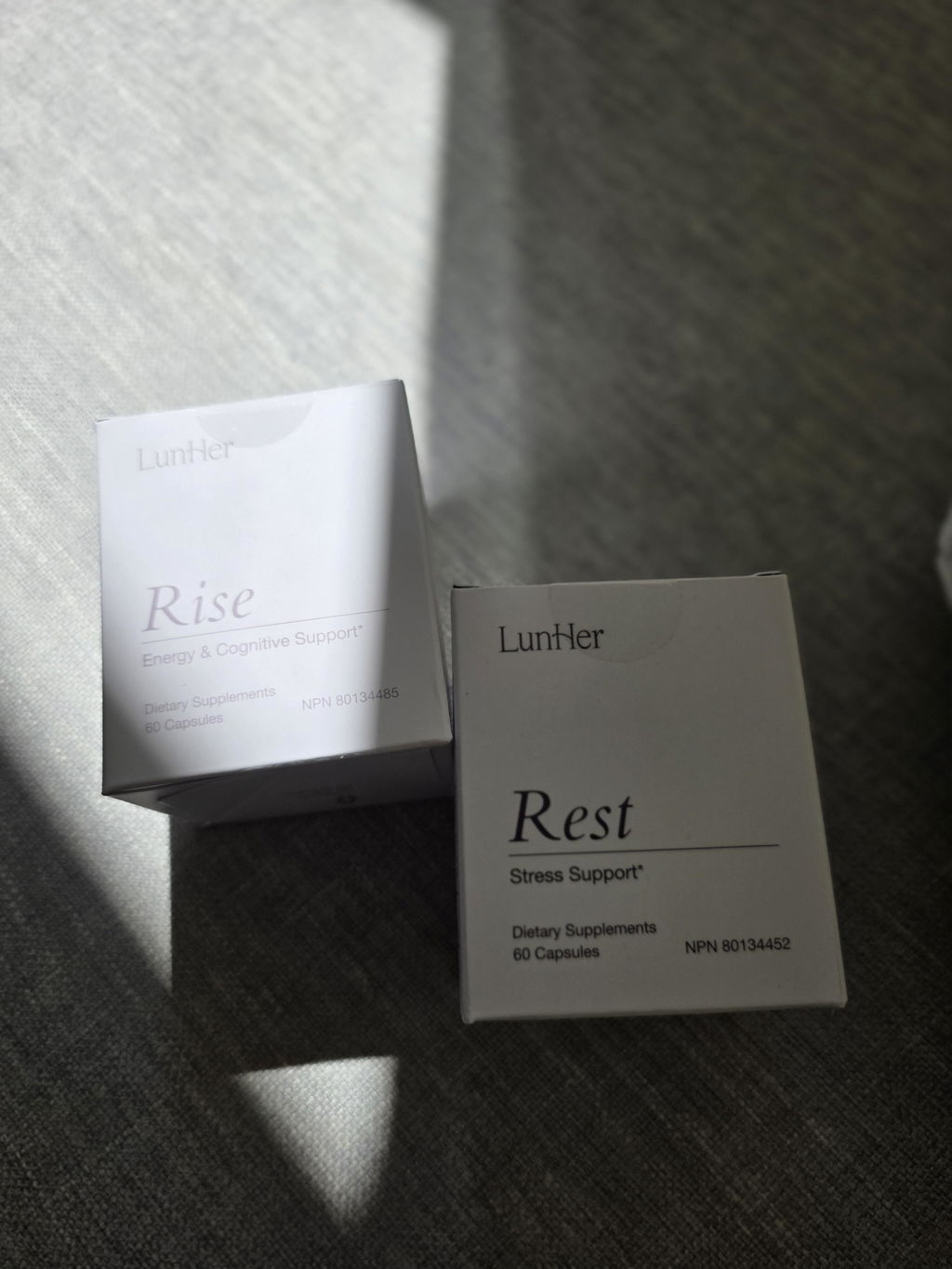
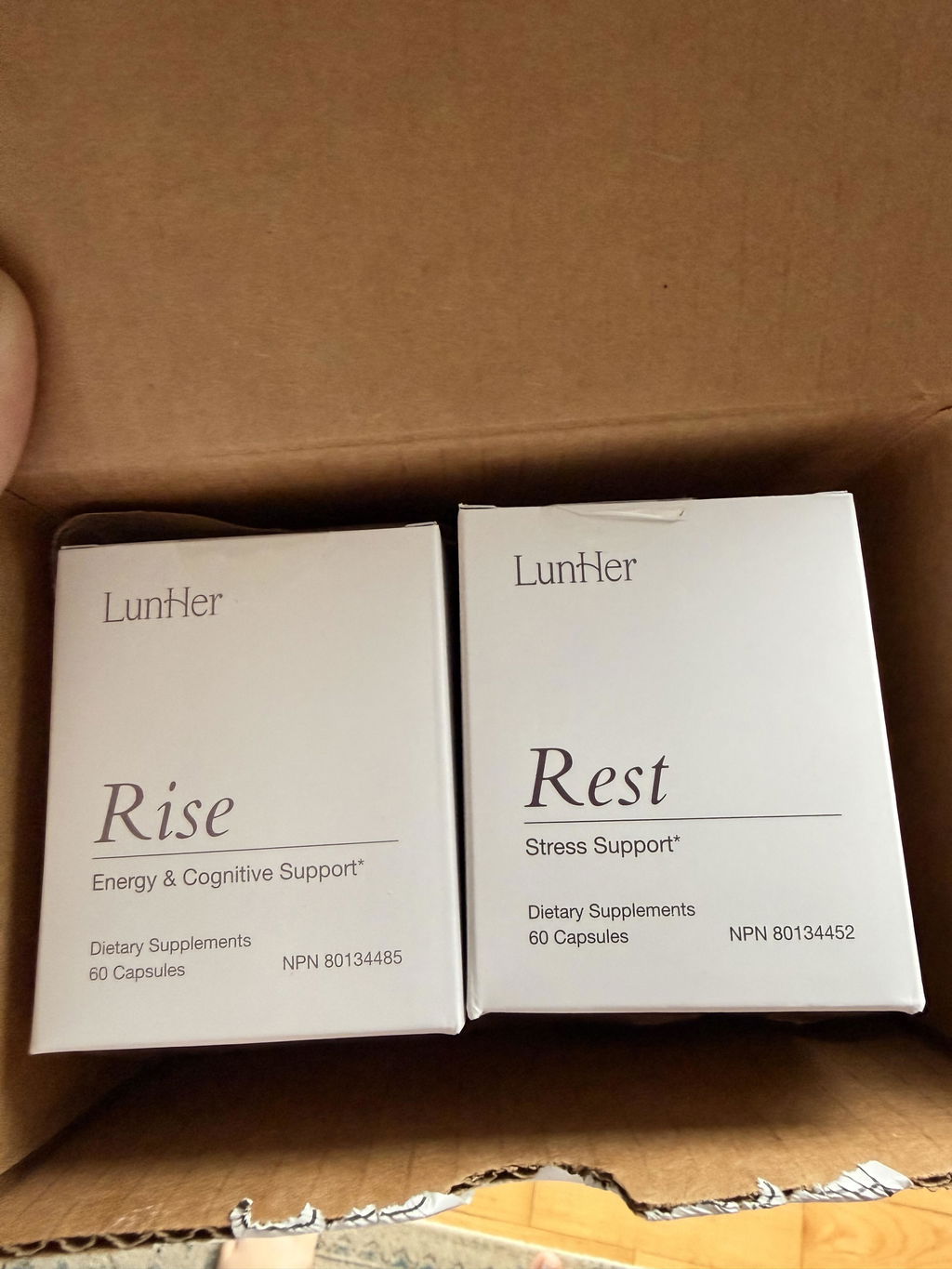
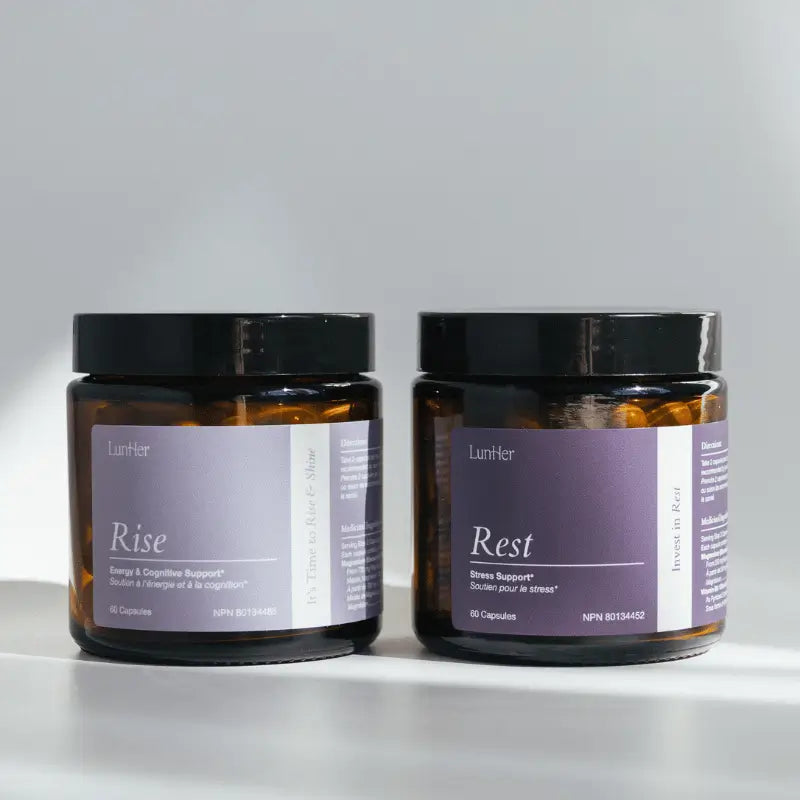
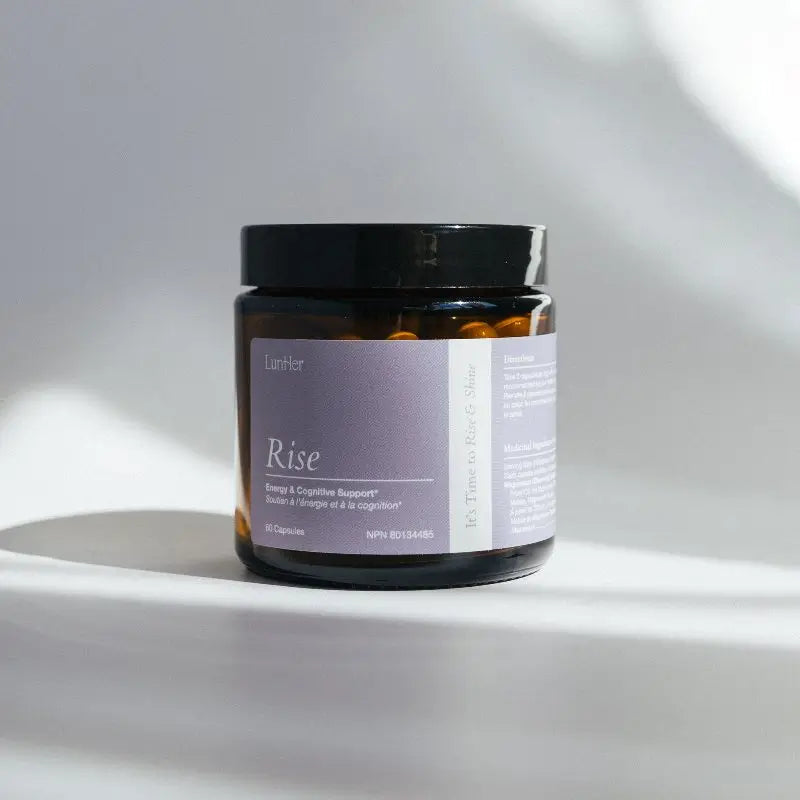
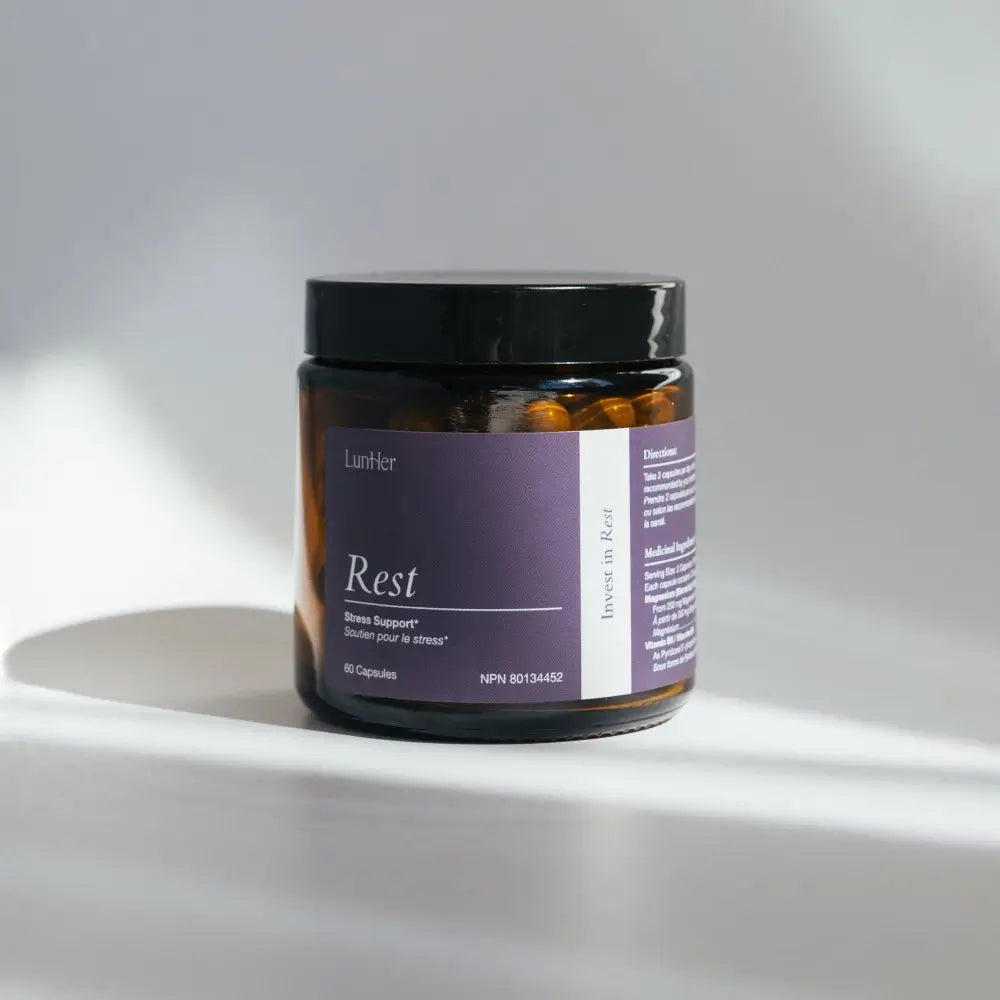
The form matters more than the milligrams. Skip magnesium oxide, which is poorly absorbed and mostly acts as a laxative. Rise uses 150 mg of elemental magnesium as three targeted forms (L-threonate, malate, and taurate); Rest uses 100 mg of elemental magnesium as bisglycinate for the evening.
2. B vitamins, especially B5 and B6
B vitamins are cofactors in energy metabolism and neurotransmitter production, which is why they show up in every adrenal formula on the shelf. Pantothenic acid (B5) is involved in coenzyme A and steroid hormone synthesis, and B6 supports the pathway that converts tryptophan toward serotonin and melatonin. What we cannot tell you is that a B complex will fix fatigue on its own, because the trial evidence for that specific claim is thin.
If you do take them, take the activated forms. Rise and Rest each use P5P rather than plain pyridoxine, L-5-MTHF rather than folic acid, and hydroxocobalamin with cobamamide rather than cyanocobalamin. Rest carries 75 mg of B5 for the overnight window; Rise carries 10 mg.
3. Vitamin C
Your adrenal cortex holds one of the highest ascorbic acid concentrations of any tissue in your body, and vitamin C is part of the antioxidant defence that protects the gland during steroid hormone production (Prasad et al., Journal of Endocrinology, 2014). The evidence linking depletion to adrenocortical degeneration in that paper comes from animal work, so treat it as biology worth knowing rather than proof that a vitamin C supplement will lift your fatigue.
4. Vitamin D
Vitamin D deficiency is common, especially through a Canadian winter, and low levels are associated with low mood and poor sleep. The research connecting vitamin D supplementation specifically to cortisol is early and inconsistent, so the honest framing is this: get your level tested, correct it if you are low, and do not expect it to be the thing that changes everything. Rise includes 1000 IU as a maintenance dose.
5. Holy basil (tulsi)
This is the strongest evidence on the list. In a 2022 randomized, double-blind, placebo-controlled trial in Frontiers in Nutrition, 100 stressed adults took 125 mg of a standardized Ocimum tenuiflorum extract twice daily for eight weeks. Perceived Stress Scale scores fell 37% versus 19% on placebo, and the holy basil group finished with significantly lower hair cortisol, a marker of longer-term stress exposure (Lopresti et al., Frontiers in Nutrition, 2022).
One caveat worth naming: that trial used one specific standardized extract, and herbal extracts are not interchangeable. Rise uses an organic 20:1 holy basil extract at 100 mg, equivalent to 2000 mg of dry leaf.
6. L-theanine
L-theanine is an amino acid from green tea that supports calm without sedation. In a randomized, double-blind, placebo-controlled crossover trial in Nutrients, 34 healthy adults showed a reduced subjective stress response one hour after an L-theanine drink, and a reduced salivary cortisol response to a stress task three hours after dosing (White et al., Nutrients, 2016). Not every trial finds a cortisol effect, so read it as real but modest. Rest uses 200 mg, within the clinically studied range.
7. Rhodiola rosea
Rhodiola is a popular adaptogen for stress-related fatigue, and small human trials have reported improvements in fatigue and mental performance under stress. The literature is limited, the extracts used vary widely in standardization, and the better-designed trials are few. Reasonable to try under practitioner guidance, not something we would build a daily formula around.
8. Schisandra
Schisandra is a traditional adaptogen used for stress resilience and liver support, and it appears in a lot of HPA-focused formulas. Human evidence in stressed adults is limited compared with holy basil, so the case for it is more mechanistic than clinical. LunHer includes an organic 10:1 extract at 150 mg in Rest, where it works alongside the sleep and recovery ingredients rather than carrying the formula.
9. Ashwagandha, and why LunHer leaves it out
Ashwagandha has genuine research behind it. In a 2012 randomized, double-blind, placebo-controlled trial, 64 adults with chronic stress took 300 mg of a full-spectrum root extract twice daily for 60 days. Perceived Stress Scale scores dropped 44% versus 5.5% on placebo, and serum cortisol fell 27.9% versus 7.9% (Chandrasekhar, Kapoor and Anishetty, Indian Journal of Psychological Medicine, 2012). It works.
LunHer still leaves it out, and here is the reasoning. A separate randomized trial found it significantly moves thyroid hormones, thyroid disease is far more common in women, and adjudicated case series document an uncommon but real liver-injury signal. Rise and Rest are built to be taken daily and indefinitely, and an ingredient whose honest label needs a thyroid caveat does not fit that use. We chose holy basil for the adaptogen slot instead, and if ashwagandha works for you, use it with your thyroid monitored and your practitioner aware.
Which adrenal support supplements have the strongest evidence?
Holy basil and L-theanine have the cleanest placebo-controlled trials for perceived stress and cortisol response. Magnesium has broad, suggestive evidence and matters most if you are running low. Vitamin C and vitamin D are worth correcting when a blood test says you are deficient, and not much use when you are not.
Notice what is missing from that ranking: anything sold as an "adrenal glandular" or an adrenal cocktail. Those products are built on the exact premise the research does not support, and some contain animal adrenal tissue with no meaningful safety or efficacy data behind them.
How long do adrenal exhaustion supplements take to work?
Give it eight weeks. Sleep usually shifts first, often within one to two weeks, because it is the fastest-moving piece. Energy and focus follow later, once your nights have something to build on. Days 10 to 20 are the stretch where most women decide it is not working, right before it starts to.
For a sense of the arc: in LunHer's 8-week observational study (n=40, self-reported, not a clinical trial), 88% of women reported improved sleep duration and quality and 87% said they felt like themselves again. Sleep supports cortisol, cortisol supports energy, energy supports focus. That order is why the timeline is what it is.
What else supports your adrenal glands besides supplements?
Sleep, food, and load. Seven to nine hours on a consistent schedule, meals that keep your blood sugar steady instead of spiking and crashing, less caffeine after noon, and one daily practice that tells your nervous system the emergency is over. Supplements support all of this. They do not substitute for any of it.
- Protect a consistent sleep and wake time, including weekends
- Eat protein at breakfast instead of running on coffee until noon
- Move gently. Hard training on an empty tank adds stress, it does not relieve it
- Cut caffeine after midday, and notice what happens to your 3am wake-ups
- Give your nervous system ten minutes a day of something unproductive: breathwork, a walk without a podcast, stretching
The bottom line on adrenal fatigue supplements
Adrenal fatigue is not a diagnosis, and no supplement is going to revive exhausted glands, because that is not what is happening to you. What is happening is a stress system running for years without enough support. That responds to magnesium, activated B vitamins, holy basil, and L-theanine, alongside sleep, food, and a lighter load.
Choose products that publish their full doses and forms, skip anything built on the adrenal-exhaustion story, and give whatever you choose a real eight weeks before you judge it.
Frequently asked questions
Is adrenal fatigue the same as burnout?
Not quite. Adrenal fatigue is an unrecognized explanation for a set of symptoms, while burnout is a recognized occupational phenomenon with its own criteria around exhaustion, cynicism, and reduced performance. The symptoms overlap heavily. If work is the thing draining you, start with the guide to supplements for burnout instead.
What is the best supplement for adrenal fatigue?
There is no single best one, and any page that names one is guessing. Holy basil has the strongest placebo-controlled evidence for perceived stress and cortisol, L-theanine is the best-supported option for calm without sedation, and magnesium matters most if you are depleted. Your symptoms and your bloodwork should decide the order.
Can a doctor test you for adrenal fatigue?
No, because it is not a diagnosable condition, and salivary cortisol panels sold as adrenal testing are not validated for it. A doctor can test for genuine adrenal insufficiency with blood cortisol and an ACTH stimulation test, and can check thyroid, ferritin, B12, and vitamin D. Those results change what you should actually do.
Is ashwagandha good for adrenal fatigue?
It has real trial evidence for reducing perceived stress over 60 days, so it can help how you feel. LunHer leaves it out of daily formulas because a randomized trial shows it moves thyroid hormones and there is a documented, uncommon liver-injury signal. If you use it, do so with practitioner guidance and thyroid monitoring.
Are adrenal support supplements safe to take with medication?
Sometimes, and it is worth asking rather than assuming. Adaptogenic herbs can interact with thyroid medication, sedatives, blood pressure drugs, and immune-modulating treatments, and the research on specific interactions is patchy. Talk to your doctor or pharmacist before adding anything, especially if you take a daily prescription or manage a health condition.
The information in this article is for general educational purposes only and is not intended to replace consultation with a qualified healthcare professional. Always consult a doctor or naturopath before starting any supplement, particularly if taking medications or managing a health condition. LunHer products are not intended to diagnose, treat, cure, or prevent any disease.