


How to Lower Cortisol Naturally: A Woman's Method Guide
You have probably been told to just lower your cortisol, as if there were a dial you could turn down. If you are running on empty, waking at 3am, and crashing by mid-afternoon, that advice is not just unhelpful, it is the wrong frame. Here is the honest, women-specific version: what actually shifts your cortisol rhythm, in order of what matters most, without the hype or the cortisol pills.
Key takeaways:
- Cortisol is not the enemy, and the goal is not a lower number. It is a steadier daily rhythm: high in the morning, low at night.
- The biggest levers are the least glamorous ones, sleep timing and eating enough, not the ones being sold to you.
- Targeted nutrients support the process, they do not replace it, and anything promising to crush cortisol fast is worth ignoring.
How do you lower cortisol naturally?
You lower cortisol naturally by fixing the inputs that keep it elevated: protecting your sleep, getting morning light, eating enough through the day, timing caffeine, and matching movement to your energy. The goal is not a lower number, it is a steadier daily rhythm. Targeted nutrients support the process, they do not replace it.
Most cortisol advice skips straight to a supplement or a breathing app. Those have a place, but they sit near the end of the list. If your nights are broken and you are under-eating to get through the day, no capsule closes that gap. Start with the foundation, then layer support on top.
What does cortisol actually do, and is lowering it the right goal?
Cortisol is your body's main stress hormone, and you need it. It should be highest in the morning to wake you and lowest at night so you can sleep. Burnout rarely means too much cortisol everywhere. It usually means the rhythm is off: flat when you need it, and stubbornly high at 3am when you do not.
This is why chasing a lower level misses the point. A healthy cortisol curve rises sharply in the 30 to 45 minutes after you wake, then tapers across the day toward a low at night. Chronic stress flattens or reverses that curve. So the real question is not how low your cortisol is, it is whether it is high and low at the right times.
Why you are wired but tired and cannot fall asleep despite exhaustion →
What are the signs your cortisol rhythm is off in women?
Signs your cortisol rhythm is off show up as waking at 3am unable to get back down, feeling wired but exhausted, an afternoon energy crash, cravings for salt or sugar, and stress that tracks with your cycle. It reads like four separate problems, but it is usually one depleted system stuck in a loop.
For women, the picture has an extra layer. Cortisol does not run in isolation from the rest of your hormones, so a flattened rhythm can feel heavier in the second half of your cycle. You might notice the 3am wake-ups cluster in the week before your period, or that the same workload feels heavier some weeks than others. That is not you being inconsistent. That is a nervous system running without a full tank.
What actually lowers cortisol, in order of impact?
The biggest levers are the least glamorous ones. In rough order of impact: consistent sleep timing, morning daylight, eating enough through the day, keeping caffeine off your cortisol peaks, and matching movement to your energy. Nutrients and stress off-ramps come after these, supporting the work rather than replacing it.
Sleep timing (the deepest lever)
Sleep and cortisol feed each other in a loop, which is why this is first. When your rhythm is off, cortisol steals from your nights, and short nights push it back up: after a night of partial or total sleep loss, evening cortisol ran 37 to 45% higher the next day, and the drop into the quiet phase came later. You break the loop from the sleep side. A consistent wake time, even on weekends, anchors the whole curve. Protect your nights first, and everything else has something to build on.
Morning light
Your cortisol is supposed to rise in the first half hour after waking, and light is what sharpens it. In controlled sleep-laboratory testing, bright and blue-enriched morning light raised post-waking cortisol compared with dim light. Ten to twenty minutes outside soon after you wake, no sunglasses, is the cheapest lever on this list and one of the few that can shift things within days. Our guide to your circadian rhythm covers how light sets the rest of the clock.
Eating enough
This is the one diet culture gets backwards. Under-eating is a stressor, and your body answers with cortisol. In a three-week randomized study in women, restricting calories raised total daily cortisol output. Skipping breakfast, then running on coffee until 2pm, is a cortisol strategy, just not the one you want. Eating enough, with protein early, takes that job off your stress hormones.
Caffeine timing
You do not have to quit coffee. But caffeine is a genuine cortisol stimulus: in controlled dosing across the waking day, caffeine raised cortisol, and daily use only partly blunted that response. Drinking it first thing, on an empty stomach, adds that rise on top of the one your body is already making. Wait sixty to ninety minutes after waking, and eat something first. You keep the ritual, you just stop pouring fuel on a fire that is already lit.
Movement dose
Movement lowers stress, until it does not. When you are already depleted, hard daily workouts are another withdrawal from an overdrawn account. In a systematic review of overtraining, resting hormone levels mostly looked normal, but the stress-hormone response to a challenge was often blunted. That is the signature of a system that has stopped answering, not one simply running hot. On low-energy weeks, walking, mobility, and strength work at an easy effort do more than punishing cardio. Match the dose to the tank you actually have.
Stress off-ramps
Your nervous system needs signals that the day is over. Slow breathing with long exhales, a few minutes outside, gentle stretching, or simply putting the phone down all tell your body the threat has passed. None of these are dramatic, and that is the point. Small, repeatable off-ramps beat one big reset you never quite get to.
Which nutrients support a healthy cortisol rhythm?
A few nutrients genuinely support a healthy cortisol response: magnesium, L-theanine for calm without sedation, and adaptogens like holy basil. We keep the full evidence-based list in a separate guide so this stays a method piece. Nutrients work best layered on top of the basics above, not instead of them.
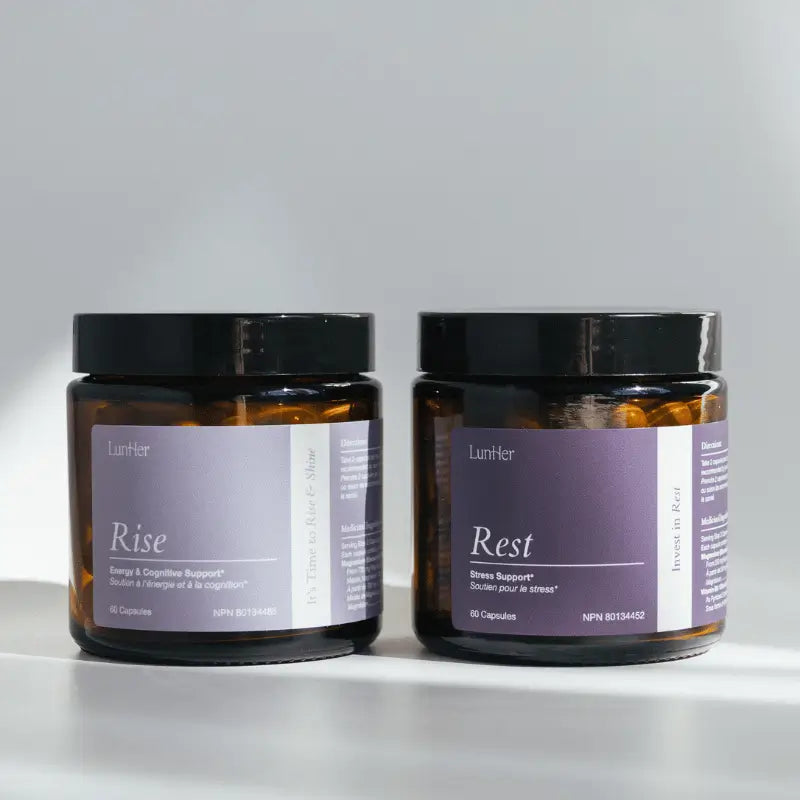
If you want the depth, our guide to the supplements to reduce cortisol walks through what the research actually shows, and our wider guide to supplements for burnout covers the fuller depletion picture. One note on adaptogens: LunHer deliberately leaves ashwagandha out of daily formulas, because long-term daily use has been linked to thyroid and cortisol dysregulation. For something you take every day, we use holy basil instead, an adaptogen that supports cortisol modulation without the same thyroid disruption risk.
What is not worth your time?
Skip anything that promises to crush or block cortisol fast. You need cortisol to function, and a flatlined stress hormone is not the goal. Extreme protocols, restrictive cleanses, and cortisol-blocker pills tend to add stress rather than remove it. A restored rhythm beats a suppressed number every time, and it lasts.
The same caution applies to the wellness trends that dress stress up as discipline: fasted marathons, ice baths stacked on four hours of sleep, cutting carbs while cutting rest. If a protocol leaves you more depleted, it is working against the exact system you are trying to steady. When in doubt, choose the gentler option and repeat it.
How long does it take to lower cortisol naturally?
Give it real time. Sleep usually improves first, often within a week or two. The deeper shift in your stress response tends to build over four to eight weeks of consistent inputs. Days 10 to 20 are the doubt window, when it feels like nothing is changing. The progress is happening beneath the surface. Keep going.
In LunHer's 8-week observational study of 40 women, self-reported, 87% said they felt like themselves again by week 8, and 90% reported improved sleep. That is the arc to expect from steady support: sleep steadies first, then cortisol, then energy, then focus. It is quiet at the start, which is exactly why so many people stop right before it clicks.
Frequently asked questions
What lowers cortisol the fastest?
Slow breathing is the fastest lever you have. A few minutes of long, unhurried exhales tells your nervous system the threat has passed and eases an acute spike. But fast relief is not the same as a steadier rhythm. Lasting change comes from sleep, food, and consistent daily inputs, not one quick trick.
What are signs of high cortisol in women?
Common signs include waking at 3am and struggling to get back down, feeling wired but exhausted, an afternoon energy crash, stubborn cravings for salt or sugar, and stress that worsens around your cycle. These usually point to a rhythm that is off, not a single broken part. A doctor can rule out medical causes.
Does caffeine raise cortisol?
Yes. Caffeine is a real cortisol stimulus, and drinking it daily only partly blunts that response. Taken first thing on an empty stomach, it adds a rise on top of the one your body is already making. Try waiting sixty to ninety minutes after waking, and eating first. You keep the coffee, you just stop stacking.
Can you lower cortisol without medication?
For everyday stress and burnout, yes. Most women support a healthier cortisol rhythm through sleep, morning light, steady meals, gentler movement, and stress off-ramps, no prescription involved. If you suspect a medical cause of high cortisol, that is different and needs a doctor. Supplements support your body's own systems, they do not treat a diagnosed condition.
Why is my cortisol high at night?
Cortisol should be low at night so you can sleep. When it stays high, it is often because chronic stress has flattened your daily rhythm, so the curve shifts later. Under-eating, late intense workouts, and screens can all keep it elevated. Waking at 3am wired is the classic sign of this reversed pattern.
The information in this article is for general educational purposes only and is not intended to replace consultation with a qualified healthcare professional. Always consult a doctor or naturopath before starting any supplement, particularly if taking medications or managing a health condition. LunHer products are not intended to diagnose, treat, cure, or prevent any disease.